※本ページはプロモーションが含まれます
Disclosure: This post contains affiliate links. If you buy through them, we may earn a commission at no additional cost to you. Learn more.
If you’re staring at a wall of Red, Green, Blue, Purple, Black, and Yellow cards and have no idea where to start, here’s the short version: Red rushes you down, Green stalls your board, Blue out-draws you, Purple ramps into big plays, Black trades resources for removal, and Yellow refuses to die. Every Leader in the One Piece Card Game is built around one, or increasingly two, of these six colors, and picking the right one is the single biggest decision a new player makes.
This guide breaks down what each color actually does mechanically (not just vibes), where it struggles, and how dual-color Leaders — which now make up most of the competitive format — change the math. We’ll also point you toward real single-color and dual-color Starter Decks so you can try a color out for around the price of a fast-food meal before committing to a full 50-card deck.
- The Six Colors at a Glance
- Red: Aggressive Rush
- Green: Board Control Through Rest Effects
- Blue: Card Advantage and Bounce
- Purple: DON!! Ramp and Big Payoffs
- Black: Removal at a Cost
- Yellow: Life Manipulation and Resilience
- Dual-Color Leaders: Why Most Competitive Decks Aren’t Mono-Color
- What’s the Easiest Color for a Beginner to Pick Up?
- FAQ
- Takeaway
- Related Articles
- More Trading Card Game Guides
The Six Colors at a Glance
| Color | Core Mechanic | Playstyle | Real Downside | Example Leader |
|---|---|---|---|---|
| Red | Power reduction, Rush, early pressure | Aggressive, fast, low decision density | Fizzles hard if the opening rush doesn’t close the game | Shanks (ST-23), Portgas D. Ace (OP-16) |
| Green | Resting/tapping opponent Characters | Board control, tempo denial | Grindy and slow; doesn’t win on its own without a finisher | Jewelry Bonney (ST-24), Dracule Mihawk |
| Blue | Bounce effects, card draw/selection | Reactive control, hand advantage | Passive if you fall behind on board early | Buggy (ST-25), Nami (OP-16, Blue/Yellow) |
| Purple | DON!! ramp, big-cost payoffs | Explosive mid-game swings | Vulnerable to early aggression before the ramp pays off | Sengoku (OP-16), Enel (mono-Purple, OP-16) |
| Black | K.O. removal, life/resource cost, trash recursion | Attrition and answers | Removal costs you life or cards — math errors are punishing | Smoker (ST-19), Marshall D. Teach (Black/Yellow, OP-16) |
| Yellow | Life gain, life-card manipulation, triggers | Resilience, long-game comebacks | Relies on trigger variance; can feel passive without a payoff | Charlotte Katakuri (ST-20/ST-34), Yamato (Green/Yellow, ST-28) |
Prices and meta shares below are approximate and current as of August 12, 2026. This isn’t financial advice — card and product prices move fast in this game, so treat anything below as a snapshot, not a guarantee.
Red: Aggressive Rush
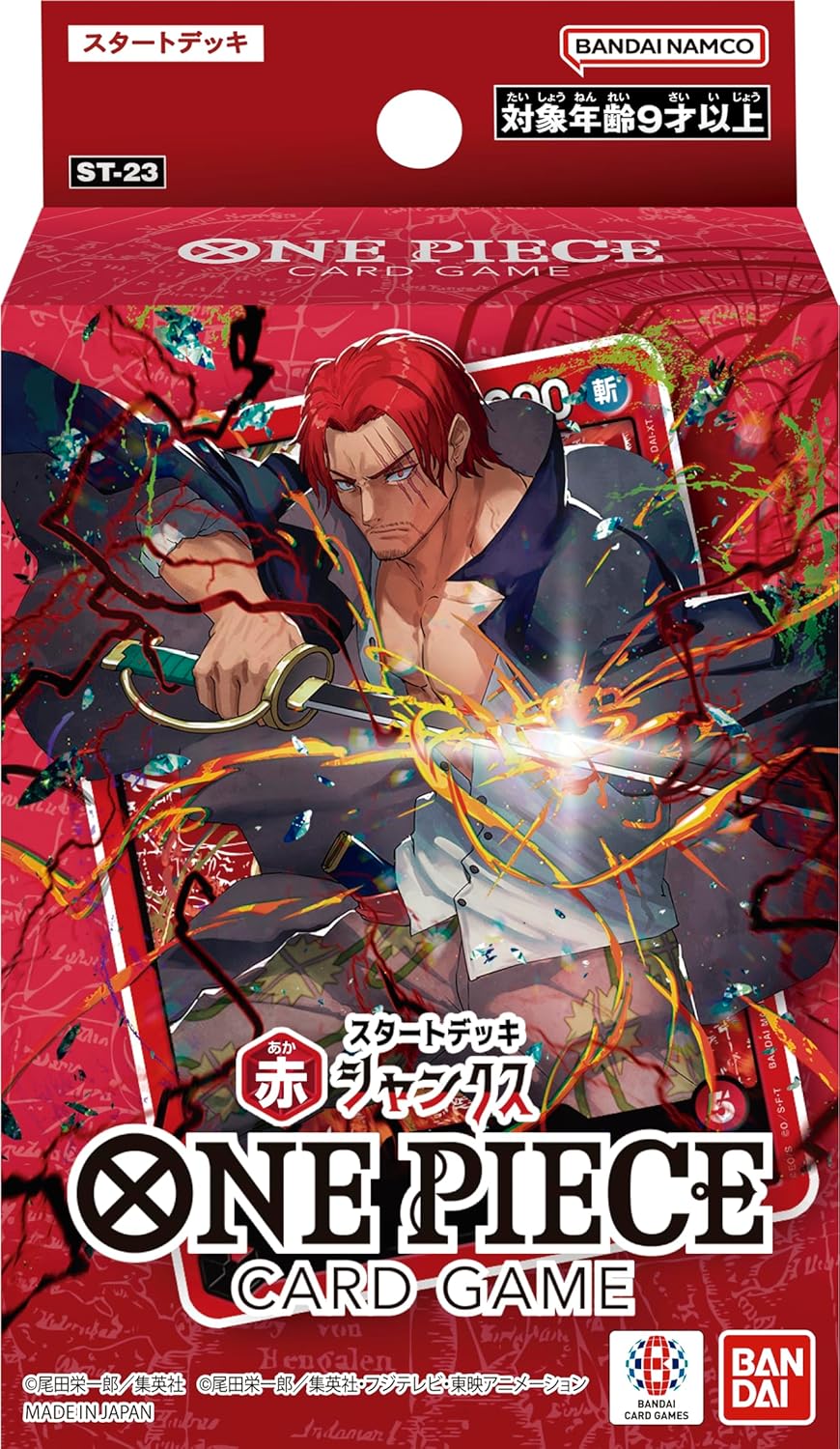
Red is the “kill them before they set up” color. Its signature tools are power-reduction effects that shrink an opponent’s blockers to a size your attackers can safely punch through, plus Rush, a keyword that lets a Character attack the same turn it’s played instead of waiting a turn. A well-built Red deck wants to be doing meaningful damage by turn 2 or 3.
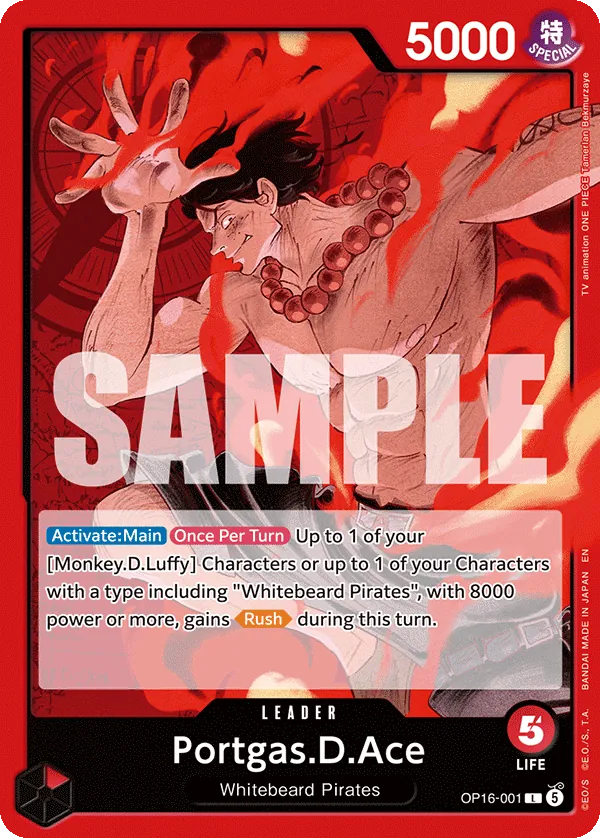
The archetype’s poster child is Starter Deck 23, RED Shanks, a mono-Red deck built entirely around the Red Hair Pirates. On the current OP-16 competitive side, Portgas D. Ace leans into Whitebeard Pirates synergy for the same kind of tempo-focused pressure.


The catch: Red is the most “decision-light” color, which makes it great for absolute beginners, but it’s also the most exploitable. If your opponent survives the opening rush with life and board presence intact, Red decks often run out of gas — there’s not much of a plan B once the aggression stalls.
Green: Board Control Through Rest Effects
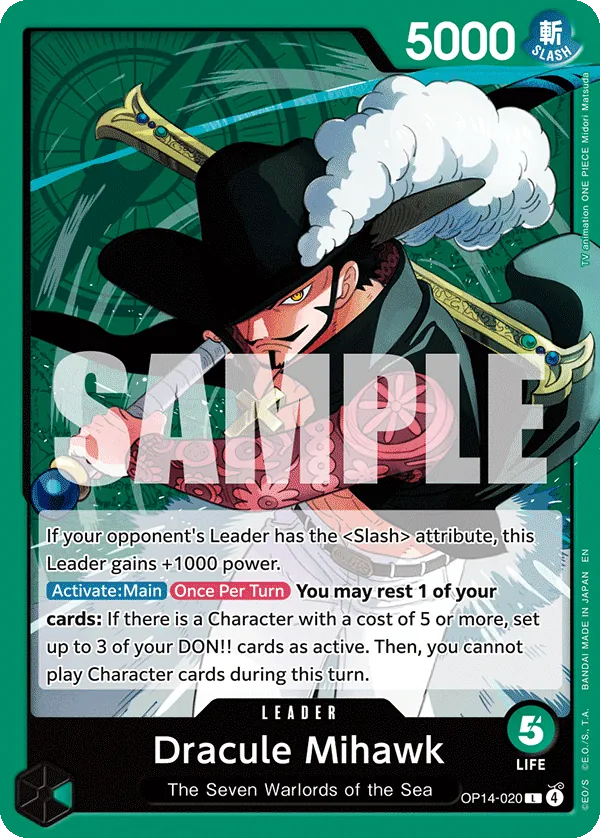
Green doesn’t remove your opponent’s Characters; it neutralizes them. Cards that “rest” (tap) an opposing Character stop it from attacking or blocking, buying Green time to develop its own board. Some Green cards double up as DON!! ramp, letting you play above-curve threats a turn early. Eustass “Captain” Kid, Carrot, and Dracule Mihawk are common faces of this style, and Green has repeatedly placed as a top-tier archetype across recent formats.
Starter Deck 24, GREEN Jewelry Bonney, is the current mono-Green entry point and focuses on Bonney’s own tempo-oriented kit.


The catch: Green is methodical. Locking down a board doesn’t win the game by itself — you still need a way to convert that tempo into actual damage, and misjudging when to rest a threat versus save the resource for a bigger one is where new Green players lose games.
Blue: Card Advantage and Bounce
Blue’s identity is control through information and resources rather than raw removal. Bounce effects send an opponent’s Character back to their hand, forcing them to spend cost to replay it — a soft form of removal that also drains their resources. Blue also has the game’s best card draw and deck-filtering tools, letting you dig toward your best cards while your opponent works with what they’re dealt.
Starter Deck 25, BLUE Buggy, is the mono-Blue starting point. In the current OP-16 meta, though, Blue rarely stands alone: Nami (Blue/Yellow) has been the single most-played Leader in the English competitive scene through July 2026, holding roughly a quarter of the meta share thanks to a draw engine built around cards like Zeus.


The catch: Blue can feel genuinely passive in the early turns. If you’re not drawing into your answers, you can get run over by a fast Red or aggressive dual-color deck before your card advantage ever comes online.
Purple: DON!! Ramp and Big Payoffs
Purple’s whole deal is DON!! acceleration — attaching extra DON!! cards ahead of schedule so you can play higher-cost, higher-impact Characters before your curve normally allows. That translates into explosive mid-game turns where Purple suddenly puts a threat on board that the opponent isn’t prepared to answer.
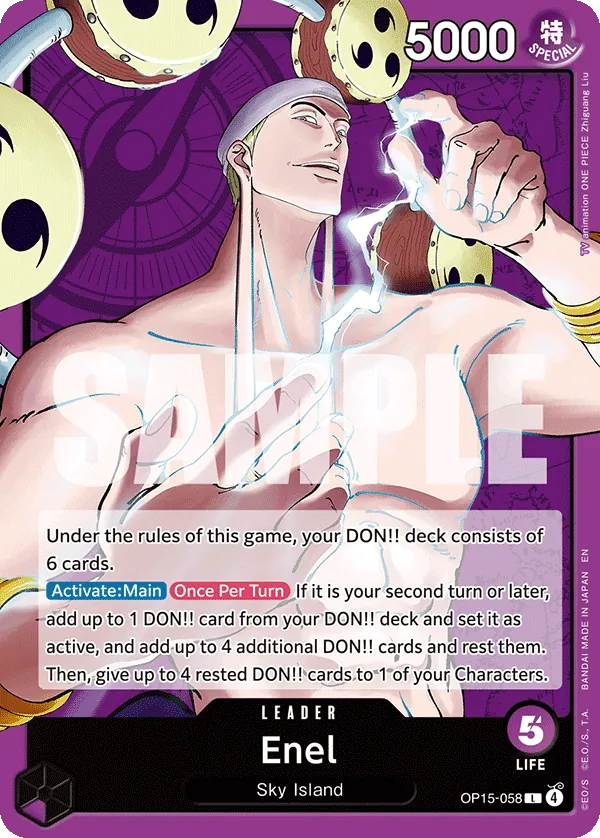
There’s no current mono-Purple Starter Deck stocked in most Western-facing shops right now — the last mono-Purple release, Starter Deck 34 (PURPLE Charlotte Katakuri), only came out in Japan on July 31, 2026, and is still working its way through import channels. If you want to try Purple today, the fastest route is a dual-color deck: PURPLE/BLACK Monkey.D.Luffy (ST-26) has been a reliable, budget-friendly way to test the ramp plan since its release. On the current meta side, mono-Purple Enel has run as high as a 22-23% English meta share this format by ramping into a pair of unremovable 10000-power copies of itself.


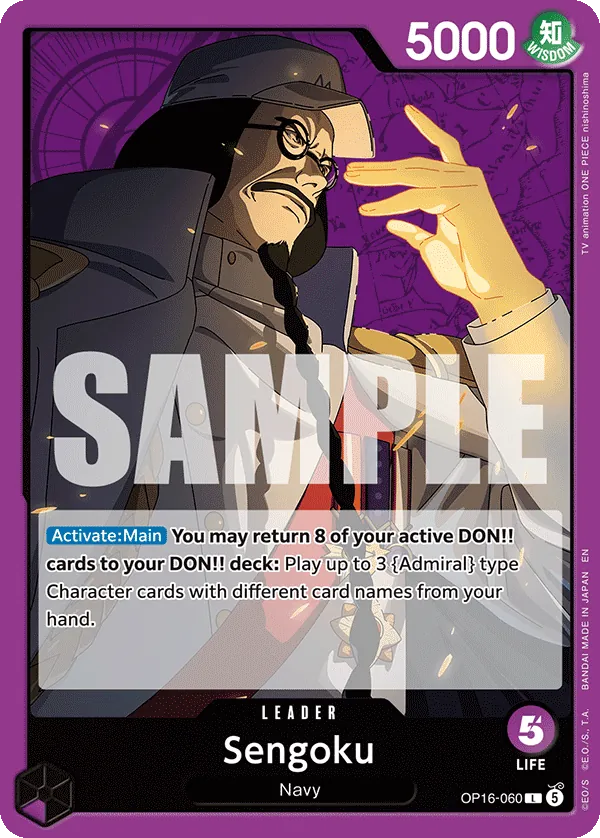
The catch: Ramp decks are a two-turn plan (build up, then deploy), and a fast Red or tempo-oriented Green opponent can punish you for those setup turns before the payoff ever lands.
Black: Removal at a Cost
Black is the game’s most direct removal color — K.O. effects that put an opposing Character straight in the trash — but nothing in Black is free. Effects typically cost you life (flipping a life card face-up early, which usually helps the opponent) or force you to discard, so playing Black well is really an exercise in resource math: is this removal worth the life total or card I’m spending on it? More recent Black cards have also leaned into trash recursion, bringing K.O.’d Characters back into play.
Starter Deck 19, BLACK Smoker, is a straightforward mono-Black entry point built around Navy synergy. Marshall D. Teach also has his own mono-Black Starter Deck (ST-27), and in the current OP-16 format, Teach’s dual Black/Yellow build runs a control plan that redirects attacks onto Blackbeard himself.


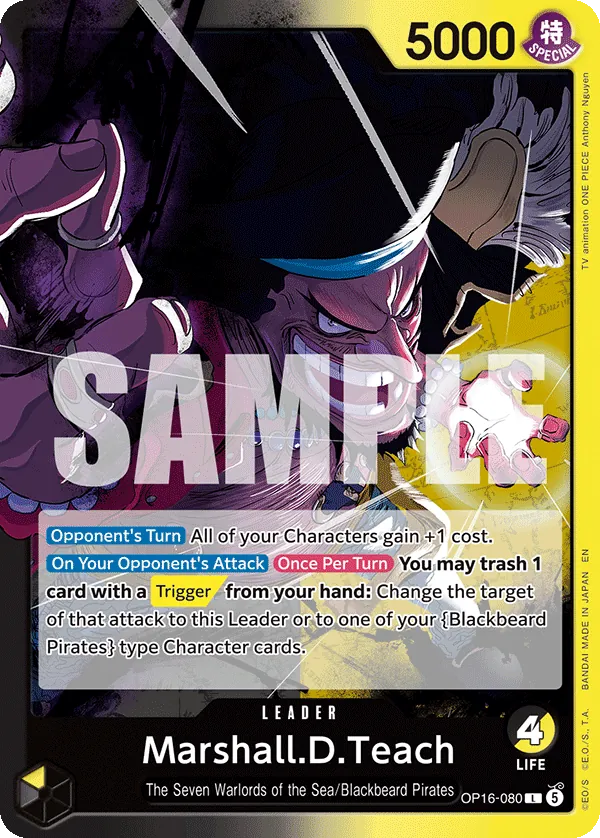
The catch: Black players who spend life carelessly on removal often find themselves one attack away from a life-total loss, especially against Yellow decks that are actively trying to punish a thin life pile.
Yellow: Life Manipulation and Resilience
Yellow doesn’t want to win a race — it wants to make sure it never loses one. Its tools revolve around gaining extra life cards, flipping life cards face-up for a preview of upcoming resources, and triggering effects off incoming damage. A well-built Yellow deck can absorb an opponent’s entire early game and still be standing to grind out the win in the back half.
Starter Deck 20, YELLOW Charlotte Katakuri, is the classic mono-Yellow starting point (note this is a different Katakuri build from the newer mono-Purple ST-34 — same character, different color and gameplan). Yellow rarely stands completely alone in the current meta, though; it’s most often paired as a support color, as in Yamato’s Green/Yellow ST-28 build or Nami’s Blue/Yellow deck discussed above.


The catch: Yellow’s payoffs depend heavily on trigger cards flipping the right way, and a Yellow deck with no proactive win condition of its own can simply run out the clock without ever closing out the game.
Dual-Color Leaders: Why Most Competitive Decks Aren’t Mono-Color
Since Starter Deck 26 (Purple/Black Luffy) popularized the format, dual-color Leaders have become the norm at the competitive table rather than the exception. A dual-color Leader lets you build a deck pulling cards from two of the six colors, which massively widens your card pool and lets you cover a mono-color deck’s weak spots — pairing Purple’s ramp with Black’s removal, for example, or Blue’s card draw with Yellow’s resilience.
That flexibility isn’t free, though. Every dual-color Leader starts the game with 4 life instead of the 5 life a mono-color Leader gets. Fewer life cards means fewer cards drawn from taking damage over the course of the game, so dual-color decks are trading raw staying power for build flexibility — a real, mechanical tradeoff baked into the rules, not just a flavor choice.
You can see this pairing logic across the format right now:
- PURPLE/BLACK Monkey.D.Luffy (ST-26) — ramp into removal
- GREEN/YELLOW Yamato (ST-28) — board control backed by resilience, BANDAI’s own recommended beginner pairing alongside Buggy
- Red/Green Luffy & Ace (ST-30) — aggression backed by tempo denial, built around Impel Down and Whitebeard Pirates synergy
- Blue/Yellow Nami (OP-16) — the format’s most-played Leader as of July 2026, pairing card draw with life resilience
- Green/Blue Monkey D. Luffy (OP-16) — control via two separate Character pools (Impel Down and Straw Hat Crew) for extra resilience
- Black/Yellow Marshall D. Teach (OP-16) — control that punishes attacks by redirecting them onto Blackbeard
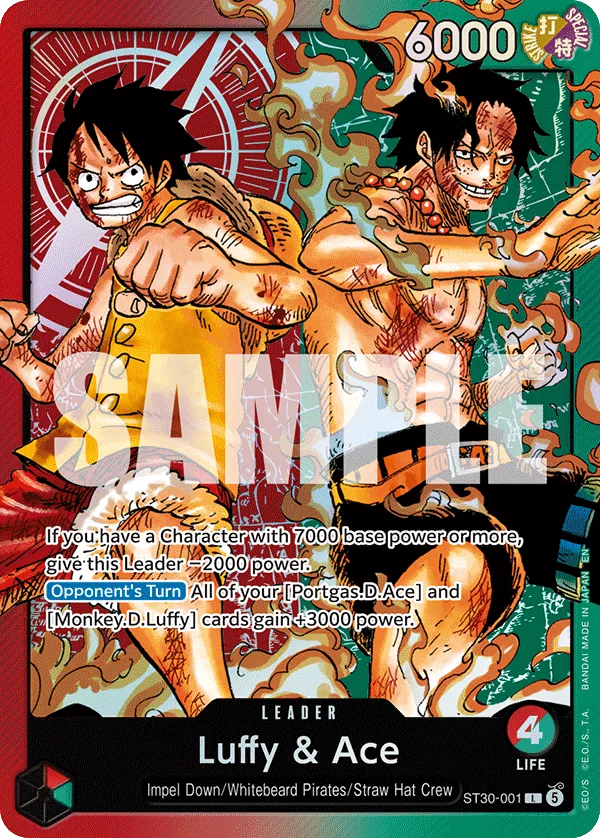
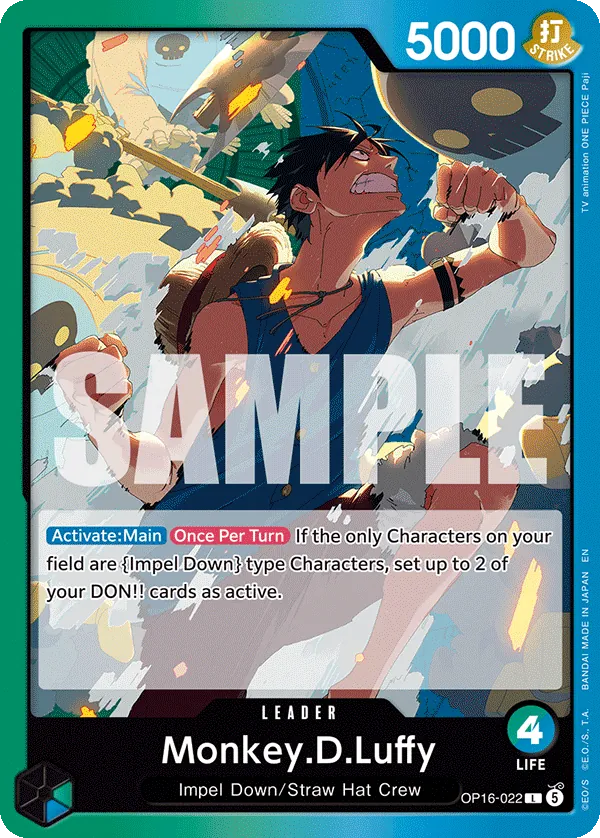
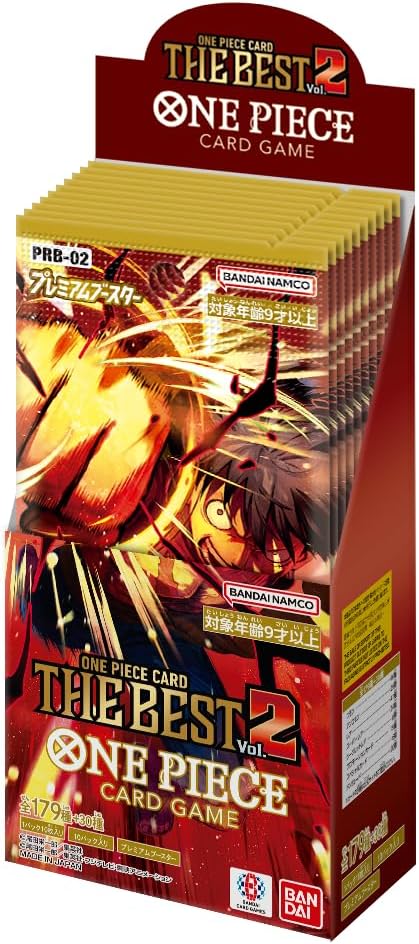
If you want to see every color’s cards in one place without committing to a full deck, ONE PIECE CARD THE BEST Vol.2 (PRB-02) is a premium booster built specifically as a cross-set, all-colors sampler — a genuinely useful way to get a feel for multiple colors before you pick a lane.

What’s the Easiest Color for a Beginner to Pick Up?
Red and Blue are generally the friendliest entry points. Red (Shanks, ST-23) rewards straightforward, low-decision-density play — attack, reduce power, attack again — so new players get quick feedback on whether a line worked. Blue (Buggy, ST-25) is a little more involved but teaches you to read the board and make bounce/removal decisions, which is a skill you’ll need in every color eventually. BANDAI itself has pointed newer players toward the Green/Yellow Yamato (ST-28) and Blue/Yellow Boa Hancock-style builds for a slightly more resilient, less punishing first deck. Purple and Black tend to reward players who already understand the game’s resource math (DON!! and life totals, respectively), so they’re worth trying second or third rather than first.
FAQ
Do I have to pick just one color when I start playing?
No — most competitive Leaders released since late 2024 are dual-color, and even a mono-color Leader’s deck can include colorless support cards. Starting with a single-color Starter Deck (like ST-23 through ST-25) is still the cheapest way to learn one color’s fundamentals before mixing in a second.
Is one color objectively the strongest?
Not consistently — the competitive meta shifts every time a new booster set or Starter Deck releases. As of August 2026, Blue/Yellow Nami, mono-Purple Enel, and Green/Blue Luffy have traded off as the top three decks in the OP-16 format, but that ranking has already changed multiple times since OP-16 launched in June 2026. Treat any “best color” claim, including this article’s meta notes, as a snapshot rather than a permanent ranking.
Do dual-color Leaders really start with less life?
Yes. Mono-color Leaders start at 5 life; dual-color Leaders start at 4 life. It’s a real rules-level tradeoff for the extra deckbuilding flexibility, so factor it in before assuming a dual-color deck is strictly an upgrade over a mono-color one.
Where can I buy real Japanese Starter Decks safely?
Stick to retailers that sell sealed, factory-wrapped product rather than loose promo cards from unverified sellers — counterfeit singles are a real problem on marketplaces with no seller vetting. Discovery Japan Mall ships authentic, currently-stocked Japanese product (including the ST-19 through ST-30 Starter Decks referenced above) internationally, which is a straightforward way to get real product without relying on a scalped US secondary-market listing.
Can I mix Starter Decks together to build my own dual-color deck?
Yes, and it’s a common budget approach — buying two single-color Starter Decks and combining the best cards from each (respecting the deck’s Leader color requirements) is cheaper than a booster box if you already know which two colors you want to pair. Just note you’ll need doubles of any shared support cards you want to run at higher counts.
Takeaway
There’s no single “correct” color in the One Piece Card Game — Red wins by ending the game early, Green and Blue win by denying the opponent options, Purple and Black win by trading resources for bigger plays, and Yellow wins by refusing to lose the war of attrition. What matters is that you understand the tradeoff built into whichever color (or color pair) you pick, because every one of them has a real, exploitable weakness. Grab a couple of single-color Starter Decks, play both sides a few times, and you’ll know within an afternoon which playstyle actually fits how you think.
If you’re brand new to the game entirely, our beginner’s guide to starting One Piece Card Game covers rules and rarities in more depth, and our booster box vs. starter deck breakdown can help you decide what to buy once you’ve settled on a color.
Related Articles
More Trading Card Game Guides
- Dragon Ball Fusion World Colors Explained: Which to Pick (Dragon Ball Super Card Game)
- Pokémon TCG Beginner’s Guide 2026: What to Buy First (Pokémon TCG)
- NARUTO CARD GAME Mechanics Explained: The July 29 Reveal (Naruto Card Game)
Comments