※本ページはプロモーションが含まれます
Disclosure: This post contains affiliate links. If you buy through them, we may earn a commission at no additional cost to you. Learn more.
Short answer, as of August 19, 2026: five cards are banned outright, three card pairs are banned from sharing a deck, and there are currently zero restricted cards. That list has been frozen since April 10, 2026 — the longest stretch without a change since Bandai started issuing banlists in December 2023.
If you’re rebuilding a deck, buying into a new Leader, or just trying to make sure your list is legal before a Store Tournament, this page is the whole picture: what’s banned, why Bandai pulled each card, the “banned pair” rule that trips up more players than any outright ban, and — the part most banlist articles skip — how April 2026’s Block rotation quietly made half the ban list irrelevant to Standard players.
- The complete ban list at a glance
- Every banned card, and Bandai’s actual reasoning
- Banned pairs: the rule people actually get wrong
- Why half this list no longer matters to Standard players
- The April 2026 update also un-banned six cards
- What this should (and shouldn’t) change about what you buy
- Is another ban announcement coming soon?
- How to check your deck is legal in 60 seconds
- FAQ
- Takeaway
- Related Articles
- More Trading Card Game Guides
The complete ban list at a glance
| Card | Set / No. | Type | On the list since | Why |
|---|---|---|---|---|
| Charlotte Pudding | OP-06 / OP06-047 | Character (Blue, 4-cost) | April 1, 2026 | Repeatable hand reset |
| Nami | OP-03 / OP03-040 | Leader (Blue) | August 30, 2025 | Alternate win condition (deck-out) |
| Gecko Moria | OP-06 / OP06-086 | Character (Black, 8-cost) | April 1, 2025 | Double reanimation off one card |
| Trafalgar Law | ST-10 / ST10-001 | Leader (Red/Purple) | September 6, 2024 | Removal + free play, every turn |
| Reject | OP-06 / OP06-116 | Event (Yellow, 4-cost) | June 21, 2024 | Removal and life manipulation |
Banned pairs (both cards are legal individually, just not together):
| Pair | Effective |
|---|---|
| OP11-040 Monkey.D.Luffy + OP11-067 Charlotte Katakuri | August 30, 2025 |
| OP11-040 Monkey.D.Luffy + OP08-069 Charlotte Linlin | August 30, 2025 |
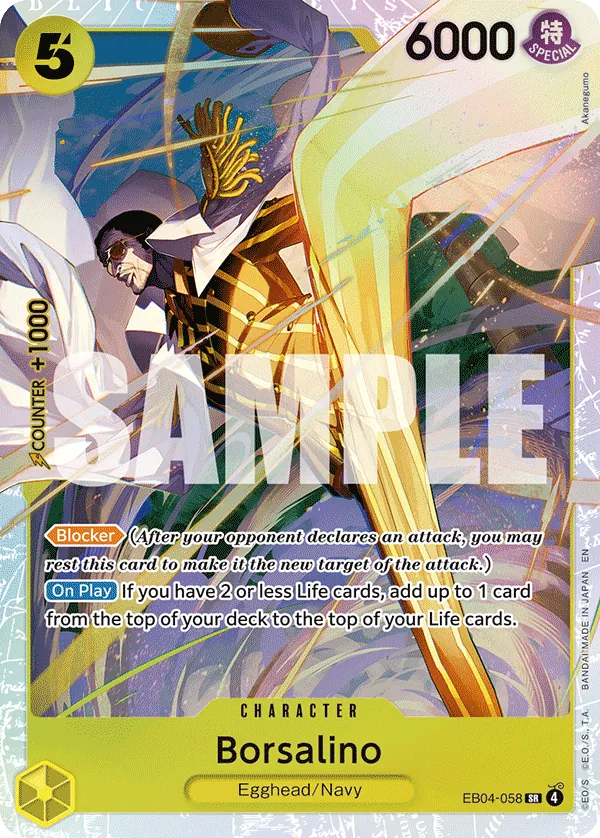
| OP07-115 I Re-Quasar Helllp!! + EB04-058 Borsalino | April 10, 2026 |
Restricted cards: none. The “Restricted” category (one copy per deck) exists in the rules but is empty right now.
Parallel and alternate-art printings count as the same card for all of the above — an Alt-Art Borsalino is still Borsalino.
Every banned card, and Bandai’s actual reasoning
Charlotte Pudding (OP06-047) — the newest ban
A 4-cost, 4000-power Blue Character whose [On Play] makes your opponent shuffle their entire hand into their deck and draw exactly five cards. In a format where holding six or seven counters is how you survive a turn, forcing a reset to five was less “disruption” and more “delete the opponent’s defensive turn.” Bandai banned her effective April 1, 2026, and she was the only addition in that announcement.

The counter-argument: plenty of players thought Pudding was a healthy check on hoarding decks, and the ban did push the format further toward raw aggression. Bans are balance opinions, not physics.
Nami (OP03-040) — the alternate win condition
Nami is a Blue Leader whose text flips the rules: when your deck hits zero, you win instead of losing. Decks built around her ignored the normal life-race entirely and just milled themselves out behind a wall of blockers and counters. Banned August 30, 2025.

Alt-win Leaders are notoriously hard to balance — either they’re unplayable or they invalidate the core game loop — so this ban surprised very few people.
Gecko Moria (OP06-086) — two bodies for one card
An 8-cost, 9000-power Black Character that revives a cost-4-or-less Character and a cost-2-or-less Character from your trash, one of them active. Late-game, that’s a three-for-one that rebuilds a board you already spent resources removing. Banned April 1, 2025.

Trafalgar Law (ST10-001) — the Leader that did too much
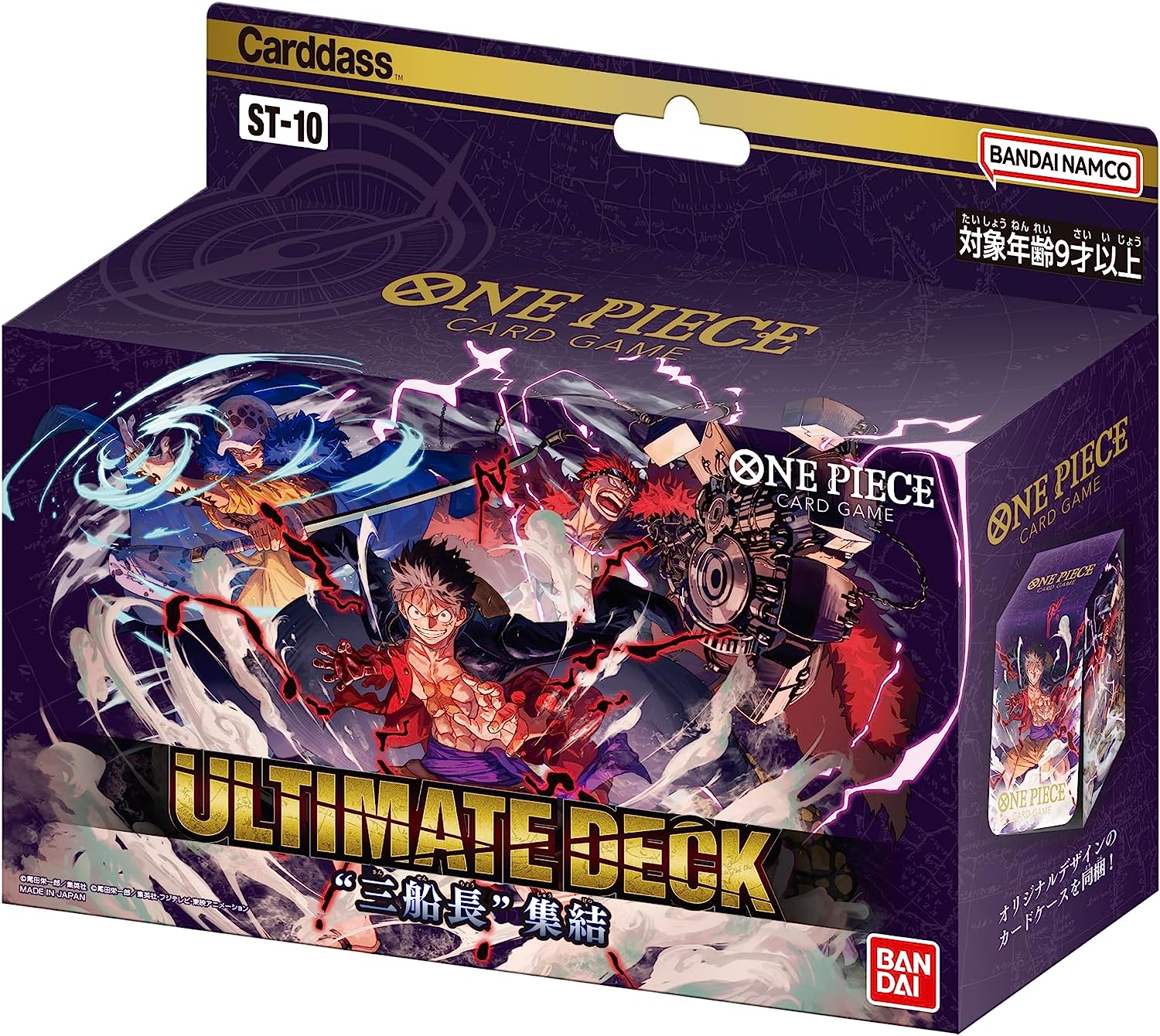
The Red/Purple Law Leader from Ultra Deck: The Three Captains could, once per turn for DON!! −3, bounce an opposing 3000-power-or-less Character to the bottom of its deck and play a cost-4-or-less Character from hand. Removal plus development plus tempo, every single turn, from a card you never have to draw. Banned September 6, 2024.

This is the ban with the most awkward retail footprint, because ST-10 is a $30-ish product whose headline card is illegal. More on that below.
Reject (OP06-116) — the Yellow catch-all
A 4-cost Yellow Event offering a choice: K.O. an opposing Character costing 5 or less, or (if your opponent is on one Life) deal a damage and add a Life card to your hand. Plus a Trigger that draws. One card covering removal, reach, and card advantage in the color that was already the hardest to close games against. Banned June 21, 2024 — the first outright ban in the game’s competitive history.

Banned pairs: the rule people actually get wrong
This is the mechanic that separates One Piece from most TCG banlists, and it’s where deck-check failures come from. A banned pair means both cards remain fully legal — just never in the same 50-card deck (or with that Leader).
OP11-040 Monkey.D.Luffy + OP11-067 Charlotte Katakuri / OP08-069 Charlotte Linlin (since August 30, 2025). The OP-11 Blue/Purple Luffy Leader ramps DON!! aggressively early, which is supposed to leave him fragile in the mid-game. Katakuri (an 8-cost Blocker that re-actives your Big Mom Pirates at end of turn and adds a DON!!) and Linlin (a 9-cost that buries an opposing Character in the opponent’s Life) both erased that fragility. Rather than kill three cards, Bandai broke the interaction.


OP07-115 I Re-Quasar Helllp!! + EB04-058 Borsalino (since April 10, 2026). The 1-cost Yellow Counter Event’s Trigger plays an Egghead-type Character costing 5 or less from your trash; Borsalino (EB-04 Egghead Crisis, 5-cost, 6000, Blocker) adds a card to your Life on play when you’re at two Life or fewer. Block with Borsalino, get K.O.’d, flip the Event off your Life, replay Borsalino, gain Life. Bandai’s stated reason wasn’t power level — it was that “game times have become significantly longer than expected,” and that the combo showed up in far more Yellow shells than they’d anticipated.

That’s a genuinely different justification from the others — a deck can be fair and still get hit for making rounds go to time.
Why half this list no longer matters to Standard players
Here’s the piece most ban list roundups miss. On April 1, 2026, One Piece Card Game got its first-ever rotation, built on the Block Number icon printed on every card:
- Block 1 — OP-01 through OP-04 and ST-01 through ST-09 → rotated out of Standard
- Block 2 — OP-05 through OP-08, ST-10 through ST-14, EB-01 → Standard-legal through March 31, 2027
- Block 3 and later — OP-09 onward (including OP-17 as it arrives), ST-18 onward, EB-02, and both Premium Boosters PRB-01 and PRB-02 → Standard-legal
- Block X — newly released Super Parallel Rares and same-numbered reprints → Standard-legal
From April 1, 2027, Standard moves to Blocks 3–6, and Block 2 rotates out in turn.
Don’t assume a Premium Booster inherits its number as its block. PRB-01 is ONE PIECE CARD THE BEST, a reprint set — despite the “01,” its cards carry Block 3 icons and are fully Standard-legal, well past the April 2026 rotation. PRB01-001 Sanji, its Leader, is Block 3 and legal in both Standard and Extra. The same goes for extra boosters: EB-01 is Block 2, not Block 1. Verified against Limitless card data on August 27, 2026.
Extra Regulation, introduced at the same time, is the eternal format: every card ever printed is legal except what’s on the ban list. So the banlist is shared across both formats, but its practical weight isn’t:
| Banned card | Block | Still relevant in Standard? |
|---|---|---|
| Charlotte Pudding (OP06-047) | 2 | Yes — until April 2027 |
| Gecko Moria (OP06-086) | 2 | Yes — until April 2027 |
| Reject (OP06-116) | 2 | Yes — until April 2027 |
| Trafalgar Law (ST10-001) | 2 | Yes — until April 2027 |
| Nami (OP03-040) | 1 | No — the ban only bites in Extra |
One important wrinkle: Bandai maintains a separate “Overview of Cards Subject to Block Number Updates” page (last revised July 17, 2026) listing individual Block 1 cards that were reprinted into later products and therefore keep Standard legality. Read the icon on the card in your hand, not the set it came from. If you’re planning purchases around what stays legal, our 2026–2027 release calendar tracks which sets land in which block.
The April 2026 update also un-banned six cards
Everyone remembers the Pudding ban; almost nobody talks about the other half of that announcement. Six cards came off the list on April 1, 2026:
- Jinbe (OP07-045)
- Kingdom Come (EB01-059)
- Great Eruption (ST06-015)
- Moby Dick (OP02-024)
- Enies Lobby (OP03-098)
- Ice Age (OP02-117)
Read those set codes and the logic is obvious: five of the six are Block 1 or ST-01–ST-09 cards that had just rotated out of Standard anyway. Bandai freed them primarily to give the new Extra Regulation format a deeper pool, not to shake up Standard. Only Jinbe (OP-07, Block 2) actually came back to competitive Standard play — so if you saw “six cards unbanned” headlines and assumed a format-wide shakeup, that’s the correction.
What this should (and shouldn’t) change about what you buy
Bans and rotation are the two ways a card you paid for stops doing what you bought it for. A few honest reads on current sealed product:
The ST-10 problem. Ultimate Deck: The Three Captains is still stocked and still cheap — around ¥4,443 (roughly $30) for BANDAI ONE PIECE Card Game Ultimate Deck 3 Captain Gathering (ST-10) at Discovery Japan Mall, which ships genuine Japanese-print product internationally. But buy it for the reprints and the Law/Kid/Killer support shell, not the box art Leader — ST10-001 is banned in both formats and is never coming back. That’s a real caveat, not a hedge: the single most marketed card in the product is unplayable.

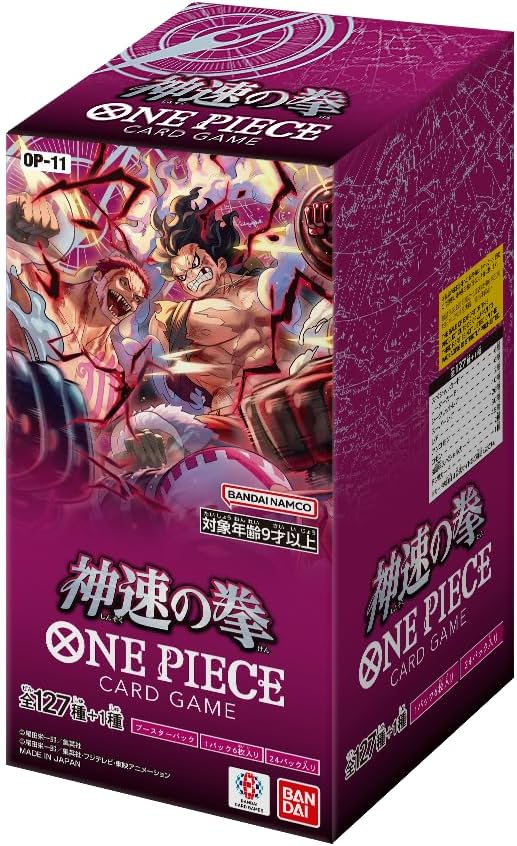
OP-06 is the ban-list set. Three of the five banned cards — Pudding, Moria, and Reject — all come from OP-06 (released in Japanese as Twin Champions, in English as Wings of the Captain). A box still runs about ¥27,279 (~$184) for BANDAI ONE PIECE Card Game Twin Champions (OP-06) Booster Box, and it’s a strong collector set. As a play-value purchase in August 2026, it’s the weakest box on this page: you’re paying 2024-era secondary prices for a set whose three best competitive cards are illegal and whose block rotates out next April.

The safe-legality picks. If you want sealed product with the longest legal runway, buy inside Block 3 or 4. The Seven Heroes of the Blue Sea (OP-14) Booster Box sits around ¥12,127 (~$82) and is Block 4 — legal through at least March 2029 on the current schedule.

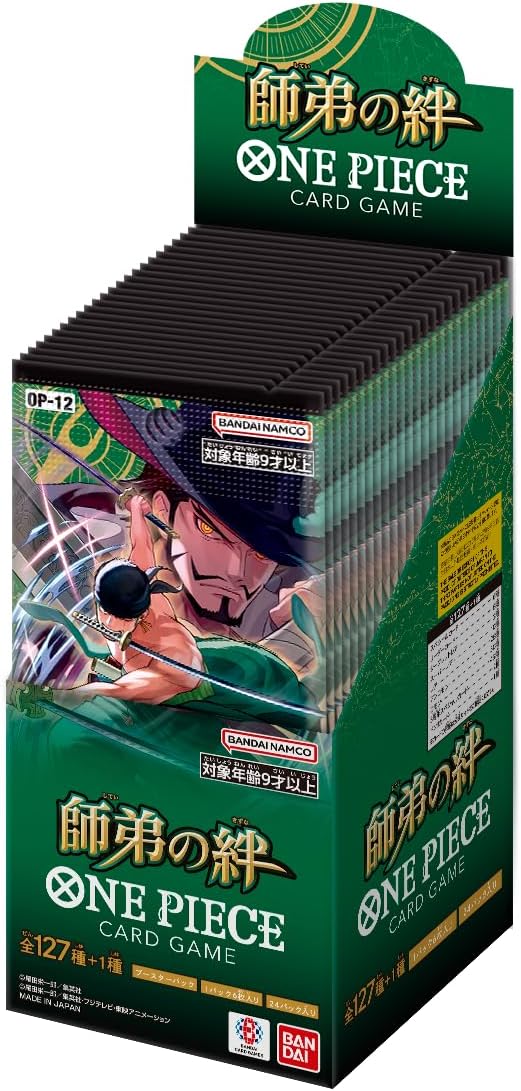
Bond Between Master and Disciple (OP-12) Booster Box is about ¥13,392 (~$90) and Block 3, which keeps it Standard-legal until roughly April 2028 while housing one of the format’s most consistent Leaders. Caveat on both: these are Japanese-language prints. They’re tournament-legal in most regions under Bandai’s card-text rules, but confirm your local organizer’s language policy first — we cover that in the Japanese vs. English buying guide.

The one to think twice about. Plot Kingdom (OP-04) Booster Box is listed near ¥36,952 (~$250). It’s a genuinely desirable collector box — but it’s Block 1, meaning everything inside is Extra-only in sanctioned play. Buying it as a deck investment in 2026 is a mistake; buying it as a collection piece with open eyes is fine.

Prices above are Discovery Japan Mall listings checked on August 19, 2026, in JPY; USD figures are approximate at prevailing rates. Card and sealed-product prices move fast, and nothing here is financial advice.
Is another ban announcement coming soon?
Nobody outside Bandai knows, but the historical cadence is informative. Announcements have landed in December 2023, June 2024, September 2024, April 2025, August 2025, and March 2026 (effective April) — roughly every four to six months, and frequently timed near a season boundary or a rotation. As of August 19, 2026 we’re four months clear of the last change, which is the longest quiet stretch yet.
What that means practically: with OP-17 arriving in late August 2026 and a fresh block entering Standard, an autumn balance update would fit the pattern. It is not announced, and anyone telling you which card is “confirmed next” is guessing. If you’re buying singles to chase whatever’s currently dominant, price in that risk — see our leader tier list for what’s actually winning right now, and our value myths piece for what a ban really does to a card’s price.
How to check your deck is legal in 60 seconds
- Leader first. Is it on the banned list (Nami OP03-040, Law ST10-001)? Does its block icon qualify for the format you’re playing?
- Scan for the five banned cards. Pudding, Nami, Moria, Law, Reject — parallels included.
- Check the three pairs. If your deck runs OP11-040 as Leader, it cannot contain OP11-067 or OP08-069. If it runs OP07-115, it cannot contain EB04-058.
- Check every block icon against the format: Standard is currently Blocks 2–5 plus X; Extra is everything not banned.
- Confirm counts. 50 cards exactly, max 4 copies of any card number, one Leader, single or dual color matching your Leader.
If a judge catches an illegal list at a deck check, the usual outcome is being told to fix it — but penalties vary by event tier, so read the specific event’s rules document rather than assuming. New to list-building? Start with our competitive deck building walkthrough.
FAQ
Is the One Piece Card Game ban list the same in Japan and English?
The card list is the same, but effective dates can differ slightly by region. The April 2026 banned-pair update, for example, was published with an April 10, 2026 effective date for NA/EU/LATAM/OC on the official English site, while regional organizers applied it on their own tournament calendars. Always check the effective date on the official announcement for your region before an event.
Can I still play banned cards in casual games?
Yes. The ban list only governs sanctioned tournament play — Championship events, Store Tournaments, Release Events, and Treasure Cups. Kitchen-table and locals-casual games are between you and your opponent, and a banned card is still a perfectly normal piece of cardboard.
What’s the difference between a banned card and a banned pair?
A banned card cannot be in any deck at all. A banned pair means two specific cards are each individually legal but cannot appear in the same deck. Katakuri (OP11-067) is legal in every Purple deck in the game — just not one led by OP11-040 Monkey.D.Luffy.
Do banned cards become worthless?
No, but they usually lose the premium that competitive demand was paying for, sometimes sharply and within days. Collectors still chase banned Leaders for binder completion and alternate art, and the introduction of Extra Regulation gave several formerly dead cards a home again. Treat a ban as a floor-lowering event rather than a total write-off.
Does rotation ban cards?
No — rotation and the ban list are separate systems. Rotation removes a whole block from Standard while leaving those cards fully legal in Extra Regulation. A card can be rotated out of Standard, banned in both formats, or both at once, and Nami (OP03-040) is currently an example of the last case.
Takeaway
The 2026 ban list is short and, by TCG standards, unusually surgical: five outright bans in nearly three years, no restricted cards at all, and three targeted pair bans that killed problem interactions instead of individual cards. Bandai’s clear preference is to break combos rather than delete staples — which is good news if you build decks, and worth remembering if you buy singles hoping today’s best card stays that way. Before your next event, spend the 60 seconds on the checklist above; before your next big purchase, check the block icon before you check the price.
Related Articles
More Trading Card Game Guides
- Dragon Ball Fusion World Banlist 2026: Every Banned Card (Dragon Ball Super Card Game)
- Pokémon TCG Standard Tier List: July 2026 Meta Guide (Pokémon TCG)
- Every Naruto Card Game Ever Made: The Full Timeline (Naruto Card Game)
Comments