※本ページはプロモーションが含まれます
Disclosure: This post contains affiliate links. If you buy through them, we may earn a commission at no additional cost to you. Learn more.
No, every Manga Rare isn’t worth a thousand dollars. No, an older set isn’t automatically worth more than a newer one. And no, getting reprinted in a THE BEST set doesn’t make the original card more valuable — usually the opposite. If you’re pricing out a collection or deciding what to chase in your next box, these misconceptions will cost you real money. Below are five of the most common One Piece Card Game value myths we keep seeing in Discord servers and Facebook trade groups, checked against actual market data as of August 12, 2026.
One quick note before we start: card prices move fast in this game, and everything below is a snapshot, not a guarantee. This isn’t financial advice — treat singles as collectibles you enjoy, not an investment vehicle.
- Myth 1: “Every Manga Rare Is a ,000+ Card”
- Myth 2: “Older Sets Are Always Worth More”
- Myth 3: “Getting Reprinted in THE BEST Makes the Original Even More Valuable”
- Myth 4: “Same Rarity Means Same Price”
- Myth 5: “A Banned Leader Is Worthless Now”
- Myth vs. Reality: A Quick Price Snapshot (as of August 2026)
- Where THE BEST Sets Fit If You’re Buying New
- FAQ
- Related Articles
- More Trading Card Game Guides
Myth 1: “Every Manga Rare Is a ,000+ Card”
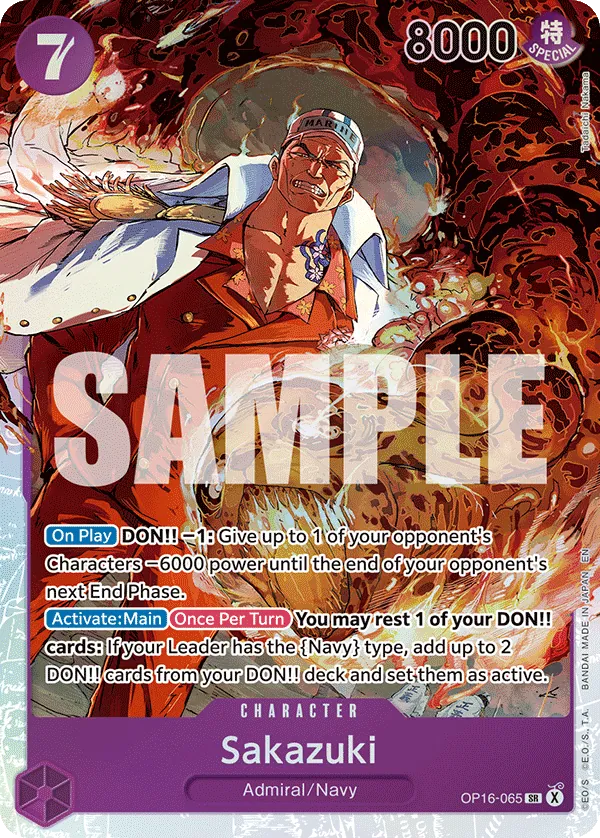
Manga Rare (the parallel treatment that reprints a card in Eiichiro Oda’s original manga panel art instead of the anime-style art) is genuinely the hardest pull in most sets, often landing at odds worse than 1-in-a-case. But rarity tier and dollar value are two different things. A Manga Rare of a character nobody’s building a deck around — a background Marine, a minor pirate crew member — regularly sits at $50-150. Compare that to a Manga Rare Sakazuki, which has traded in the $1,600 range, or the Gear 5 Monkey D. Luffy line from OP-05 (Awakening of the New Era), where card number OP05-119 alone spans everything from roughly $15-17 for the standard Secret Rare printing up to several thousand dollars for its Alternate Art Manga parallel, depending on which of its multiple print treatments you’re looking at.

The downside: buying a sealed box specifically to “hit a Manga Rare” is a bet on which character you pull, not just whether you pull one at all. Pull the wrong character and you’ve still spent box money for a card worth less than a starter deck.
Myth 2: “Older Sets Are Always Worth More”
OP-01 Romance Dawn, the very first booster set (released July 2022), does carry a real premium — sealed boxes have traded at 3-4x their original MSRP thanks to nostalgia, being the true “set 1,” and a genuine print-run quirk: early Wave 1 boxes have a blue bottom flap, while the larger Wave 2 reprint run has a white bottom, and collectors pay extra for the blue-bottom “first print.” But that’s the exception, not the rule. Most OP-02 through OP-04 boxes hover close to MSRP even years later, and the bulk commons and uncommons packed inside OP-01 itself are still nickel-and-dime bulk-bin cards.
Meanwhile, a single Manga Rare chase card from a much newer set — like the OP-05 Gear 5 Luffy discussed above — can be worth more than an entire OP-01 box. Age by itself doesn’t create value. Scarcity, character popularity, and ongoing competitive relevance do, and those three things don’t automatically track with a set’s release date.
Myth 3: “Getting Reprinted in THE BEST Makes the Original Even More Valuable”
This is probably the most common misunderstanding out there, and it usually runs backward. BANDAI’s Premium Booster “THE BEST” line — PRB-01 (released in Japan in 2023) and its follow-up PRB-02 ONE PIECE CARD THE BEST Vol.2 (Japan July 26, 2025; English release October 3, 2025) — exists specifically to reprint previously scarce, expensive chase cards, often with brand-new alt-art treatments, so more players can actually own and play them. Trafalgar Law’s leader card, for example, was one of the marquee reprints in PRB-01, and secondary-market listings for the original older printings softened noticeably after that reprint hit shelves, since supply of a “Trafalgar Law leader” suddenly wasn’t limited to the original scarce printing anymore.

Reprinting doesn’t zero out value — a card still needs to be good or iconic to matter, and a fresh alt-art treatment inside THE BEST can become its own new chase card over time (some PRB-02 alt-art reprints already trade above the card’s original printing). But “it got reprinted, so the old one must be worth more now” has the logic backward. More supply of a playable version almost always means less scarcity, not more.
The downside if you’re holding originals: if you bought an expensive pre-reprint copy of a card as a long-term hold, a THE BEST reprint can meaningfully cut into what you can resell it for, especially on the standard (non-alt-art) printing.
Myth 4: “Same Rarity Means Same Price”
An SR is an SR and a SEC is a SEC on the card itself, but the secondary market doesn’t price by rarity code — it prices by demand. Within the exact same set and rarity tier, an SR of a side character can sell for $2-5 while an SR of Luffy, Zoro, Shanks, or another cover-star character from the same set sells for $30-80 or more. Add in the print-treatment layer from Myth 1 (base printing vs. Alternate Art vs. Manga vs. Special/parallel) and you can get a single card number spanning a 100x-plus price range depending purely on which physical version you’re holding — again, see OP05-119 Monkey D. Luffy as the clearest real-world example of this.
Myth 5: “A Banned Leader Is Worthless Now”
The official banlist (last updated April 10, 2026) currently bans ST10-001 Trafalgar Law, OP03-040 Nami, OP06-047 Charlotte Pudding, OP06-086 Gecko Moria, and OP06-116 Reject outright, plus several restricted “banned pair” combos involving OP07-115, OP11-040, and others.


A banned Leader does lose the bulk of the price premium tied to competitive demand almost immediately — that’s real, and it’s the risk you take buying any meta staple as a “hold.” But it doesn’t go to zero. Collectors still want banned Leaders for binder completion, box-topper art, or nostalgia (the ST10-001 Trafalgar Law ban even came with an errata’d replacement Leader, which tells you BANDAI still sees value in keeping the character playable in some form). Treat a ban as a floor-lowering event, not a total wipeout.
Myth vs. Reality: A Quick Price Snapshot (as of August 2026)
| Card / Product | Rarity / Treatment | The myth | Approximate real price | Why the gap exists |
|---|---|---|---|---|
| Generic Manga Rare, non-popular character | Manga Rare | “Rarest tier = $500-1,000+” | ~$50-150 | Rarity tier ≠ character demand |
| Sakazuki | Manga Rare | Same myth | ~$1,600 | Iconic villain, sustained demand |
| Monkey D. Luffy, OP05-119 | Standard Secret Rare | “It’s a 2023 card, should be dirt cheap by now” | ~$15-17 raw | Base printing, high pull rate for the number |
| Monkey D. Luffy, OP05-119 (Alt Art Manga) | Manga/Alt Art parallel | Same card number as above | Several thousand dollars | Rarest treatment of a chase character |
| Trafalgar Law Leader (pre-PRB-01 printing) | SR/Leader | “Reprinted, so it’s worth even more now” | Softened after the PRB-01 reprint; ST10-001 version banned April 2026 | Reprint + banlist both cut scarcity/competitive premium |
| OP-01 Romance Dawn Booster Box (Wave 1, blue bottom) | Sealed box | “Oldest set = automatically the best hold” | 3-4x original MSRP (box level only) | Genuine first-print scarcity, but doesn’t extend to most singles inside |
Prices above are approximate, sourced from public marketplace listings and price trackers as of this article’s publish date, and will move. This is general information, not financial advice — never buy a card purely because you expect it to appreciate.
Where THE BEST Sets Fit If You’re Buying New
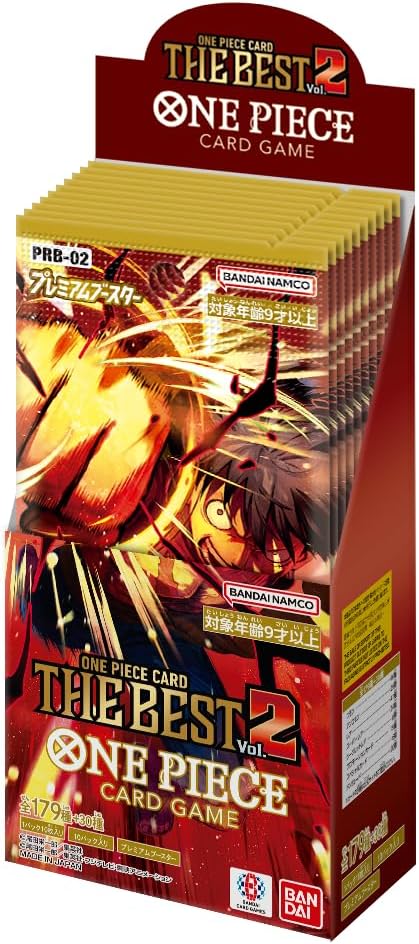
If the reprint mechanic in Myth 3 makes you want to actually see it in action, PRB-02 ONE PIECE CARD THE BEST Vol.2 is still the easiest way to pull reprinted staples and their new alt-art versions in one box — BANDAI ONE PIECE Card Game Premium Booster ONE PIECE CARD THE BEST Vol.2 (PRB-02) ships real, unopened Japanese product. Every pack guarantees at least an SR or better, and it’s a reasonable way to build out staples for a budget deck without chasing individual $30+ singles from their original sets. The original PRB-01 (2023) and first-print OP-01 Romance Dawn boxes, by contrast, are increasingly hard to find as fresh sealed product through import retailers since both are older, lower-availability prints at this point — worth knowing before you go hunting for either as a “cheap way in.”

For more on what’s actually worth chasing in the current competitive format, see our PSA vs BGS vs CGC: One Piece Card Game Grading Guide and One Piece Card Game Leader Tier List: OP-16 Meta Guide for how competitive relevance (not just rarity) drives what Leaders and staples are worth right now.
FAQ
Do all Manga Rare cards sell for hundreds of dollars?
No. Manga Rare is a rarity/pull-rate tier, not a value guarantee. Manga Rares of popular characters (Luffy, Shanks, Sakazuki, and similar) can reach four figures, but Manga Rares of less iconic characters commonly sell for $50-150.
Is an older One Piece Card Game set always worth more than a newer one?
No. OP-01 Romance Dawn sealed boxes do carry a real collector premium due to being the first set, but most singles inside older sets are still cheap bulk cards, and single chase cards from much newer sets can be worth more than an entire older box.
Does getting reprinted in a THE BEST set make a card more valuable?
Generally no. PRB-01 and PRB-02 exist to reprint previously scarce chase cards so more players can access them, which typically softens the resale price of the original printing rather than raising it. A brand-new alt-art treatment introduced within the reprint set can still become valuable on its own over time.
Are banned Leaders worthless to collectors?
Not worthless, but their price drops fast once a ban hits, since most of the premium was tied to tournament legality. Collectors still buy banned Leaders for binder completion and art value, so expect a lower floor, not zero.
Where can I buy real Japanese One Piece Card Game booster boxes safely?
Stick to established importers or marketplaces with buyer protection and clear return policies, and be extra cautious with loose singles sold outside major grading/authentication platforms, since counterfeit risk is much higher there than with sealed product. Discovery Japan Mall is one option that ships sealed Japanese product like PRB-02 internationally.
Card values in this game move quickly with the competitive meta, banlist changes, and BANDAI’s own reprint decisions — none of the numbers above are financial advice, just a snapshot. The one myth that never holds up: assuming any single rule (“older,” “rarer,” “reprinted”) tells you everything about what a card is actually worth. Character popularity, competitive relevance, and specific print treatment matter far more than any one factor alone.
Related Articles
More Trading Card Game Guides
- Pokémon Card Value Myths, Debunked (2026 Collector Guide) (Pokémon TCG)
- Dragon Ball Fusion World Card Value Myths, Debunked (Dragon Ball Super Card Game)
Comments