※本ページはプロモーションが含まれます
Disclosure: This post contains affiliate links. If you buy through them, we may earn a commission at no additional cost to you. Learn more.
If you’re wondering how to start playing One Piece Card Game, the short answer is: grab one $10-15 starter deck, learn the DON!! system in about ten minutes, and pick up a booster box or two only once you know which colors you actually enjoy playing. That’s it — you don’t need to open a $300 booster case to get a competitive-legal deck on day one.
This isn’t a fringe recommendation anymore, either. Per TCGplayer’s Q2 2026 seller data, One Piece Card Game has now outsold at least one “Big Three” TCG (Magic, Pokémon, or Yu-Gi-Oh!) for three consecutive quarters — it currently sits at #3 in overall GMV, ahead of Yu-Gi-Oh! but still behind Magic and Pokémon. It’s a genuinely mainstream card game at this point, not a niche import hobby, and that means a healthy secondary market, active regionals, and (usefully for beginners) a lot of accessible entry points.
Below is everything a total newcomer needs: how the game actually works, which starter deck to buy first, how rarities and pull rates shake out, and where you can buy real Japanese-print product without getting scammed.
- The Absolute Basics: What You’re Building
- Rarities and Pull Rates, Explained Honestly
- Best Starter Decks for a First-Time Player
- Once You’ve Got the Basics: Booster Boxes and the Current Meta
- Comparison Table: Where to Start Your Collection
- Frequently Asked Questions
- Can I use Japanese-print cards from a mall like Discovery Japan in official English tournaments?
- What’s the actual difference between a starter deck and a booster box?
- Is One Piece Card Game hard to learn compared to Pokémon or Magic?
- How do I avoid counterfeit or damaged cards when buying online?
- Do I need to worry about cards rotating out and becoming unplayable?
- Takeaway
- Related Articles
- More Trading Card Game Guides
The Absolute Basics: What You’re Building
Every One Piece Card Game deck is built around three components:
- 1 Leader card — this sits face-up in its own zone the entire game, determines your deck’s color(s), and usually has its own attack and ability.
- A 50-card main deck — every card in it must match a color printed on your Leader (a mono-color Leader like red-only locks you to red; a dual-color Leader like green/yellow lets you mix both). You can run up to 4 copies of any single card number.
- 10 DON!! cards — these are your resource system. You gain 2 DON!! per turn (1 on turn one for the player going first) up to a maximum of 10, and you spend or attach them to boost a Leader’s or Character’s power.
Your Leader’s printed Life value sets how many Life cards you start with. Reduce your opponent’s Leader to 0 Life, or make them draw past the bottom of their deck, and you win. It plays fast — most games run 15-25 minutes once you know the flow — which is a big part of why it’s exploded at local game stores.
Rarities and Pull Rates, Explained Honestly
One Piece Card Game uses a fairly simple rarity ladder, from most to least common: C (Common) → UC (Uncommon) → R (Rare) → SR (Super Rare) → L (Leader) → SEC (Secret Rare), with alternate-art “Manga Rare” and parallel foil versions layered on top as chase variants.
Bandai has never published official pull rates, so treat any numbers you see — including the ones below — as community estimates, not guarantees:
- SEC (Secret Rare): roughly 1 in 8-12 packs in a booster box, based on community box-break tracking around the OP-16 release window (June 2026).
- SR: several per box, though the exact count varies by set — OP-16 shipped with only 10 unique SRs total (versus 14-15 in OP-14 and OP-15), which concentrates the odds on fewer targets.
The practical takeaway for a beginner: booster boxes are a gamble by design. If you just want to build a legal, functional deck, buy singles or a starter deck instead of chasing packs — save the box-breaking for when you’re collecting for fun, not deck-building on a budget.
Best Starter Decks for a First-Time Player
Starter decks are the correct on-ramp for almost everyone. Each one ships as a pre-built 51-card deck (50 main deck + Leader) plus 10 DON!! cards, ready to play the moment you open the box — no deckbuilding knowledge required.
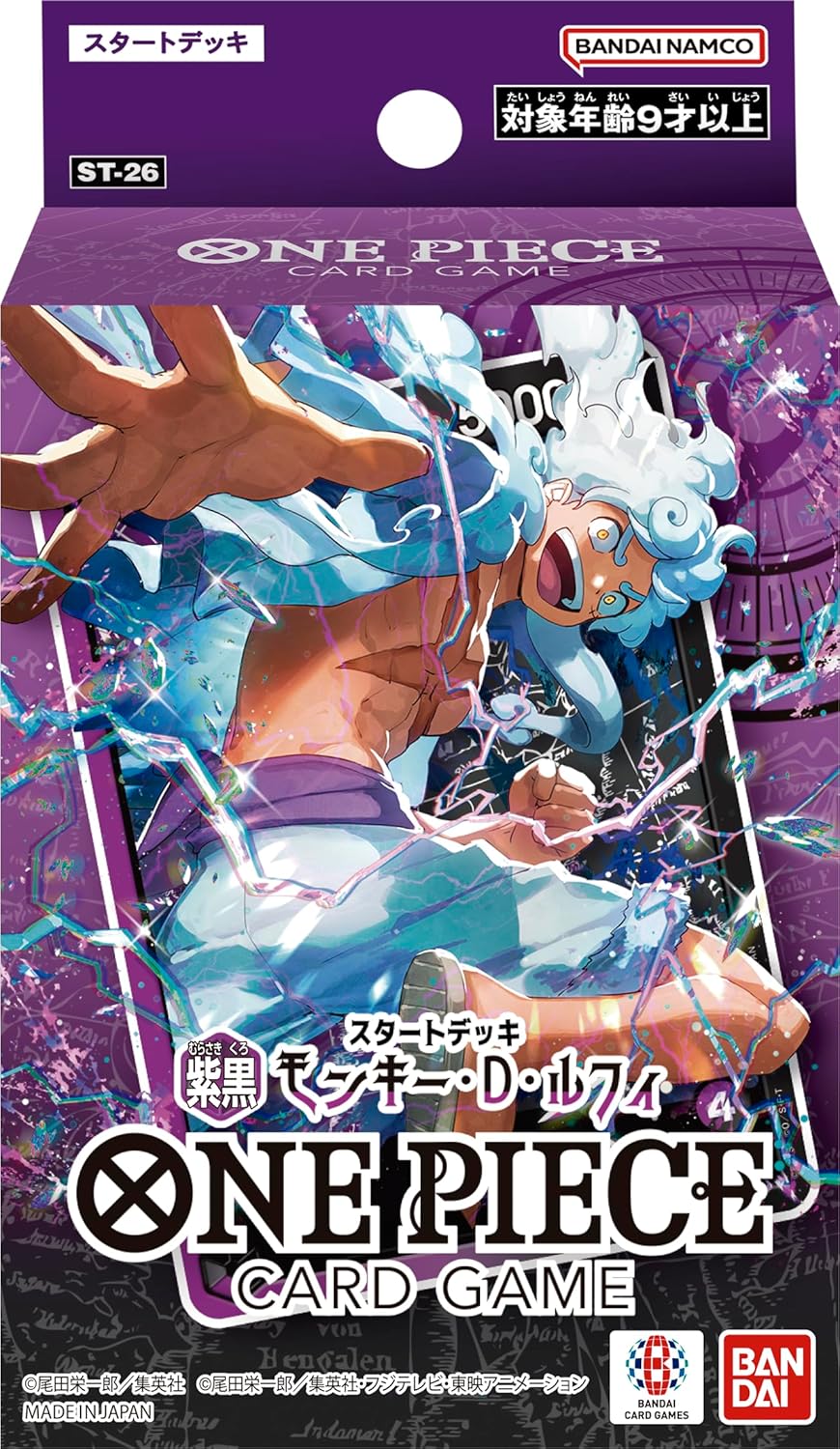
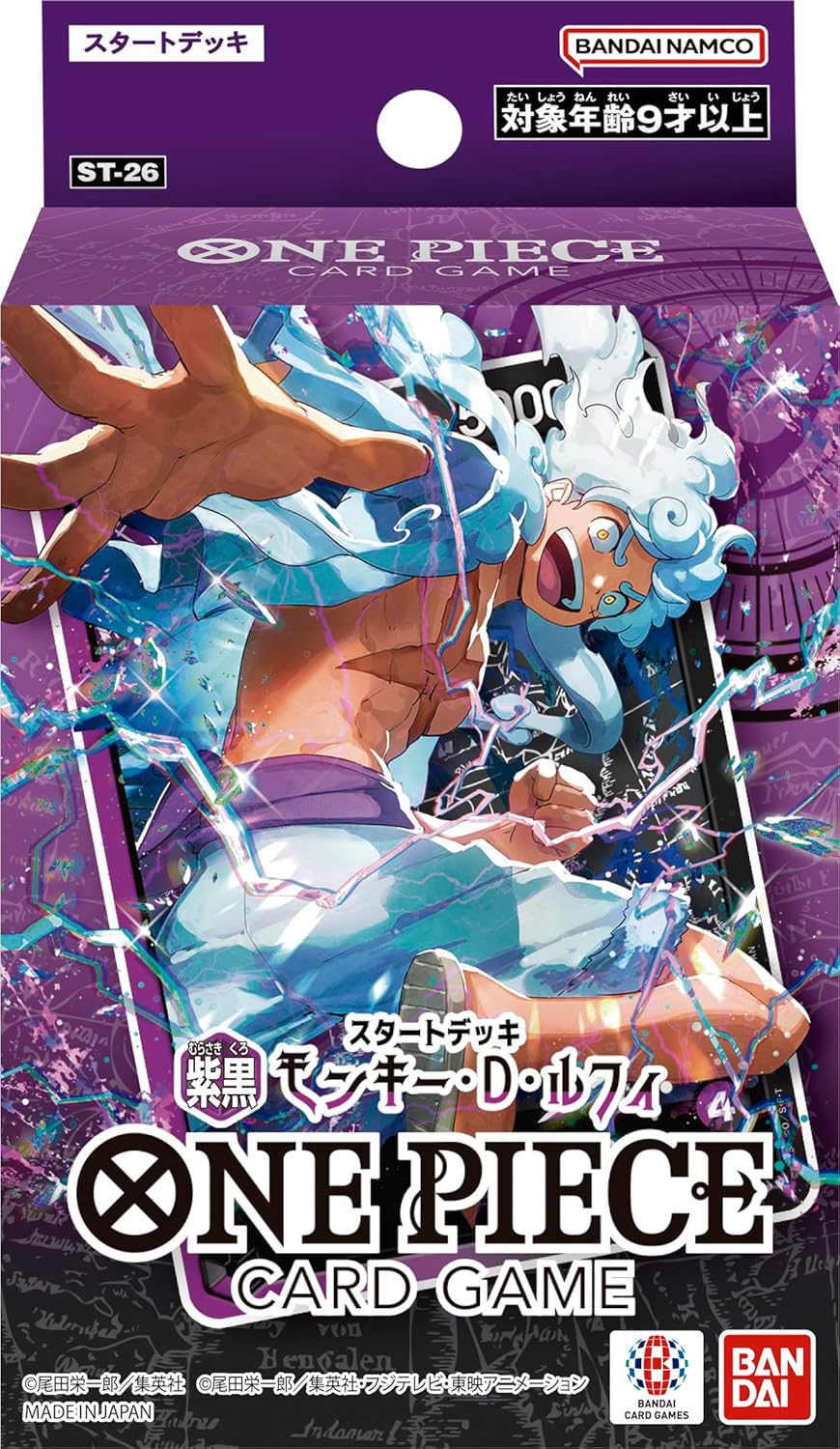
Starter Deck ST-26: Purple/Black Monkey D. Luffy is the pick I’d point most total beginners toward. It teaches the DON!! ramp mechanic in the cleanest possible way — Luffy’s Leader ability accelerates your DON!! count so you can play bigger threats earlier — which is a great, low-complexity introduction to the game’s core resource system. Released June 2025, it includes a bonus OP-11 booster pack. The downside: it’s a two-color ramp deck built around one specific game plan, so it doesn’t teach you much about aggressive tempo decks or control, and if you fall in love with a different playstyle you’ll be starting a second deck from scratch anyway.

Starter Deck ST-28: Green/Yellow Yamato leans midrange — solid stat-lines, straightforward triggers, and enough removal to punish players who overextend. It’s a good second deck if you want to see how a different color pair plays, or a good pickup if you’re planning to play casual games against a friend right out of the box (this particular listing bundles a promo pack in with it). The catch: it’s less beginner-proof than ST-26 in the sense that its trigger and counter timing takes a game or two to click.


If you’d rather sample a wider slice of the card pool before committing to one archetype, ONE PIECE CARD THE BEST Vol.2 (PRB-02) is a premium booster made entirely of reprinted staple cards spanning multiple colors and sets — no random chase-rare gambling, and a good way to stock up on commons and uncommons you’ll actually play. The tradeoff: it typically doesn’t include a new Leader card, so it supplements a starter deck rather than replacing one.

Once You’ve Got the Basics: Booster Boxes and the Current Meta
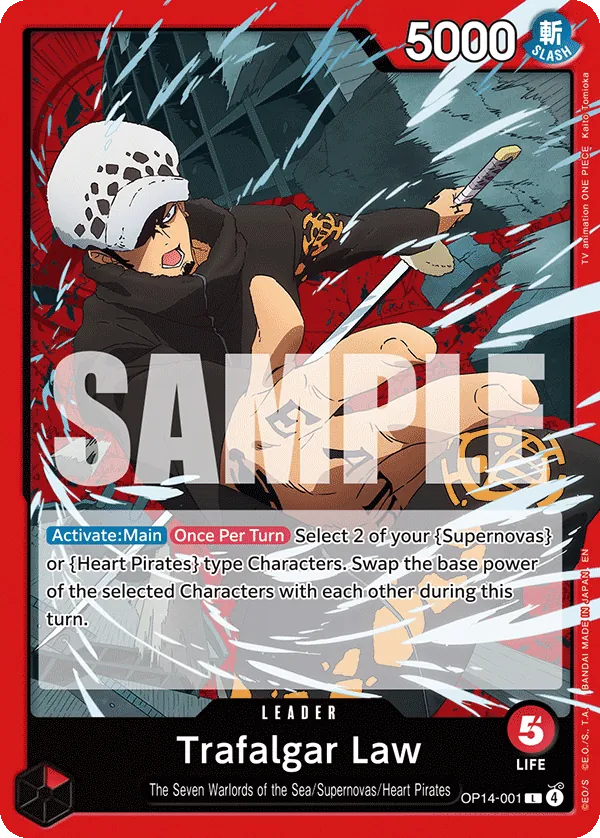
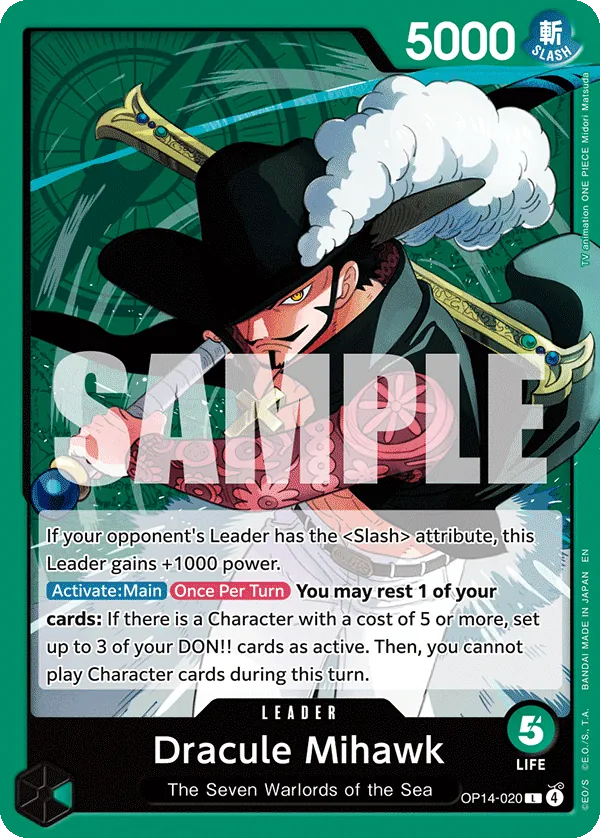
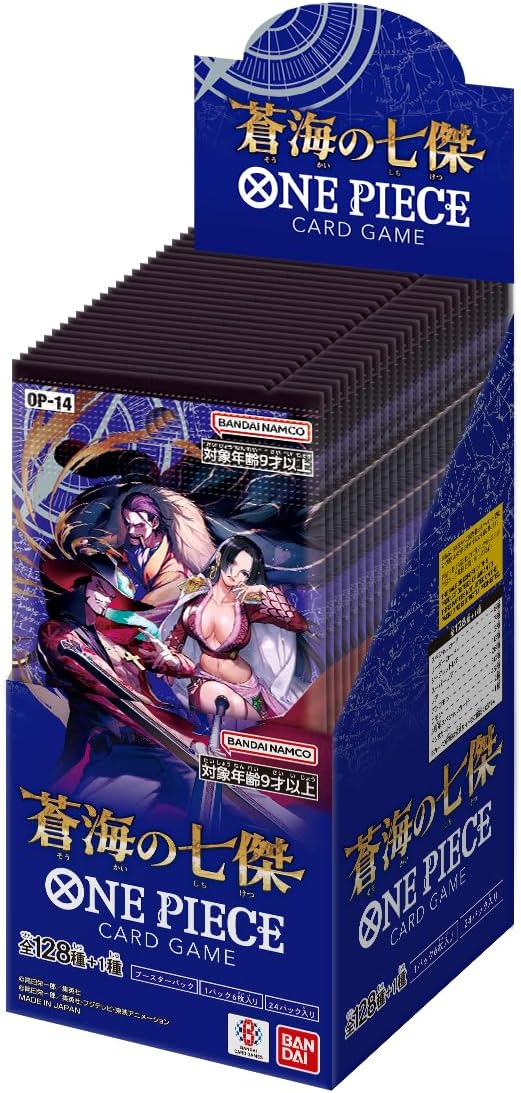
Once you know your favorite color pair, a booster box lets you build out a real, tournament-legal deck around it. OP-14: The Azure Sea’s Seven booster box (Japan release November 2025, English release January 2026) is a solid entry point — it’s a Seven Warlords-themed set with seven new Leaders spanning Trafalgar Law’s technical control shell, Dracule Mihawk’s raw stat-stick beatdown, and Boa Hancock’s trigger-heavy plan, so there’s a playstyle in the box for most preferences.
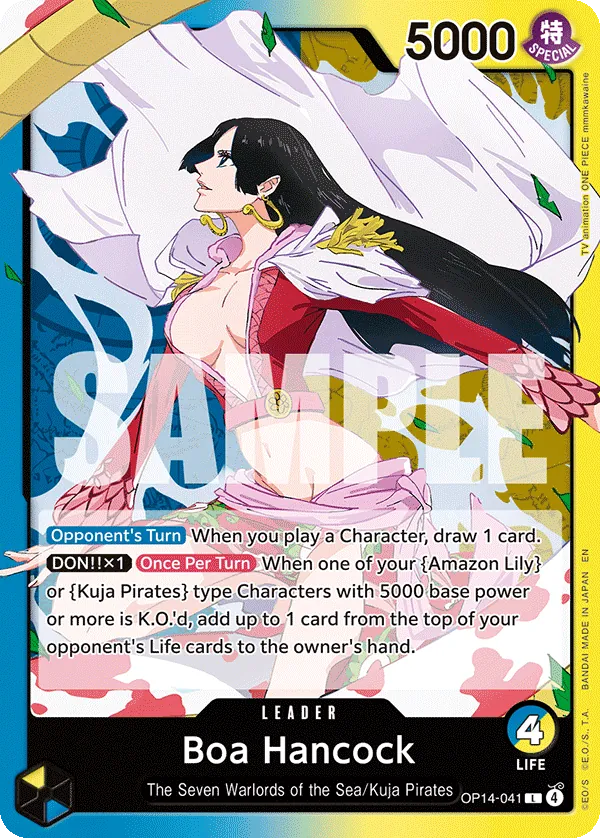

Be aware the format has moved on since then: OP-15 “Adventure on Kami’s Island” (Skypiea arc, released April 2026) and OP-16 “The Time of Battle” (the Paramount War set, released June 12, 2026) have both come out since, and OP-17 “The World’s Strongest Warriors” — the game’s 4th-anniversary set and the first title releasing simultaneously worldwide rather than Japan-first — drops August 28, 2026. Singles support from OP-14-era archetypes has already started rotating out of the very top competitive tier, so buy it to learn the game and build a fun casual deck, not because it’s the current best investment for tournament play.
Comparison Table: Where to Start Your Collection
| Product | Type | Set Code | Approx. Price (Aug 2026)* | Best For |
|---|---|---|---|---|
| Purple/Black Monkey D. Luffy | Starter Deck | ST-26 | ~$12 | Simplest possible first deck, teaches DON!! ramp |
| Green/Yellow Yamato | Starter Deck | ST-28 | ~$23 | Second deck / head-to-head casual games |
| ONE PIECE CARD THE BEST Vol.2 | Premium Booster (curated reprints) | PRB-02 | ~$57/box | Staple commons/uncommons with zero pull-rate gambling |
| The Azure Sea’s Seven | Standard Booster Box | OP-14 | ~$81/box | Building a real, playstyle-flexible deck once you’ve picked a lane |
*Converted at roughly ¥150/$1 from Discovery Japan Mall’s JPY listings; live prices and stock fluctuate, so check the linked listing for the current figure. Card and sealed-product prices move constantly — this isn’t financial advice, just a snapshot as of this writing.
Frequently Asked Questions
Can I use Japanese-print cards from a mall like Discovery Japan in official English tournaments?
Not automatically. BANDAI’s language rules are region-specific — as of the most recent update, English cards became usable in Taiwan and Thailand alongside Japanese ones starting November 2025, and French cards became legal in Europe from February 2025, but that doesn’t mean every region allows mixed-language decks. If you’re planning to play in North American or European Regionals specifically, check your region’s current floor rules before building a tournament deck around Japanese-print singles. For casual play, learning the game, and collecting, language makes zero functional difference — the card text is identical, just printed in Japanese.
What’s the actual difference between a starter deck and a booster box?
A starter deck is a fixed, pre-built 51-card deck plus DON!! cards — you know exactly what you’re getting, and it’s playable straight out of the box. A booster box contains 24 randomized packs, so you’re gambling on which Leaders, SRs, and SECs you pull; you’ll need to buy a Leader card separately (or from a starter deck) since most booster packs don’t include one. Beginners should start with a starter deck, not a box.
Is One Piece Card Game hard to learn compared to Pokémon or Magic?
It’s generally considered one of the faster TCGs to pick up. There’s no mana system to manage (DON!! handles resources automatically at 2 per turn), and the core loop — attack, block, trigger, DON!! — usually clicks within one or two full games. The deckbuilding ceiling (counter ratios, curve, trigger density) is where the real depth lives, and that can take longer to master.
How do I avoid counterfeit or damaged cards when buying online?
Stick to sealed product (starter decks, booster boxes) from reputable retailers rather than loose singles from unverified marketplace sellers, since sealed packaging is much harder to fake convincingly than an individual card. If you do buy singles later, buy from sellers with established grading/return policies and compare the card’s font, foil pattern, and cardstock against verified images from the official card list.
Do I need to worry about cards rotating out and becoming unplayable?
Yes, a little — this changed recently, so a lot of older beginner guides get it wrong. On April 1, 2026, One Piece Card Game introduced its first-ever rotation. Cards carry a Block Number, and Block 1 (OP-01 through OP-04, plus the earliest Starter Decks) rotated out of the Standard format on that date. Everything from OP-05 onward is still Standard-legal.
The good news for a new buyer: nothing you own becomes unplayable. Rotated cards stay fully legal in Extra Regulation, a separate format that allows every card ever printed, and they’re of course still fine for casual play. The practical advice is simply to check the Block Number icon printed on a card before building a Standard deck around it — and if you’re buying sealed product to play with rather than collect, favor OP-05 and newer, which has years of Standard life left.
Takeaway
Start with a $12-25 starter deck to learn the DON!! system without pressure, add a curated product like ONE PIECE CARD THE BEST Vol.2 to round out your card pool cheaply, then graduate to a booster box once you know which color identity you actually enjoy. Skip the temptation to crack a full booster case on day one — with SEC pull rates sitting around 1-in-8-to-12 packs, that’s a collector’s move, not a beginner’s move. Given that this game now consistently outsells at least one Big Three TCG by TCGplayer’s own GMV numbers, it’s a safe bet to invest a weekend in learning it either way.
Related Articles
More Trading Card Game Guides
- Which Naruto TCG Should You Start With in 2026? (Naruto Card Game)
- Dragon Ball Fusion World Beginner’s Guide (2026 Edition) (Dragon Ball Super Card Game)
- Pokémon TCG Beginner’s Guide 2026: What to Buy First (Pokémon TCG)
Comments