
※本ページはプロモーションが含まれます
Disclosure: This post contains affiliate links. If you buy through them, we may earn a commission at no additional cost to you. Learn more.
The short answer: sleeve every card you care about (penny sleeve first if it’s a chase pull), keep played decks in a matte outer sleeve, store bulk and collection pieces in a side-loading binder or a rigid box, and keep all of it in a climate-controlled room away from direct sunlight. That’s the whole system — the rest of this guide is about which layer matters for which card, and which parts are worth spending real money on.
This matters more than it used to. With One Piece Card Game now outselling at least one “Big Three” TCG in quarterly GMV per TCGplayer’s Q2 2026 data, secondary-market prices on OP-01 through OP-04 chase cards have climbed enough that a warped or fingerprinted SEC is a real financial loss, not just a cosmetic annoyance. If you’re sitting on early sets like OP-02 “Paramount War” or the original ST-01 through ST-04 starter decks, those cards are also Block 1 — rotated out of Standard format as of April 1, 2026 — which means their value now leans almost entirely on collector condition rather than tournament utility. Protecting them properly is the only lever you have left.
- Why Card Protection Actually Matters for This Game Specifically
- Card Size and Sleeve Compatibility (Don’t Grab the Wrong Sleeves)
- The Layered Protection System
- Storing a Full Collection: Binders vs. Boxes
- Long-Term Storage: Climate, Light, and the Silent Killers
- Comparison: Protection Options at a Glance
- What About Newly Opened OP-15 or OP-17 Boxes?
- FAQ
- The Takeaway
- More Trading Card Game Guides
Why Card Protection Actually Matters for This Game Specifically
One Piece Card Game leans hard on foil treatment — Super Rares, Secret Rares, Leaders, and the alternate-art “Manga Rare” cards all use heavy foil stamping across a large portion of the card face. Foil and cardstock expand and contract at different rates when humidity shifts, which is exactly why foil-heavy cards warp faster than plain commons. A booster box’s worth of commons can sit in a shoebox for a decade and be fine; a single SEC pull left loose in a binder pocket in a humid room can visibly curl within a few months.
The other factor specific to this game: OP sets ship with genuinely large chase-card price gaps. When OP-16 “The Time of Battle” released in June 2026, its top Manga Rares were pulling true lottery-ticket prices while most of the box was bulk-value commons — that spread means a “protect everything the same way” approach either wastes money on toploaders for $0.25 commons, or under-protects the one card in the box actually worth grading.
Card Size and Sleeve Compatibility (Don’t Grab the Wrong Sleeves)
One Piece Card Game cards are printed at standard size — 63mm x 88mm — the same physical dimensions as Magic: The Gathering and English-print Pokémon cards. That’s genuinely convenient if you already collect other TCGs, since your existing side-loading Pokémon or MTG binder pages will fit One Piece cards without any adjustment.
The mistake new collectors make: grabbing “Japanese size” or “small size” sleeves (around 59mm x 86mm), which are built for older Japanese-only games and are noticeably too tight for One Piece cards. Forcing a card into an undersized sleeve creases the corners and can crack foil over repeated shuffling. Stick to standard-size sleeves — outer sleeves run roughly 66mm x 91mm, and if you’re double-sleeving, inner “penny” sleeves at roughly 64mm x 89mm go between the card and the outer sleeve.
The Layered Protection System
Think of card protection in three layers, and match the layer to how much the card is actually worth to you.
Layer 1 — Penny sleeve (every card that matters). A thin, soft inner sleeve that’s the first barrier against dust, oils from your fingers, and minor surface scratches. Cheap enough (a few cents each in bulk) that there’s no reason not to use one on any SR or higher the moment it comes out of the pack.
Layer 2 — Outer/deck sleeve or toploader. For cards you’re actually playing in a deck, a matte outer sleeve over the penny sleeve is standard — matte finishes shuffle more smoothly and hide micro-scratches better than glossy sleeves. For cards you’re not playing (chase pulls, alt-art Leaders, anything you might submit for grading later), skip the deck sleeve and go straight to a rigid toploader instead, since toploaders resist bending in a way soft sleeves can’t. Bandai makes official One Piece sleeves in rotating numbered sets — the current lineup on the shelf includes Official Card Sleeves 11 (four designs featuring Kuzan, Roronoa Zoro, Corazon, and Boa Hancock; 70 sleeves per design, 280 total), plus older but still-available Official Card Sleeves 8 and Official Card Sleeves 7 sets if you want a specific older character art. Each runs roughly $23-28 at current exchange rates (as of August 2026; JPY/USD fluctuates, so treat this as approximate). The honest downside: official Bandai sleeves are art-forward and matte, which most players like, but they’re not shuffle-tested to the same tournament standard as dedicated sleeve brands like Dragon Shield, so if you’re grinding Regionals-level events with heavy shuffling, a third-party tournament-legal sleeve brand may hold up better over a long season — this mall doesn’t stock those non-Bandai brands, so you’d source them from a local game store or a US TCG retailer.


Layer 3 — Team bag over the toploader. A toploader alone doesn’t actually keep a card locked in place; the card can slide out the open top if the loader gets bumped or turned upside down. A resealable “team bag” (a semi-rigid plastic sleeve just larger than a toploader) closes that gap and is standard practice before a card goes into a box for shipping or long-term storage.
Storing a Full Collection: Binders vs. Boxes
Once you’ve got more than a few dozen protected cards, the question becomes bulk storage.
Side-loading binders are the better default for anything you want to browse or show off. The card slides in from the side rather than the top, so you’re never dragging the top edge of a card across a page pocket every time you flip through it — that repeated top-edge friction is exactly what causes the visible white “binder wear” line collectors dread on older cards. Avoid cheap top-loading page binders sold at general retailers; they save a couple of dollars and cost you card condition over time.
Ringless or strap-style binders beat traditional 3-ring binders for anything you’re not actively adding to. Three-ring designs let pages shift and bunch when the binder isn’t perfectly full, which dents the cards nearest the spine.
Rigid storage boxes (card boxes, “monster boxes,” or the deck box a starter deck ships in) are the right call for bulk commons and uncommons you’re not displaying — anything below SR doesn’t need premium treatment, and spending toploader money on a stack of commons is just wasted budget better spent on protecting the handful of cards that are actually worth something.
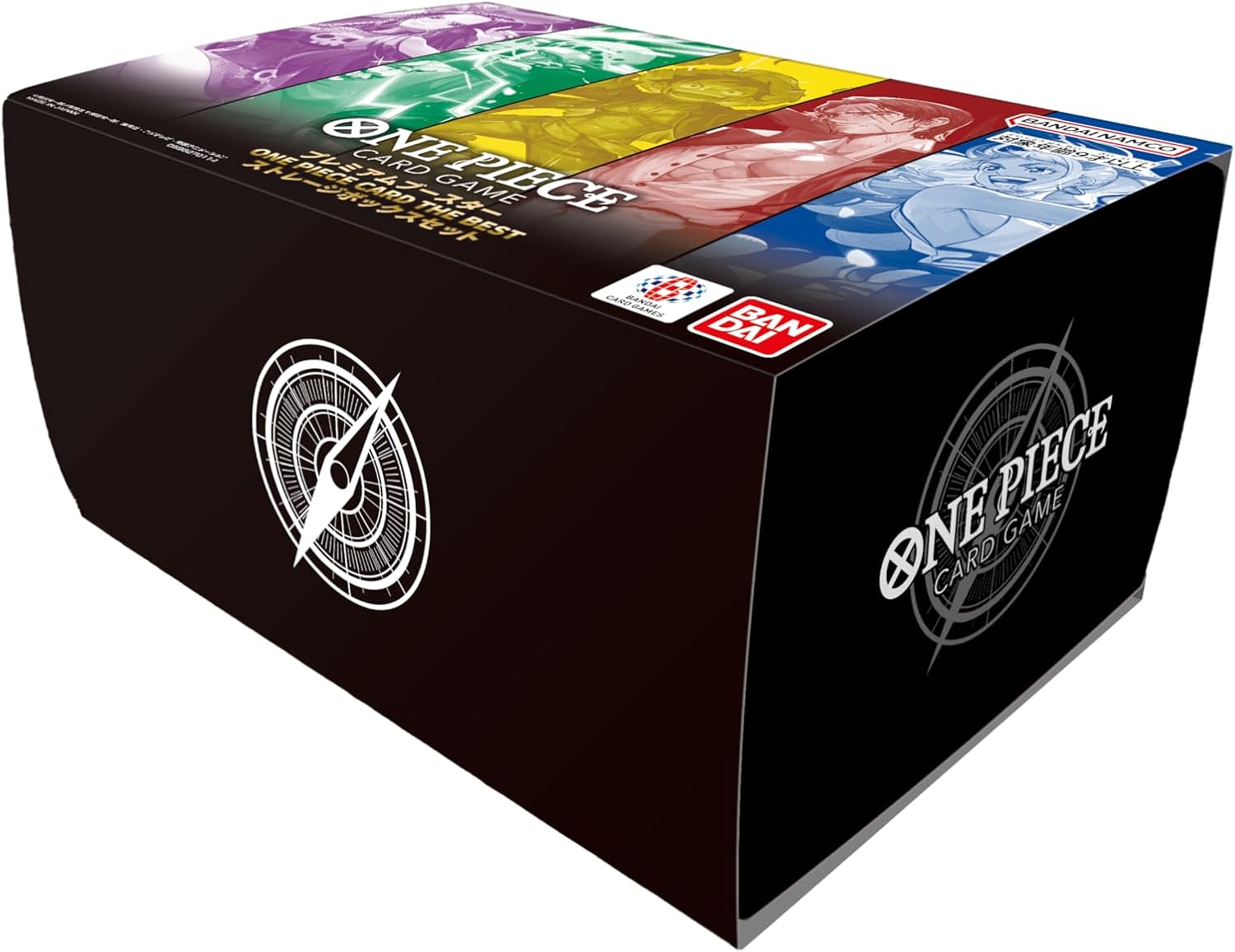
If you’d rather buy an official all-in-one option, Bandai also sells the ONE PIECE CARD THE BEST Storage Box Set (PRB-01) — worth knowing about, though it’s really a premium booster product (5 packs of reprints plus a bonus pack) that happens to ship with a branded storage box, not a standalone empty storage box you can buy on its own. Treat it as “get some good reprints and a nice box as a bonus,” not as a dedicated storage purchase.
Long-Term Storage: Climate, Light, and the Silent Killers
For anything you’re holding for years rather than months — early sets, retired Leader cards, graded submissions you’re waiting to send in — environment matters more than the sleeve brand.
- Temperature: aim for roughly 65-72°F (18-22°C). Avoid garages, attics, and basements, where seasonal swings are the biggest single cause of long-term warping.
- Humidity: target 40-50%. Trapped moisture inside a sealed toploader in a humid room can actually cause mold on the card surface, not just curling — a cheap dehumidifier or a few silica gel packets tossed into closed storage boxes is a real, inexpensive fix.
- Light: UV exposure fades foil and printed color over time. Most toploaders and sleeves offer zero UV protection on their own, so the fix is location, not gear — keep boxes out of direct sunlight and away from south-facing windows.
- Handling: wash and dry your hands before handling raw (unsleeved) cards straight out of a pack. Skin oils are a slow but real contributor to surface degradation on foil cards.
None of this is financial advice — card values fluctuate, and how much you invest in storage should scale with what you’re actually protecting. A $400 OP-01 SEC justifies a $10 toploader and silica gel. A stack of OP-15 commons doesn’t.
Comparison: Protection Options at a Glance
| Product / Method | Best For | Approx. Price (Aug 2026) | Real Downside |
|---|---|---|---|
| Penny sleeve | Every SR+ card, minimum baseline | ~$0.02-0.05 each in bulk | Zero rigidity; no protection against bending alone |
| Official Bandai Sleeves 11 | Playing/displaying a themed deck | ~$23 for 280 sleeves (4 designs) | Not built for heavy tournament-grade shuffling durability |
| Rigid toploader + team bag | Chase pulls, grading candidates | ~$0.30-1.00 per card (3rd-party; not sold by this mall) | Doesn’t fully stop card from sliding without the team bag |
| Side-loading binder | Full collections you browse often | ~$15-40 depending on page count | Ringed versions can shift and dent cards near the spine |
| Rigid storage box | Bulk commons/uncommons | ~$5-15 (3rd-party) | Not display-friendly; harder to sort quickly |
| ONE PIECE CARD THE BEST Storage Box Set | Bonus reprints + a branded box together | ~$97 | It’s a card product first, empty-box purchase second |
What About Newly Opened OP-15 or OP-17 Boxes?
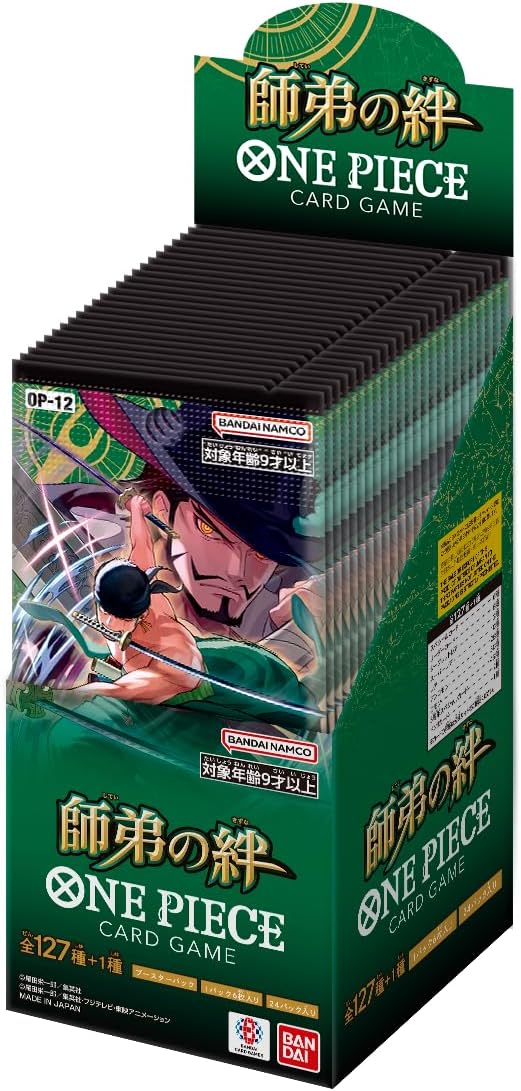
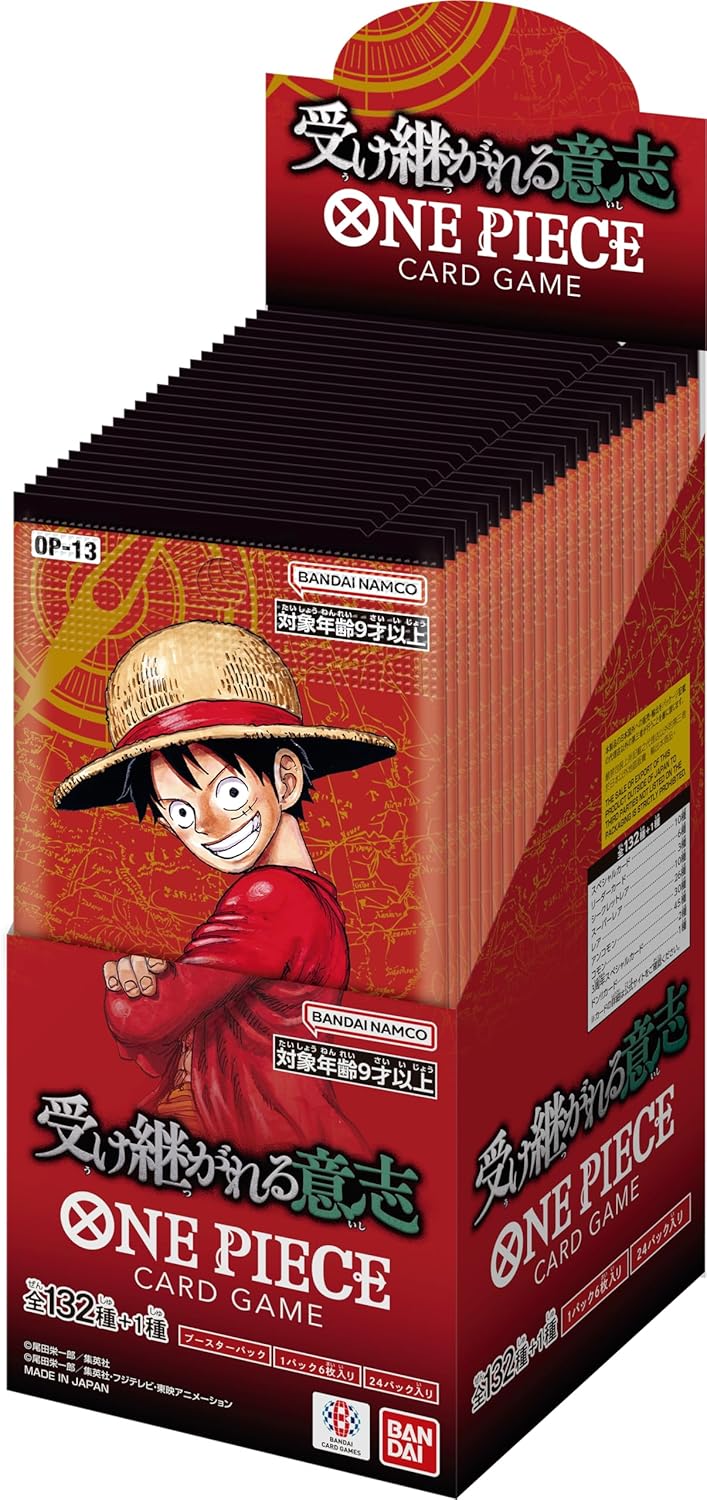
If you’re cracking a fresh box — say, OP-15: Adventure on KAMI’s Island (released in Japan February 28, 2026) or the newly-arriving OP-17 “The World’s Strongest Warriors” (Japan release August 22, 2026, English release August 28, 2026) — the practical routine is: sort as you open, sleeve anything SR or above immediately in a penny sleeve, and don’t leave loose foils sitting stacked on a table under a window while you finish the box. Most warping damage collectors report happened in the first few days after opening, before cards ever made it into permanent storage — not from years of sitting in a binder.

FAQ
Do I need to double-sleeve every card in my One Piece collection?
No. Double-sleeving (penny sleeve inside a deck sleeve) makes sense for SR, Leader, and SEC-tier cards, or anything you’re actively playing in a competitive deck that gets shuffled constantly. Commons and uncommons hold up fine with just a single sleeve or even loose in a rigid storage box, since the marginal value protected doesn’t justify the extra cost and bulk.
Are official Bandai sleeves better than third-party brands like Dragon Shield or Ultra Pro?
Not necessarily “better” — they’re comparable in material quality and look great with official artwork, but third-party tournament brands are generally shuffle-tested more rigorously for competitive play. For casual games and display decks, official Bandai sleeves are a fine, often preferred choice; for a grinding tournament season, many competitive players still reach for a dedicated third-party brand.
Can I use Pokémon or Magic binders and toploaders for One Piece cards?
Yes. One Piece Card Game cards share the same 63mm x 88mm standard card size as Magic and English-print Pokémon, so standard-size sleeves, toploaders, and binder pages made for those games will fit One Piece cards without issue. Just avoid anything labeled “Japanese size” or “small size,” which is built for a different, smaller card format.
Does rotation out of Standard format affect how I should store older cards?
It changes the reason to store them, not the method. Sets that rotate out of Standard (Block 1 — OP-01 through OP-04 and ST-01 through ST-10 — rotated April 1, 2026) are still fully legal in the Extra Regulation format and remain valid collector pieces regardless of tournament legality. If anything, rotated cards deserve more careful storage, since their long-term value depends entirely on condition rather than continued competitive relevance.
Where can I buy real Japanese-print One Piece sleeves and product safely?
Stick to established retailers rather than unverified marketplace listings, especially for loose singles, where counterfeit risk is highest. For sealed Japanese product like official sleeves and booster boxes, a storefront that ships internationally and lists real GTIN/product data — like Discovery Japan Mall — is a safer bet than an anonymous auction listing with no verifiable sourcing.
The Takeaway
You don’t need a $200 storage setup to protect a One Piece Card Game collection properly — you need the right layer of protection matched to what each card is actually worth, a genuinely climate-stable room, and the discipline to sleeve chase pulls the moment they come out of the pack. If you’re just getting into the game, pair this with our beginner’s guide to starting One Piece Card Game for what to buy first, and check our OP-16 “Time of Battle” set review if you want to know exactly which recent chase cards are worth the extra toploader.
More Trading Card Game Guides
- How to Store Dragon Ball Super Card Game Cards Properly (Dragon Ball Super Card Game)
- How to Store & Display Naruto TCG Cards: Sleeves to Binders (Naruto Card Game)
- How to Store Pokémon Cards: Sleeves, Toploaders & Binders (Pokémon TCG)
Comments