※本ページはプロモーションが含まれます
Disclosure: This post contains affiliate links. If you buy through them, we may earn a commission at no additional cost to you. Learn more.
Short version: sort your collection into bulk, mid-value, and chase-rare tiers before you touch a single platform; sell high-value singles and graded slabs on eBay, mid-tier singles through TCGplayer, and dump bulk to a local game store or a Discord/Reddit bulk-lot buyer instead of listing 400 individual commons. Grading only pays off on cards that already sell for $150+ raw, and the single biggest risk to your payout isn’t a lowball offer — it’s shipping fraud and fake “item not received” claims, both of which are preventable with a few habits before you ever print a label.
If you’ve been playing or collecting since OP-01 “Romance Dawn” launched in the US in 2022, or you inherited a binder from a friend who quit after OP-08 “Two Legends,” you’re sitting on a collection in a genuinely hot market — One Piece Card Game has outsold at least one “Big Three” TCG (Pokémon, Yu-Gi-Oh!, or Magic) by GMV for three straight quarters on TCGplayer as of Q2 2026. That demand is good news for sellers, but it also means the marketplace is crowded with both real buyers and scammers who specifically target this genre because cards move fast and prices are volatile. Here’s how to actually get paid.
- Step 1: Sort Before You List Anything
- Step 2: Price-Check Before You Grade or List
- Step 3: Is Grading Worth It Before You Sell?
- Step 4: Choosing Where to Sell
- Step 5: Photography and Listing Basics
- Step 6: Avoiding Scams (Both Sides of the Deal)
- If You’d Rather Reinvest Than Cash Out
- Comparison: What Actually Sells Where
- FAQ
- Takeaway
- Related Articles
- More Trading Card Game Guides
Step 1: Sort Before You List Anything
Don’t open a TCGplayer seller account until you’ve split your collection into three buckets:
- Bulk — commons, uncommons, and duplicate rares worth under $1-2 each. These aren’t worth individual listing fees or your time photographing one at a time.
- Mid-tier singles — Super Rares (SR), non-chase Leaders, and playable staples worth roughly $3-40. This is the bulk of most collections’ actual dollar value.
- Chase cards — Secret Rares (SEC), alternate-art Leaders, Manga Rares, and Special cards that can run anywhere from $50 to several hundred dollars raw, and into four figures for the rarest Manga Rare pulls from sets like OP-16 “The Time of Battle.”
Sealed product (unopened booster boxes, starter decks) is its own category and generally the safest thing to sell, since there’s no condition dispute possible — more on that below.
Step 2: Price-Check Before You Grade or List
Never price off active listings — half of those are aspirational and never sell. Pull up TCGplayer’s “Price Guide” tab for a market/median price, or filter eBay to Sold & Completed listings for the same card in the same condition. Do this for every card in your mid-tier and chase piles; it takes an evening but it’s the difference between listing a card at a realistic price and having it sit for six months, or worse, underselling a card that’s actually a $200 alt-art without realizing it.
As of August 2026, treat every price mentioned in this article as a snapshot, not a guarantee — this isn’t financial advice, and OPCG singles in particular can swing 20-30% around a set release, a Regional result, or a banlist update.
Step 3: Is Grading Worth It Before You Sell?
Grading can meaningfully boost resale value on the right card, but it’s a bad bet on most of a typical collection. PSA restructured its service tiers in February 2026, cutting the cheap bulk options — Value Bulk, Value, Value Plus, and Value Max are all currently unavailable, which leaves Regular at $79.99/card with a roughly 40-50 business-day turnaround as the realistic entry point, plus Express ($149), Super Express ($349), and Walk-Through ($599) for faster service.
Once you add return shipping, insurance, and (if you’re not already a member) PSA’s annual membership, the real all-in cost per card lands closer to $120-180. That math only works if:
- The card is a SEC, Manga Rare, or alt-art Leader that reliably sells for $150+ raw, since grading rarely more than doubles a card’s value and often adds far less.
- The card is in genuinely gem-mint condition — a PSA 8 or lower on a mid-value card can actually sell for less than the raw card once buyers see grading fees baked into your asking price.
The downside: with a 40-50+ business day turnaround at the affordable tier, you’re locking up capital and market timing risk for two to three months. If the card’s price drops or the meta shifts against its archetype while it’s in PSA’s queue, you eat that loss regardless of the grade it comes back with. For anything under roughly $100 raw, skip grading and sell raw in a rigid top-loader with clear condition photos instead.
Step 4: Choosing Where to Sell
No single platform is right for a whole collection — most experienced sellers split it by tier.
| Marketplace | Best for | Approx. fees (2026) | Payout speed | Main downside |
|---|---|---|---|---|
| eBay | High-value singles ($50+), graded slabs, sealed boxes | ~13.25% final value fee + $0.30-0.40/order | 1-2 days after delivery scan | Highest scam exposure (fake tracking, INR claims) |
| TCGplayer | Mid-tier singles, playable staples | ~10.75-13% commission, no listing fee | Weekly/biweekly payout cycle | Seller approval process; weak for bulk/sealed product |
| Local Game Store (LGS) | Instant cash or store credit, bulk | Store typically pays 30-50% of market value | Immediate | Lowest payout by far |
| Whatnot (live auction) | Hype chase cards, new-set alt arts | ~8-12.5% commission + payment processing | A few business days | Requires ID verification and an audience to get good prices |
| Facebook Marketplace / Discord / r/OnePieceTCG trades | Local cash deals, no fees | 0% platform fee | Instant (in person) | Zero dispute protection outside PayPal Goods & Services |
| COMC (consignment) | Hands-off bulk-to-mid singles | Consignment % + processing fees | Slow — cards can sit for months | You lose pricing control once consigned |
For sealed product specifically — unopened boxes, starter decks — eBay and dedicated card-shop consignment tend to net the best price, because buyers are paying a premium for verified-unopened condition rather than grading a single card’s corners.
Step 5: Photography and Listing Basics
- Shoot in natural, indirect light — flash photography creates glare that hides scratches (which buyers will find anyway, then dispute).
- Photograph the actual card, front and back, not a stock image. Buyers increasingly reverse-image-search seller photos to catch stolen/stock images, a known Pokémon-market scam tactic that’s crossed over into OPCG listings too.
- List condition honestly using standard grades (NM/LP/MP/HP) rather than vague terms like “great condition.” Overgrading is the single fastest way to trigger a return-fraud dispute.
- For sealed boxes, photograph the shrink wrap, all four sides, and the manufacturing date/lot sticker — this is your proof against a buyer later claiming the box arrived opened or resealed.
Step 6: Avoiding Scams (Both Sides of the Deal)
This is the part sellers underestimate. A few concrete, recurring scam patterns in the trading card market right now:
- Package redirection / fake tracking (FTID) scams. A buyer manipulates or spoofs a shipping label so tracking shows “delivered” to the wrong address, then files an “item not received” claim. Always use the carrier’s official label straight from the marketplace’s shipping tool, never a label a buyer sends you directly.
- Return fraud. A buyer purchases a genuine high-value card, then returns a damaged or fake substitute claiming “not as described.” Photograph and video the exact card, front and back, including any visible print or edge details, immediately before packing — this is your evidence if a platform dispute opens.
- Resealed “sealed” boxes on the buy side. If you’re also buying (to build a deck, or to hold sealed product as part of a collection), be extra cautious with early sets: OP-01 “Romance Dawn” Wave 1 (identifiable by blue outer packaging) has sold for as much as $5,000+ per box on the secondary market, which makes it a prime target for resealing scams. Buy sealed high-value product only from a marketplace with buyer protection or an established retailer.
- Off-platform payment requests. Any buyer who wants to move a deal to a bank transfer, gift cards, or crypto “to save on fees” is a red flag — use payment methods that keep dispute/chargeback protection (PayPal Goods & Services, marketplace-native checkout) for anything of real value.
If You’d Rather Reinvest Than Cash Out
Not every seller is cashing out completely — a lot of collectors sell off duplicates and cards from archetypes they’ve dropped, then reinvest into fresh sealed product for a set they’re actually chasing. If that’s you, it’s worth knowing that sealed booster boxes hold value differently than singles: BANDAI’s OP-06 “Twin Champions” is already out of print and trading well above its original MSRP on the secondary market, which is the same appreciation pattern that made early OP-01 boxes so valuable — a preview of what happens to today’s in-print boxes a few years out.
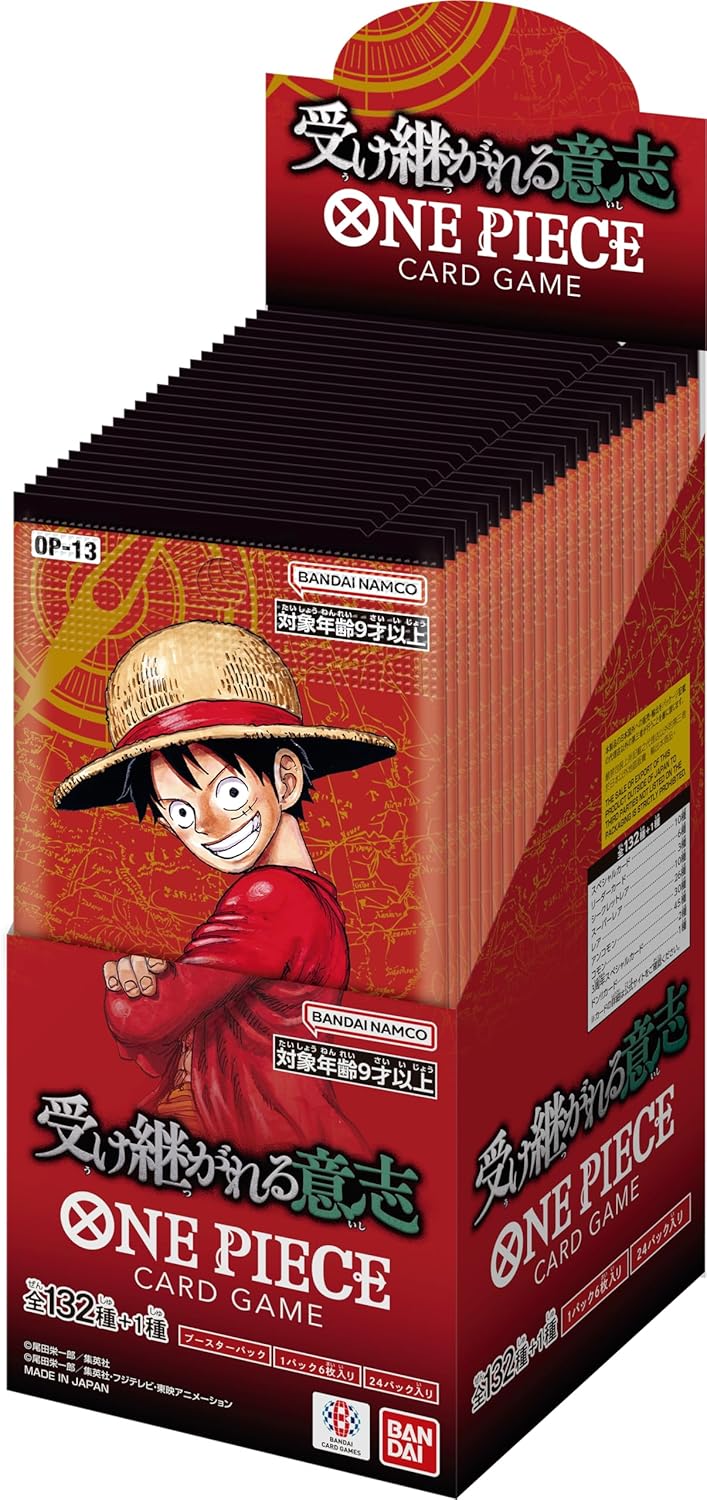
For readers restocking rather than fully exiting, Discovery Japan Mall (this blog’s storefront partner for genuine Japanese-import product) currently lists real sealed stock including the OP-13 Inherited Will Booster Box (around ¥40,918, roughly $255 at current exchange rates), the more budget-friendly OP-14 The Seven Heroes of the Blue Sea Booster Box (around ¥12,127, roughly $76), and the reprint-heavy PRB-02 ONE PIECE CARD THE BEST Vol.2 (around ¥8,519, roughly $54) if you want a lower-variance box built around already-known hits. Note these are Japanese-language product and JPY-denominated import prices that shift with exchange rates and stock — always check the live listing before you buy, not this article’s snapshot.


If you haven’t decided which format is worth your money in the first place, our booster box vs. starter deck breakdown covers the actual math by goal.
Comparison: What Actually Sells Where
| Item type | Best venue | Realistic payout vs. market price | Time to sell |
|---|---|---|---|
| Bulk commons/uncommons | LGS trade-in or bulk-lot buyer | 10-30% of guide value | Instant |
| Mid-tier SR singles ($3-40) | TCGplayer | 80-90% after fees | Days to weeks |
| Chase SEC/alt-art/Manga Rare (raw) | eBay | 85-90% after fees | Days |
| Graded chase cards (PSA 9-10) | eBay or Whatnot auction | 90%+, often above raw guide price | Days, plus grading turnaround upfront |
| Sealed boxes/starters | eBay or dedicated card shop consignment | 90%+ if verified unopened | Days to weeks |
FAQ
Is it worth grading One Piece cards before selling?
Only for cards already worth roughly $150+ raw in near-mint condition. Below that, PSA’s current all-in cost (roughly $120-180 per card including shipping and fees at the affordable Regular tier) often eats most or all of the value grading would add, and you lose 40-50+ business days of market timing in the process.
Where’s the safest place to sell a One Piece TCG collection?
For anything of real value, use a marketplace with built-in buyer/seller protection and tracked, signature-required shipping — eBay and TCGplayer both qualify. Avoid off-platform payment methods (bank transfer, gift cards, crypto) even if a buyer offers a better price, since you lose all dispute protection.
How do I know if an old OP-01 booster box is genuine and not resealed?
Check the manufacturing lot number/date sticker against BANDAI’s known production runs, inspect the shrink wrap seam for double-wrapping (a common resealing tell), and when possible buy from a seller with verifiable purchase history or an established retailer rather than an anonymous marketplace listing — high-value Wave 1 OP-01 boxes are a known target for this scam.
Should I sell my collection as one bulk lot or piece by piece?
Piece by piece nets more money for anything above bulk-tier value, but takes far more time. A bulk lot sale (to an LGS or a dedicated bulk buyer) is faster and better for collections that are mostly commons/uncommons where the per-card time cost of individual listing isn’t worth it.
Does selling cards affect a deck’s tournament legality if I keep playing?
No — selling cards from your collection doesn’t affect legality of cards you keep. What does matter for legality is BANDAI’s periodic banlist updates and set rotation for Regional-level play, which is separate from anything about how or where you sell.
Takeaway
Selling a One Piece Card Game collection well comes down to three things: sort by value tier before you list anything, match each tier to the platform that actually pays best for it (bulk to an LGS, mid-tier to TCGplayer, chase cards and sealed product to eBay), and treat shipping/payment scams as the real threat — not lowball offers. Grade selectively, price off sold comps rather than wishful listings, and if you decide to stay in the hobby rather than exit completely, sealed product from a set you actually want to open is usually a better use of that cash than chasing whatever’s hyped that week.
Related Articles
More Trading Card Game Guides
- How to Sell Your Dragon Ball TCG Collection Safely (Dragon Ball Super Card Game)
- Where to Sell Your Pokémon Card Collection (2026) (Pokémon TCG)

Comments