※本ページはプロモーションが含まれます
Disclosure: This post contains affiliate links. If you buy through them, we may earn a commission at no additional cost to you. Learn more.
Short answer: Japanese-print boxes are cheaper per pack, arrive first, and carry every early promo — but in North America, most of Europe, and Oceania you legally need English cards to play in sanctioned tournaments, and Japanese product carries real import shipping and customs costs. Which one you should buy depends entirely on whether you’re collecting, playing locally, or both.
This question comes up constantly in the community, especially with OP-17 “The World’s Strongest Warriors” launching in Japan on August 22, 2026 and in English markets just six days later on August 28 — the tightest gap between the two releases in the game’s history. That gap makes this a good moment to actually break down what’s different, what isn’t, and where the money and the rules actually land.
The Quick Answer: What’s Actually Different
At the mechanical level, almost nothing. A Japanese-print Luffy Leader and an English-print Luffy Leader from the same set (say, OP-12 “Bond Between Master and Disciple”) have identical stats, identical effects, and identical rarity slots. BANDAI runs a single global card database, and en.onepiece-cardgame.com publishes official errata that apply to both language versions. The differences that matter are:
- Release timing. Japan gets every mainline set (OP-xx), Extra Booster (EB-xx), Premium Booster (PRB-xx), and Starter Deck (ST-xx) first — historically by weeks or months, though OP-17 has narrowed that gap to under a week.
- Price per pack. A Japanese pack runs roughly ¥240 MSRP (about $1.60 at current exchange rates), versus the $4.99 MSRP U.S. players pay per English pack, for the same six cards per pack. A full Japanese booster box (24 packs) typically retails for the yen equivalent of $35-55 before shipping; the same box carries a $110-120 MSRP domestically at U.S. game stores.
- Exclusive promos. Japan gets tournament prize cards, convenience-store collabs, and regional promos that frequently never see an English print run at all.
- Card stock and cut. Community reports (and BANDAI’s own past statements) note Japanese cards sometimes run a marginally smaller/tighter cut and different card-stock finish than English prints — noticeable mainly to players who sleeve competitively, not something that affects gameplay.
- Flavor text and cultural references. Japanese cards occasionally carry puns, wordplay, or meme references in flavor text that get flattened or reworded in the English localization, since literal translation wouldn’t land the same joke.
None of this makes one version “better” at the table. It’s a collecting and cost-of-entry question, not a power-level one.
Why Collectors Actually Chase Japanese Prints
Three real reasons drive demand, and none of them are hype:
1. They’re first to market. Chase cards — Secret Rares (SEC), Manga Rares, and Special (SP) cards — hit the Japanese secondary market weeks before English collectors can even open a pack. If you want OP-17’s Loki (OP17-119, one of the set’s two confirmed SEC cards) or the new Anniversary Manga Rares the moment they’re revealed, you’re watching Japanese box breaks, not English ones.
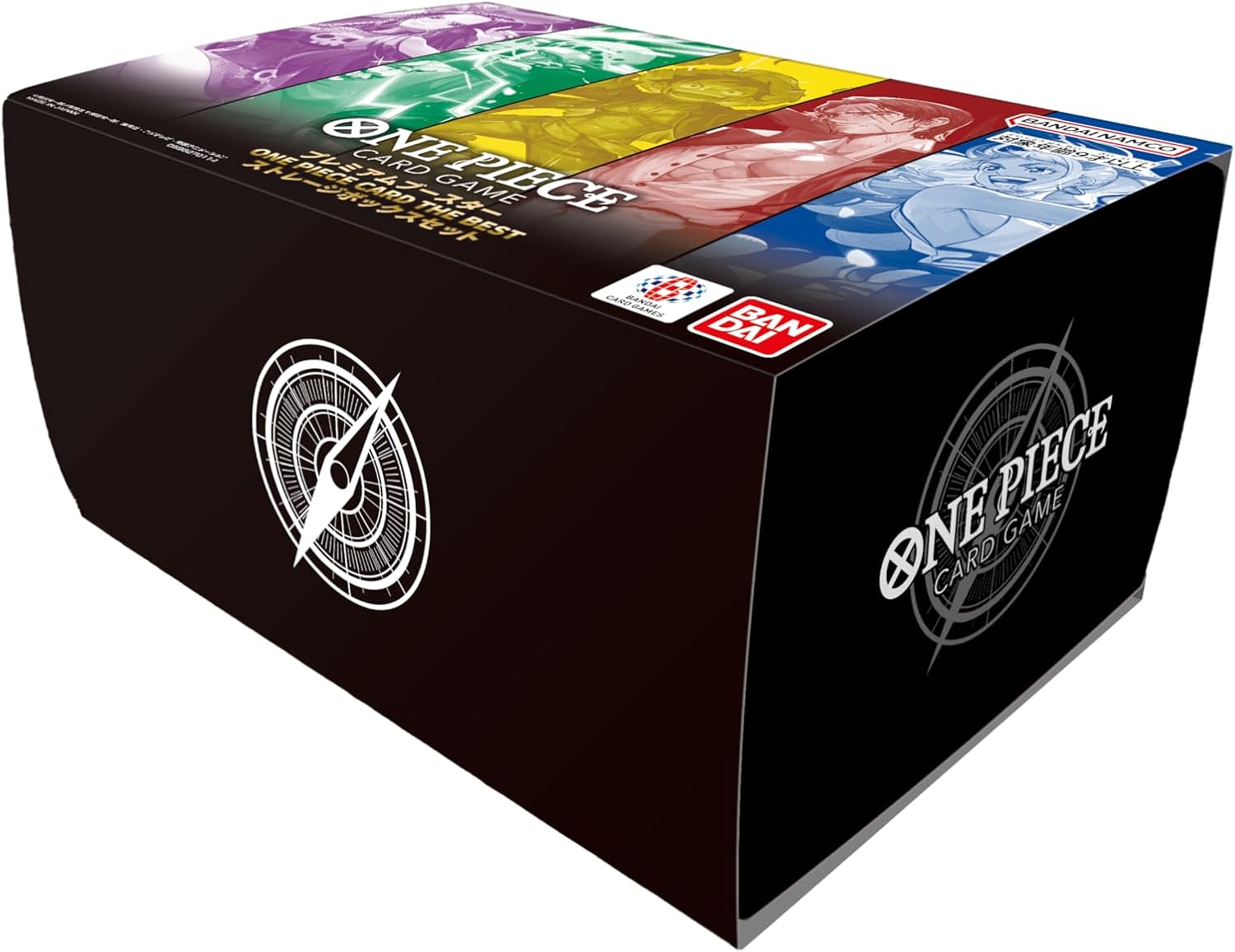
2. Exclusive product only exists in Japanese. Things like the ONE PIECE CARD THE BEST premium booster line, certain Extra Boosters, and most tournament prize promos have historically launched Japan-only, with no guaranteed English counterpart ever printed. If a specific alt-art or promo card only exists in Japanese, importing is the only way to own it — full stop.
3. Raw cost per card. Even after shipping, a Japanese booster box usually lands cheaper landed-cost than an English box bought at U.S. MSRP, because the yen-denominated print run undercuts the dollar MSRP by a wide enough margin to absorb $15-30 in international shipping. That’s the whole reason Japan-focused importers exist.
The catch: none of this is guaranteed value. Prices on Japanese chase cards can spike hard right after a set drops and correct just as hard once English supply catches up and speculative demand cools — this happened with several OP-11 Godspeed Fist alt-arts in 2025, which posted 40%+ pullbacks within two months of release. Card prices fluctuate constantly and nothing here is financial advice — treat Japanese chase cards as a collecting decision, not an investment plan.
Tournament Legality: Can You Actually Play With Japanese Cards?
This is where a lot of new players get tripped up, and the official rule is more specific than “just use whatever.” Per BANDAI’s own language rules page, each region has a designated legal language for sanctioned play:
| Region | Legal deck language(s) |
|---|---|
| North America, Latin America, Oceania | English only |
| Japan | Japanese only |
| Hong Kong, Southeast Asia | Japanese |
| Taiwan, Thailand (as of Nov. 28, 2025) | Japanese or English, mixed decks allowed |
| Europe | English (or English + French, as of Feb. 7, 2025) |
| Mainland China | Simplified Chinese only |
| Korea | Korean only |
So if you’re playing at a Regional, a Championship, or even a Store Tournament (locals) in the U.S., UK, Canada, or Australia, your deck needs to be built from English-legal cards. A gorgeous Japanese alt-art SEC pulled from an imported box cannot be sleeved into your tournament deck at a U.S.-sanctioned event — it’s a great display piece or trade asset, not a playable copy, unless you’re specifically playing in one of the bilingual-legal regions above. Casual kitchen-table games are obviously a different story — play with whatever your playgroup agrees on.
How to Import Japanese One Piece Cards Safely
If you’ve decided the earlier chase cards and lower per-pack cost are worth it, here’s how to do it without getting burned:
- Buy sealed product from an established importer, not random marketplace singles. Sealed booster boxes are self-verifying — a factory-sealed box from a reputable Japan-export retailer is about as safe as this hobby gets. Loose singles bought from no-feedback sellers on eBay, Facebook groups, or unfamiliar storefronts are where counterfeit risk actually concentrates; look for high-resolution printing, correct card-back color saturation, and consistent seller feedback before buying loose cards.
- Factor in shipping and possible customs/import fees, which can add $15-30+ per box depending on your country and how the shipment is declared. This is exactly why yen-MSRP savings don’t always translate one-to-one into landed savings — do the full math before assuming Japanese import is automatically cheaper.
- Know what you’re buying it for. If it’s a display/collection piece or you’re playing in a Japanese-legal region, buy Japanese. If you need tournament-legal cards for a U.S. or European event, buy English and treat Japanese boxes as a separate collecting hobby.
- Check current stock through a mall that actually specializes in Japan-to-overseas shipping, since availability on recent sets shifts fast. Discovery Japan Mall is one option that ships real BANDAI-sealed One Piece Card Game product internationally — worth checking their current One Piece Card Game listings before you commit to a specific box.
Current Japanese Boxes Worth Knowing About
Here’s a snapshot of real Japanese-print One Piece Card Game boxes and their approximate JPY listing price as of August 2026 (prices fluctuate — check current listings before buying):
| Set | Code | Format | Approx. price (JPY) |
|---|---|---|---|
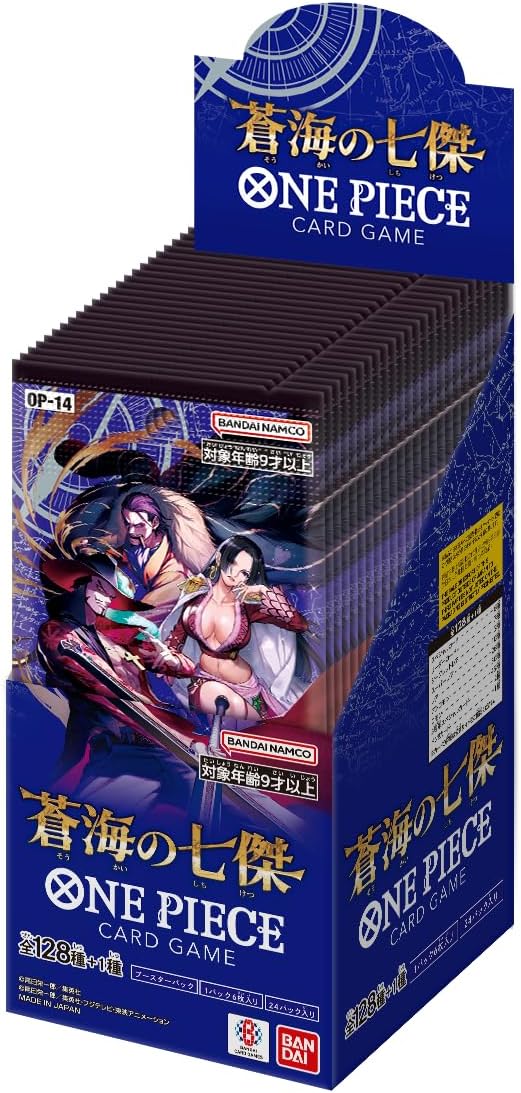
| The Seven Heroes of the Blue Sea | OP-14 | Booster box, 24 packs | ~¥12,100 |
| Bond Between Master and Disciple | OP-12 | Booster box, 24 packs | ~¥13,400 |
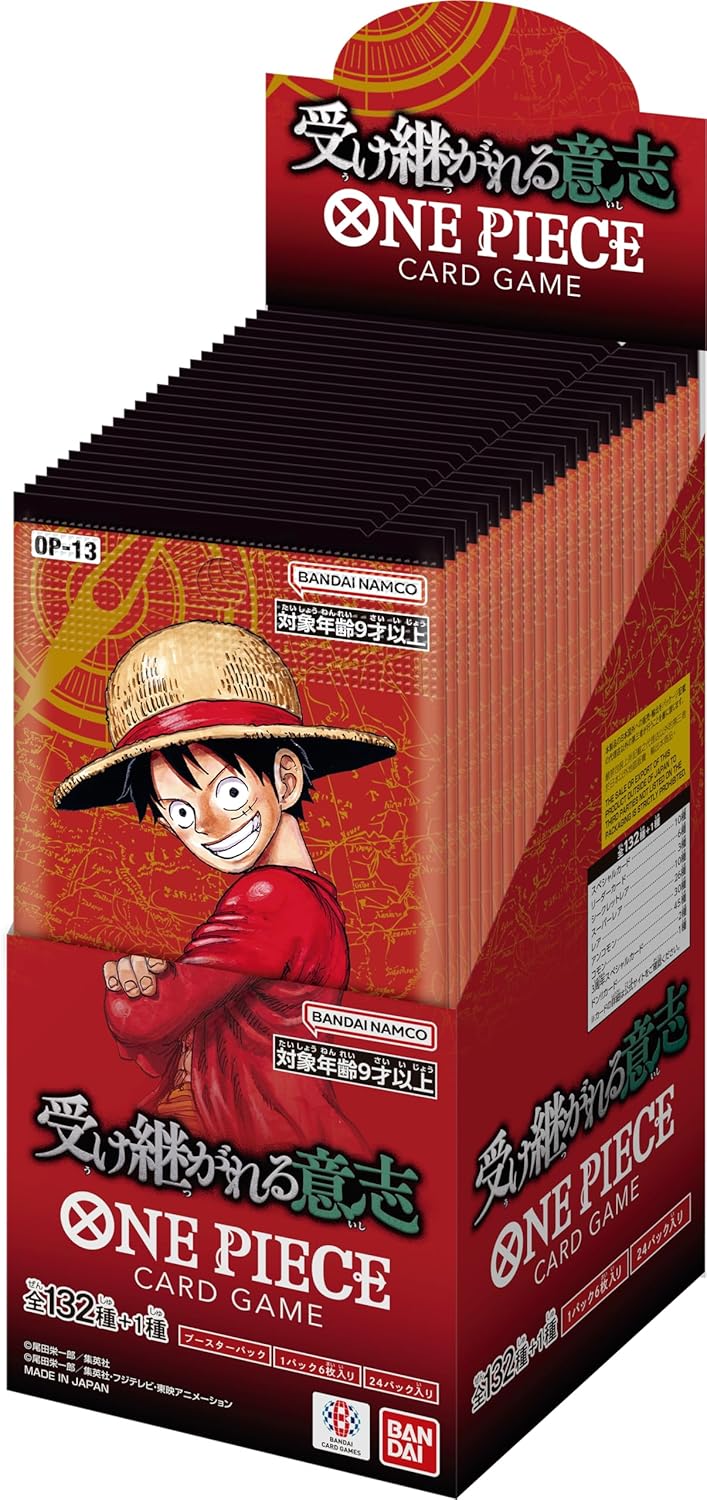
| Carrying On His Will | OP-13 | Booster box, 24 packs | ~¥40,900 |
| Godspeed Fist | OP-11 | Booster box, 24 packs | ~¥31,000 |
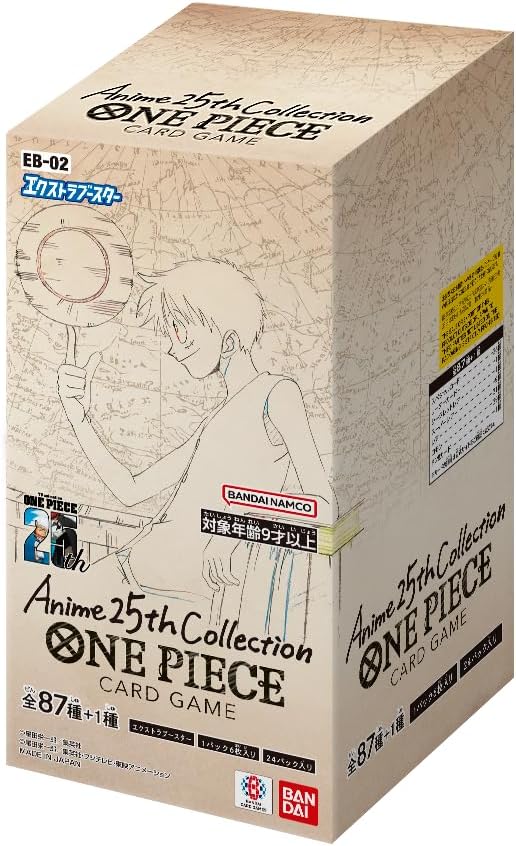
| Extra Booster: Anime 25th Collection | EB-02 | Booster box, 24 packs | ~¥21,100 |
| Extra Booster: Memorial Collection | EB-01 | Booster box, 24 packs | ~¥24,600 |
| ONE PIECE CARD THE BEST | PRB-01 | Premium booster, 10 packs | ~¥17,300 |
| ONE PIECE CARD THE BEST Vol.2 | PRB-02 | Premium booster storage box | ~¥15,400 |
| Official Card Sleeves 7 (4-pack set) | Accessory | Sleeves | ~¥4,500 |
Box photos, in the same order as the table above:

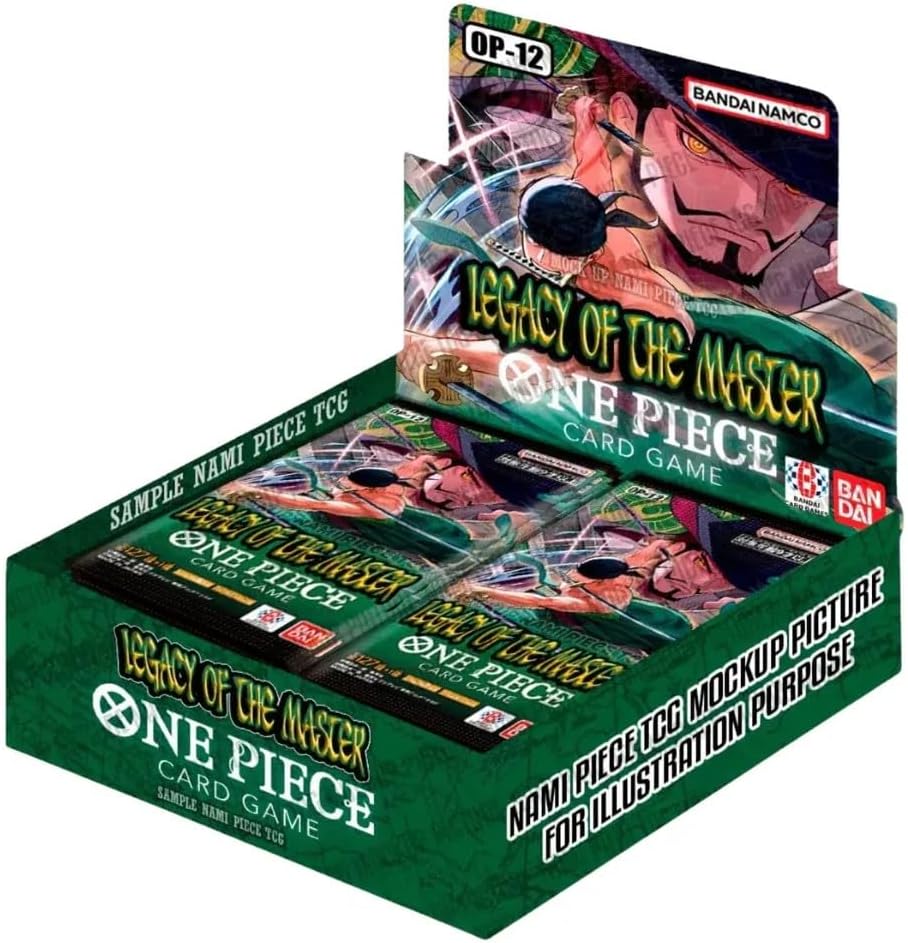


Note that OP-13 in this list carries a noticeably higher price than its neighbors — that’s a real signal, not a typo; Carrying On His Will has been running hot on the secondary market due to a handful of chase alt-arts, so shop around rather than assuming every Japanese box is automatically the “cheap” option. OP-16 “The Time of Battle” and OP-17 “The World’s Strongest Warriors” boxes weren’t yet listed at this importer as of this writing since OP-17 hasn’t released in Japan yet — check back close to the August 22 Japan street date, since Extra Boosters and mainline sets typically appear in import catalogs within days of release. If you want a deeper breakdown of what’s actually inside OP-16, we covered that set card-by-card in our OP-16 The Time of Battle set review.
FAQ
Are Japanese One Piece cards legal in sanctioned English-region tournaments?
No, not in North America, Latin America, Oceania, or standard European events — those regions require English-print cards per BANDAI’s official language rules. The exceptions are Taiwan and Thailand, which allow mixed Japanese/English decks as of November 28, 2025, and Europe, which allows English/French mixing as of February 2025.
Are Japanese One Piece cards worth more than English ones?
It depends on the specific card and timing. Fresh chase cards (SEC, Manga Rare) are often priced higher in Japanese right after release simply because English copies don’t exist yet. Once the English version releases weeks or months later, prices on both versions tend to converge, though certain Japan-exclusive promos never get an English print and can hold a permanent premium. Prices move fast — check a live marketplace before assuming any number here still holds.
Can I mix Japanese and English cards in the same deck for casual play?
For casual, at-home games, sure — most playgroups don’t care as long as everyone agrees. For any sanctioned event (Regionals, Championships, most store locals), you need to follow your region’s designated language, per the official BANDAI rule.
Is it safe to buy Japanese One Piece booster boxes online?
Sealed boxes from an established Japan-export retailer are low-risk since factory sealing is hard to fake convincingly at scale. The real counterfeit risk sits with loose singles from unverified sellers — that’s where you need to check print quality, card-back saturation, and seller feedback closely.
Why did OP-17 release so close together in Japan and English regions?
BANDAI has been steadily narrowing the release gap between Japanese and English One Piece Card Game sets over the game’s first four years. OP-17 “The World’s Strongest Warriors,” releasing August 22, 2026 in Japan and August 28, 2026 in English markets, is the closest the two versions have ever launched — down from a gap that used to run several months in the game’s early sets.
Takeaway
Japanese and English One Piece Card Game cards are mechanically identical, so this isn’t a power question — it’s a cost, timing, and legality question. If you’re chasing early SEC pulls, Japan-exclusive promos, or just want more packs per dollar and don’t mind the wait and shipping cost, importing sealed Japanese boxes makes sense. If you’re building a deck for a U.S. or European tournament, buy English, full stop — a beautiful imported alt-art won’t get you into a sanctioned bracket. A lot of serious collectors end up doing both: English for the playset, Japanese for the display case.
This article discusses card prices and market trends for informational purposes only. Prices for both Japanese and English One Piece Card Game product fluctuate regularly — nothing here is financial advice.
More Trading Card Game Guides
- Japanese vs English Dragon Ball Fusion World Cards Compared (Dragon Ball Super Card Game)
- Japanese vs. English Pokémon Cards: Should You Import? (2026) (Pokémon TCG)
- Every Naruto Card Game Ever Made: The Full Timeline (Naruto Card Game)
Comments