※本ページはプロモーションが含まれます
Disclosure: This post contains affiliate links. If you buy through them, we may earn a commission at no additional cost to you. Learn more.
Short answer: statistically, no — a One Piece Card Game booster box is a negative expected-value purchase on average, especially at current US street prices that often run well above MSRP. You’re paying for a shot at a Secret Rare or Manga Rare, not a guaranteed return on the box price. That doesn’t mean boxes are a bad buy — the fun, the guaranteed playables, and the (real, if long) shot at a $100+ chase card are worth something too — but you should crack a box knowing the math, not hoping around it.
This isn’t a knock on the game. Every booster-format TCG works this way, and One Piece Card Game (BANDAI, based on Eiichiro Oda’s manga) is currently one of the hottest products on the shelf — per TCGplayer’s Q2 2026 GMV data, it has now outsold at least one “Big Three” TCG member for three straight quarters. High demand plus scarce chase cards is exactly the environment where understanding pull-rate math actually matters, because it’s the difference between buying with your eyes open and just gambling on cardboard.
How One Piece Card Game Rarities Actually Work
Every mainline set (OP-01 through the current OP-16 “The Time of Battle”) uses the same base rarity ladder: Leader (L), Common (C), Uncommon (UC), Rare (R), Super Rare (SR), Secret Rare (SEC), and Special (SP). Layered on top of that are premium print treatments — Alternate Art parallels, Manga Rare (monochrome manga-panel art with holo foil, introduced in OP-06), and Treasure Rare (TR), a top-end foil tier that debuted in Japan with OP-16.
Every booster pack costs $4.99 MSRP and contains 6 cards; a box holds 24 packs (144 cards) for an MSRP of roughly $120. In practice, US retail boxes for a hot new set like OP-16 have been selling for $200-$215 when in stock, per listings tracked in August 2026 — nearly double MSRP, which matters a lot for the math below.
The Real Odds, Set by Set
Here’s the catch that catches a lot of new players off guard: BANDAI does not publish official pull rates for One Piece Card Game. Unlike some other Japanese card games that print inclusion ratios on their spec sheets, BANDAI has never released official odds for OPCG boosters. Every number below — including the ones in this article — comes from community tracking: large-scale box-opening data aggregated by sites like TCGTalk and Japanese card shops that log thousands of box breaks. Treat these as well-informed estimates, not guarantees.
With that caveat firmly in place, here’s the rough consensus for a standard 24-pack box:
| Rarity | Estimated odds per box | Notes |
|---|---|---|
| Common / Uncommon | Guaranteed, most of the box | Deck-filler, essentially no resale value |
| Rare (R) | ~7-8 per box | Playable, rarely worth more than a dollar or two |
| Leader (L) | ~3-4 per box | Needed to build new decks; value depends on the specific Leader’s meta relevance |
| Super Rare (SR) | 3-8 per box | Trackers disagree by nearly 2x here depending on methodology — some log ~1 SR every 3 packs (~8/box), others closer to 3-4/box |
| Secret Rare (SEC) | Roughly 1 in 3 boxes to 1 per box | Varies by set; OP-16 specifically tracked at about a 32% chance per box in Japanese case-break data |
| Special (SP) / Super Parallel | ~1 per case (12 boxes) | Case-level hit, not a per-box expectation |
| Manga Rare / Treasure Rare | ~1 per 2-6 cases | The true chase tier; collectors who’ve opened 100+ boxes sometimes report never pulling one |
One detail that helps explain the SEC variance: Japanese community trackers have documented that OPCG boxes are printed in one of three fixed “patterns” — a box either contains 2 parallel cards and 0 SEC (~25% of boxes), 1 parallel and 0 SEC (~42%), or 0 parallels and exactly 1 SEC (~33%), according to breakdown data compiled by Toreca Begin. That’s roughly consistent with the ~32% SEC rate independently tracked for OP-16, which is a decent cross-check that the two data sets are measuring something real rather than two people’s bad luck.
Chase-Card Math: What “Expected Value” Actually Means
Expected value (EV) is just the average dollar return you’d get if you opened the same box thousands of times and averaged the results. It’s not a promise about your one box — you could open a box and immediately pull an SEC worth $150, or you could open ten boxes and whiff on every SEC and Manga Rare entirely. EV tells you what happens on average, which is the only honest way to judge whether a box is “worth it.”
Let’s walk through OP-16 “The Time of Battle” (released in Japan May 30, 2026; English release June 12, 2026) as a real example, since it’s the current mainline set with the most tracked data. OP-16 is the first set to feature three Admiral Manga Rares in one release — Sakazuki, Kuzan, and Borsalino — with Sakazuki alone reported around $180-240 on the English secondary market shortly after release. Its two SEC cards (Ace and Blackbeard) launched around $180-250 and settled to a $90-140 floor within about a month as more boxes hit the market, a pattern that’s extremely common: SEC prices almost always drop 30-40% from launch-week hype once supply catches up.
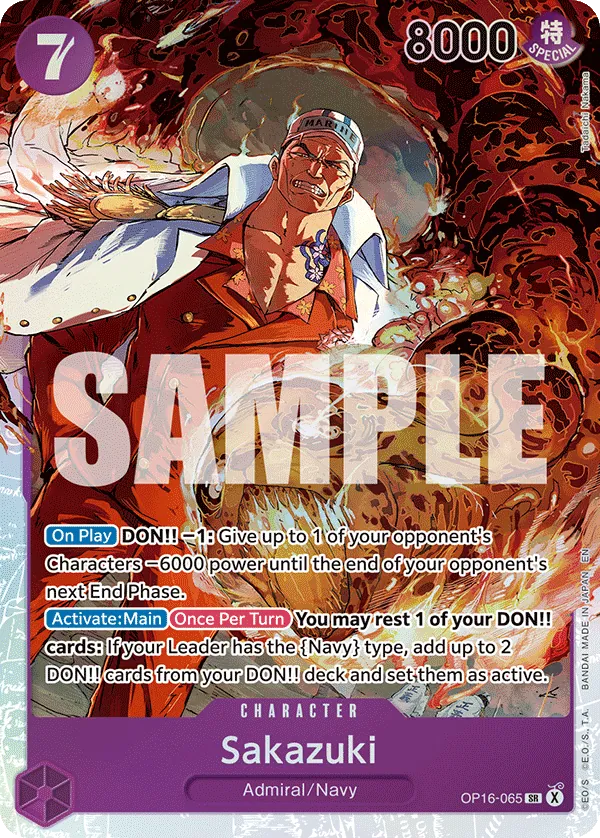
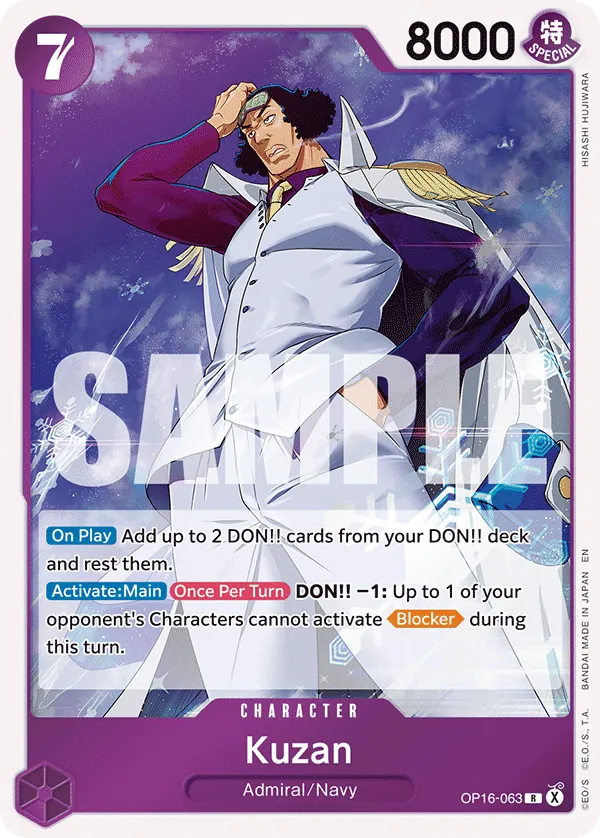
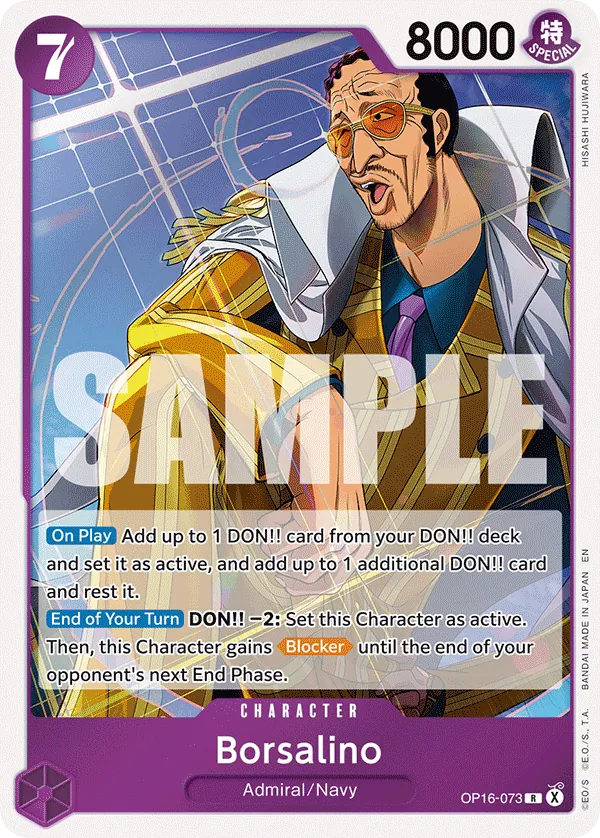
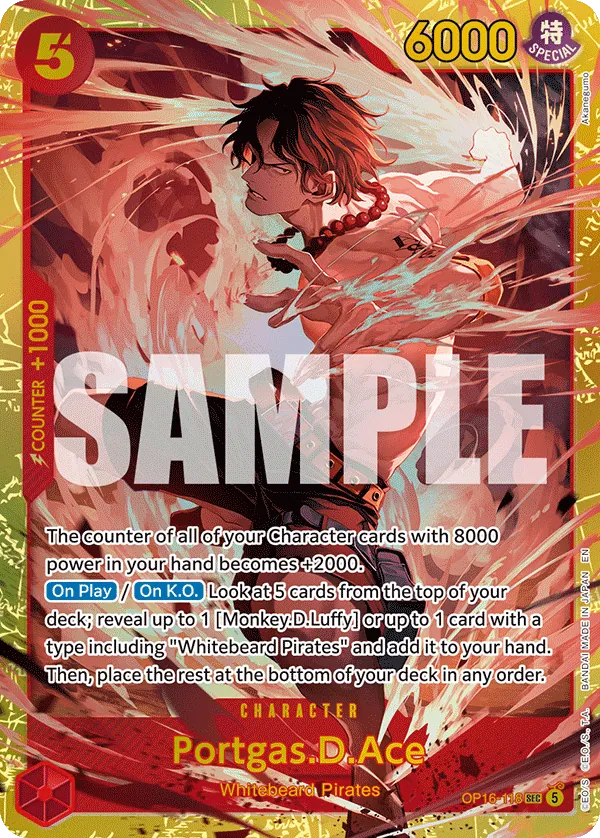
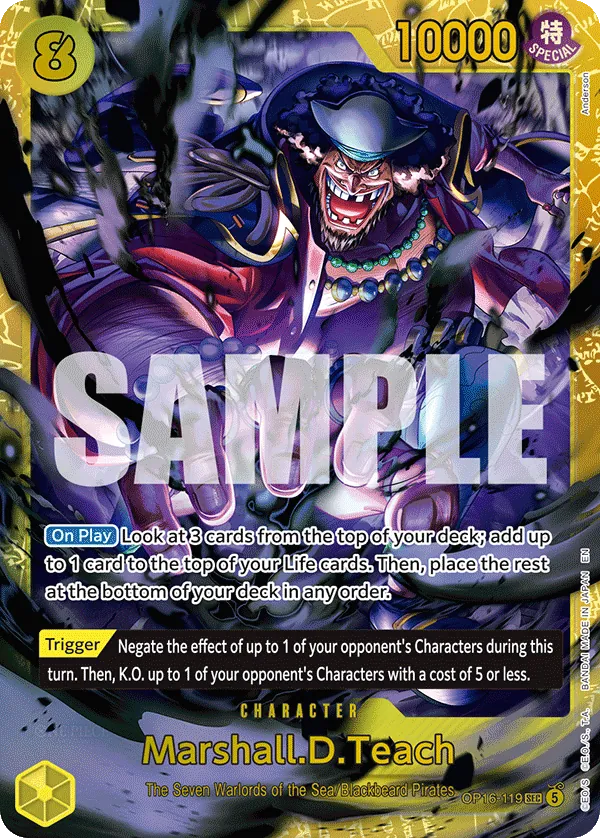
Running rough numbers on a box at the ~32% SEC rate: 0.32 × ~$110 (mid-range settled SEC value) ≈ $35 of expected SEC value per box. Add in maybe $40-50 of value across 3-8 SRs (most SRs settle in the $3-25 range, with only a handful worth more), a few dollars in Leaders and Rares, and a very small sliver of Manga Rare EV (they’re too rare to move the average much for any single box). Total expected return lands somewhere in the ballpark of $85-110 per box — below the ~$120 MSRP, and well below the $200+ street price boxes were actually selling at in August 2026. That gap is the “gambling tax” you’re paying for the chance at hitting big, and it’s the same basic pattern trackers found when running EV math on earlier sets like OP-08.
This is not financial advice, and card prices move fast — the numbers above are a snapshot as of August 2026, not a permanent forecast. Treat any pull-rate or price figure in this article (or anywhere else) as directional, not exact.
Is It Better to Buy Singles Instead of a Box?
If your only goal is owning a specific chase card — say, one particular SEC — buying that single card directly is almost always cheaper and faster than gambling on a box to pull it. A settled-market SEC running $90-140 is less than what a single box at $200+ street price would cost you even before accounting for the real chance of pulling nothing chase-worthy at all.
The tradeoff: buying loose singles online carries real counterfeit risk, especially from third-party marketplace sellers without grading or provenance. Stick to established TCG retailers, graded slabs from PSA/BGS/CGC for higher-value cards, or sealed product from reputable importers when buying loose singles. Boxes, by contrast, are basically counterfeit-proof if bought factory-sealed from a legitimate seller — you’re trading price efficiency for authenticity certainty. If you already read our booster box vs. starter deck breakdown, this is the same logic extended one step further: buy exactly the product that matches your actual goal, not the one that feels the most exciting to open.
Products at a Glance
| Product | Format | Approx. price (JPY, Aug 2026) | Best for |
|---|---|---|---|
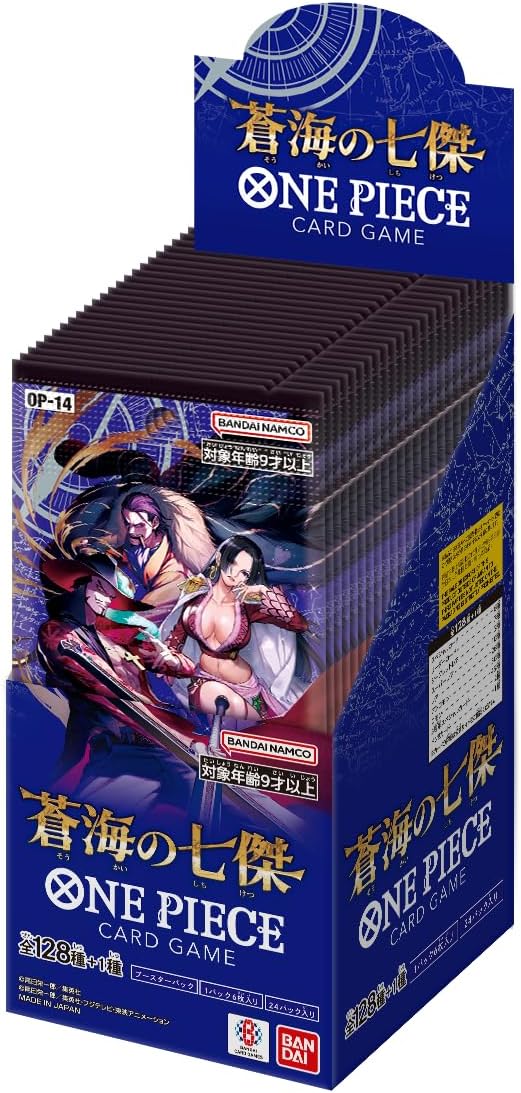
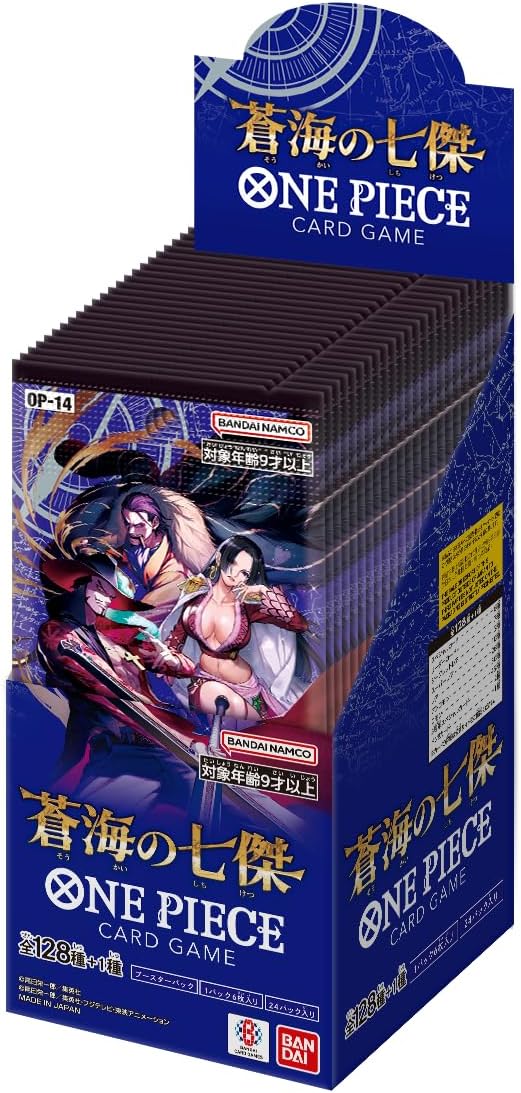
| OP-14 The Seven Heroes of the Blue Sea Booster Box | 24-pack box | ~¥12,127 (~$82) | Practicing box-opening EV math on a set that’s already settled in price |
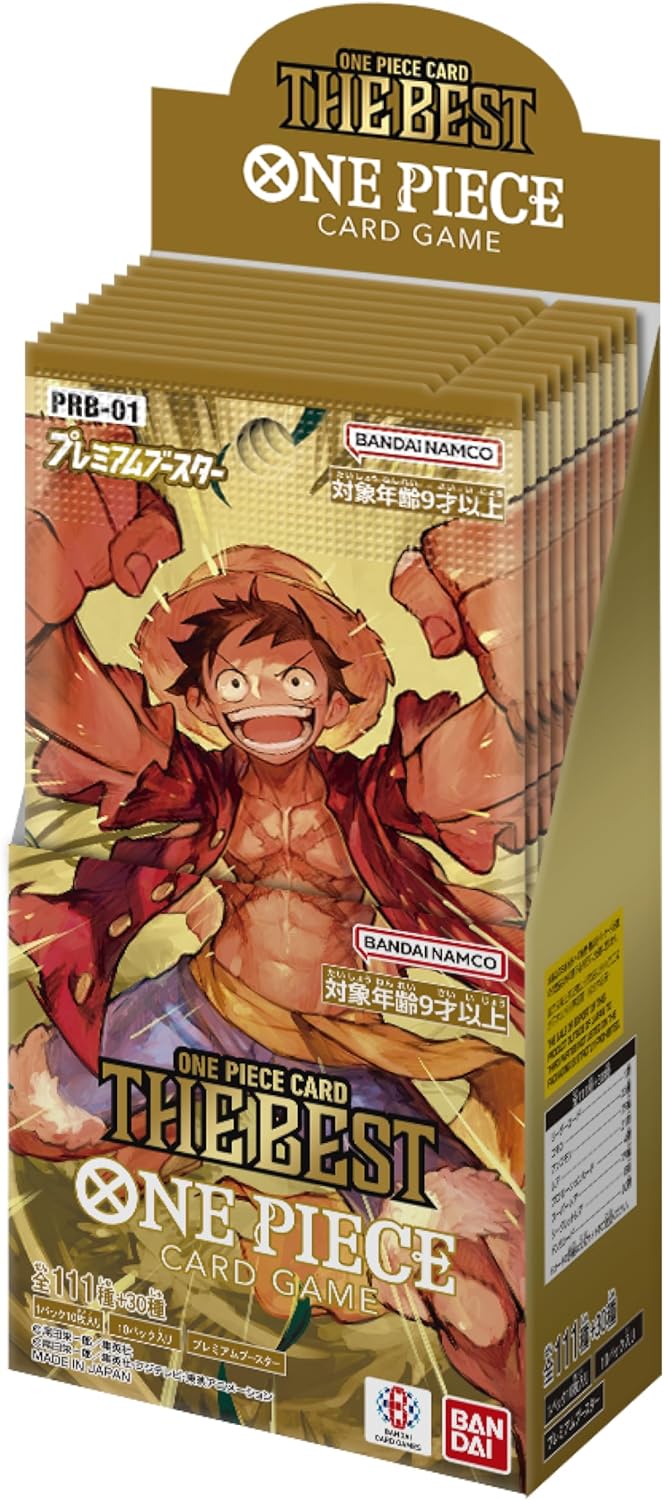
| PRB-02 ONE PIECE CARD THE BEST Vol.2 | 10-pack premium box | ~¥8,519 (~$58) | Higher hit-rate collector box — smaller pack count but denser rare odds |
| EB-03 Heroines Edition | Extra Booster box | ~¥18,848 (~$127) | Different (often friendlier) SR/SEC ratios than mainline OP-numbered sets |
| ST-26 Starter Deck (Purple/Black Luffy) | Fixed 51-card deck | ~¥1,723 (~$12) | Zero variance — guaranteed legal deck, no gambling involved |
| OP-16 The Time of Battle Booster Box | 24-pack box | Not currently stocked by this importer | The current mainline set used for the EV example above |


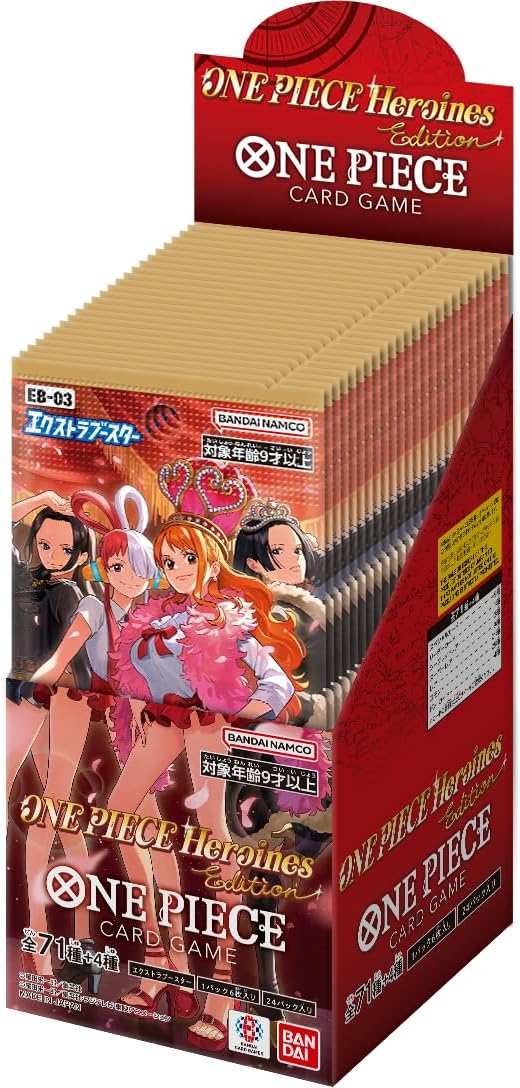
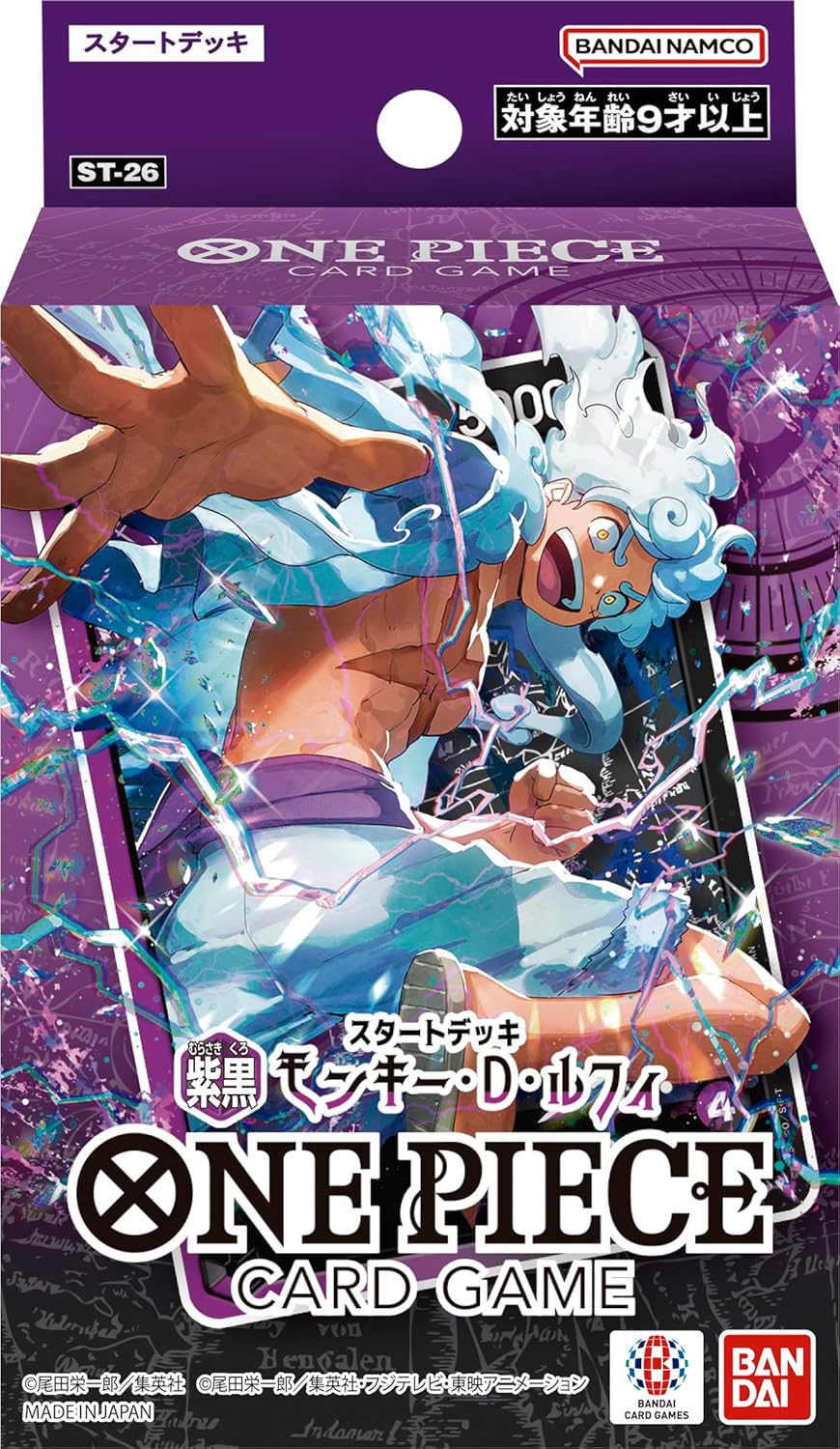
Prices convert from JPY at roughly current exchange rates and will shift with the market — treat these as ballpark figures, not live quotes, and note that Discovery Japan Mall’s catalog updates several times a day so stock can move between when this was written and when you check.
FAQ
Does BANDAI publish official pull rates for One Piece Card Game?
No. BANDAI has never released official inclusion ratios for OPCG boosters, unlike some other trading card games. Every pull-rate figure you’ll see — including in this article — comes from community-tracked box-opening data, not manufacturer disclosures.
What’s the actual chance of pulling a Secret Rare in a box?
It varies by set, but community trackers put it in the range of roughly 1-in-3 boxes to about 1 per box for most recent mainline releases. OP-16 specifically tracked around a 32% chance per box in Japanese case-break data, which lines up with the theory that boxes ship in one of three fixed print patterns (25% double-parallel, 42% single-parallel, 33% single-SEC).
Are booster boxes worth buying if I just want to play, not collect?
Not really — starter decks are the better buy for that goal. Every ST-numbered starter deck ships as a tournament-legal 50-card deck plus Leader and 10 DON!! cards for roughly $11-40, with zero pull-rate gambling involved. Save box-cracking for when you specifically want the thrill of chasing SR/SEC/Manga Rare pulls or need bulk Commons/Uncommons for deckbuilding depth.
Is it safe to buy loose One Piece TCG singles online to avoid the box gamble?
It can be, but stick to established, reputable sellers and look for graded cards (PSA, BGS, CGC) on higher-value pulls. Counterfeit risk is real on unmoderated marketplaces, especially for expensive SEC and Manga Rare cards, so a slightly higher price from a trusted retailer is usually worth the peace of mind versus the cheapest listing you can find.
Do sealed booster boxes lose or gain value over time?
Sealed product from popular, low-print sets sometimes appreciates once a set goes out of print, but it’s far from guaranteed — plenty of boxes just track down toward bulk pricing as supply catches up with demand. This is not financial advice; card and sealed-product prices fluctuate, and past price trends don’t guarantee future results.
The Takeaway
Booster boxes are built to be a fun gamble, not a value play — the EV math on a set like OP-16 lands somewhere around $85-110 in expected returns against a box that’s realistically cost $120-215 depending on when and where you bought it in 2026. If you want guaranteed value, a starter deck or singles purchase beats a box every time. If you want the actual experience of chasing an SEC or an Admiral Manga Rare — which, to be clear, is a real and valid reason to buy a box — go in knowing BANDAI never published the odds, the numbers above are community estimates, and the “gambling tax” is real. Buy boxes for the thrill, buy decks and singles for the value, and you’ll rarely feel like you got fooled by either one.
More Trading Card Game Guides
- Dragon Ball Fusion World Pull Rates Explained (2026) (Dragon Ball Super Card Game)
- Pokémon TCG Pull Rates Explained: Odds vs. Reality (Pokémon TCG)
- Grading Naruto Cards in 2026: Is It Actually Worth It? (Naruto Card Game)
Comments