※本ページはプロモーションが含まれます
Disclosure: This post contains affiliate links. If you buy through them, we may earn a commission at no additional cost to you. Learn more.
If you’re buying One Piece Card Game product online, the two biggest risks are counterfeit singles and resealed “sealed” booster boxes — and both are getting harder to spot as the game’s popularity explodes. The short version: buy from sellers with a long, verifiable track record (established marketplaces, certified hobby shops, or a licensed importer), inspect anything expensive before you trust it, and treat “too good to be true” pricing as a red flag every single time.
This isn’t a niche worry anymore. TCGplayer’s own Q2 2026 marketplace data has One Piece Card Game outselling a member of the “Big Three” TCGs (Magic, Pokémon, Yu-Gi-Oh!) for three quarters running, landing at #3 in overall GMV behind only Magic and Pokémon. That kind of demand — combined with chase cards like Alternate Art Leaders and Secret Rares regularly selling for hundreds of dollars, as we broke down in our OP-16 set review — is exactly the environment counterfeiters and resellers target. Here’s how to shop smart.
- The Big Red Flags When Buying Loose Cards Online
- How to Spot a Fake One Piece Card
- How to Spot a Resealed Booster Box
- Where to Actually Buy Real Product
- A Timely Nuance: OP-17 Changes the Import Calculus
- Grading Adds a Layer — But Watch for Fake Slabs Too
- Comparison Table: Buying Channels at a Glance
- Frequently Asked Questions
- Is it safe to buy One Piece Card Game booster boxes from overseas sellers?
- How can I tell if a “sealed” booster box has actually been resealed?
- Are Japanese-print One Piece cards legal to use in English tournaments?
- What’s the safest way to buy a single expensive card, like a Secret Rare or Manga Rare?
- Do prices for chase cards like Alternate Art Leaders actually hold their value?
- Takeaway
- Related Articles
- More Trading Card Game Guides
The Big Red Flags When Buying Loose Cards Online
Before you even get to authentication, most bad purchases can be avoided by reading the listing itself:
- No or blurry real photos. A legitimate seller of a $150+ Secret Rare will photograph the actual card, front and back, in raking light. Stock images or watermarked scans from a card database are a warning sign.
- Brand-new seller account, high-value inventory. A seller with zero feedback suddenly listing a stack of OP-01 Alternate Art Leaders is a classic pattern for both counterfeits and stolen goods.
- Price 30-50% under every other listing. Card markets are efficient; a Manga Rare priced dramatically below every comp on TCGplayer or 130point isn’t a steal, it’s a signal.
- “Near Mint” claims with no return policy. Condition is subjective and disputes are common — a seller who won’t accept returns on a graded-adjacent claim is avoiding accountability.
- Payment requests outside the platform. Any seller asking you to pay via Zelle, wire, or “friends and family” on PayPal to “skip fees” has just removed your buyer protection.
How to Spot a Fake One Piece Card
Counterfeits have improved a lot since the game’s 2022 English launch, but most still fail on a few consistent points:
- Card back tint. Genuine One Piece cards have a very specific, evenly balanced card back. A noticeably purple, blue, or washed-out tint compared to a known-real card is one of the most common counterfeit tells.
- Texture on rares. SR, SEC, and Alternate Art cards have a subtle embossed/textured finish. If a “rare” card feels completely flat and smooth like a common, be suspicious.
- Print sharpness. Zoom in on small text (rules text, card number, set code). Fuzzy edges, incorrect font weight, or slightly-off color saturation are common on fakes — official print quality is very consistent card to card.
- Weight and thickness. Real cards have a consistent card stock. Fakes often feel a little too thin, too thick, or too flexible.
None of these checks are 100% definitive on their own — do two or three together before you conclude a card is fake, and when in doubt, compare directly against a card you already know is authentic.
How to Spot a Resealed Booster Box
This is the scam that hurts the most financially, because it targets full boxes, not single cards. Someone opens a legitimately sealed box, pulls the valuable chase cards, then reseals it (sometimes with a reproduced wrapper) and sells it as “factory sealed.”
- Check the shrink wrap seam. Factory shrink wrap has a consistent, tight seal with a clean seam line. Irregular seam width, doubled lines, bunching, or hand-creased folds are signs of a reseal.
- Inspect the flap area for glue residue or whitening. This is a fast check that catches a lot of amateur reseals.
- UV light on seams (if you’re serious about it). Many modern adhesives fluoresce under UV light; a bright glowing line along a seam suggests fresh glue rather than factory sealing.
- Weight as a supporting clue only. A digital scale can flag a box that’s noticeably lighter than a known-good box of the same set, but treat this as one data point, not proof — normal manufacturing variance exists.
- Know which sets are targeted most. High-value early sets (OP-01, OP-05) and any set with a newly revealed Manga Rare or SEC chase card are the products scammers target hardest, since the payoff per pulled card is highest.
This is also exactly why buying from a seller with a long track record matters more than saving a few dollars from an anonymous listing — reputable sellers have too much to lose from getting caught reselling gutted boxes.
Where to Actually Buy Real Product
Certified hobby shops and TCGplayer Direct. TCGplayer’s “Verified Seller” badge only goes to Gold Star Sellers (99.5%+ feedback, 100+ transactions in the last 90 days) or Certified Hobby Shops that have proven they run an actual brick-and-mortar store. Buying through TCGplayer Direct also adds a condition double-check at TCGplayer’s own authentication center before it ships. The tradeoff: prices on Direct or from Certified Hobby Shops run a bit higher than random marketplace listings — you’re paying for the verification.
Long-established eBay sellers. Look for accounts with years of history, tens of thousands of items sold, and 98%+ feedback specifically in the trading card category — not just high overall feedback from unrelated categories. Read the last 20-30 pieces of feedback for mentions of resealed boxes or condition complaints, not just the star rating.
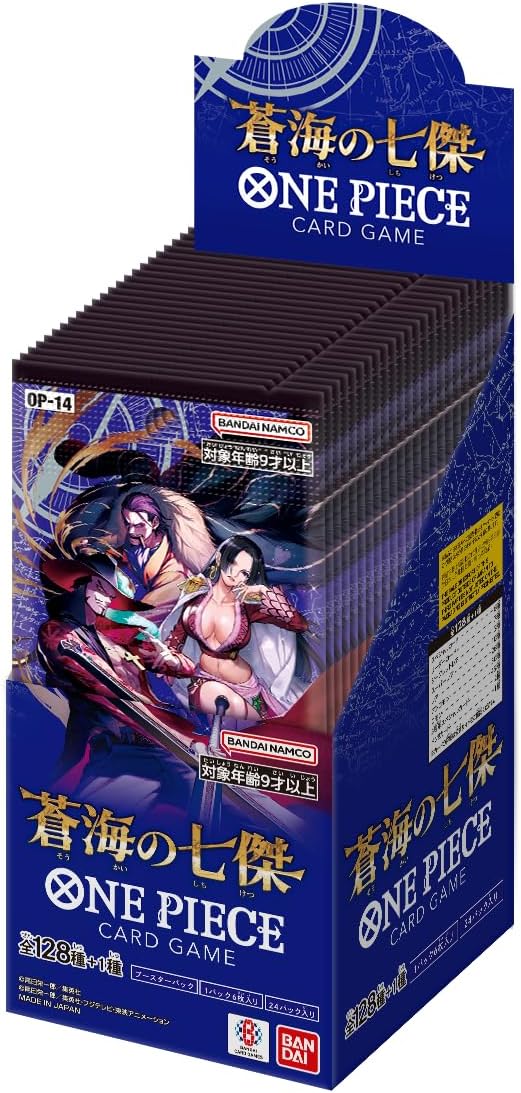
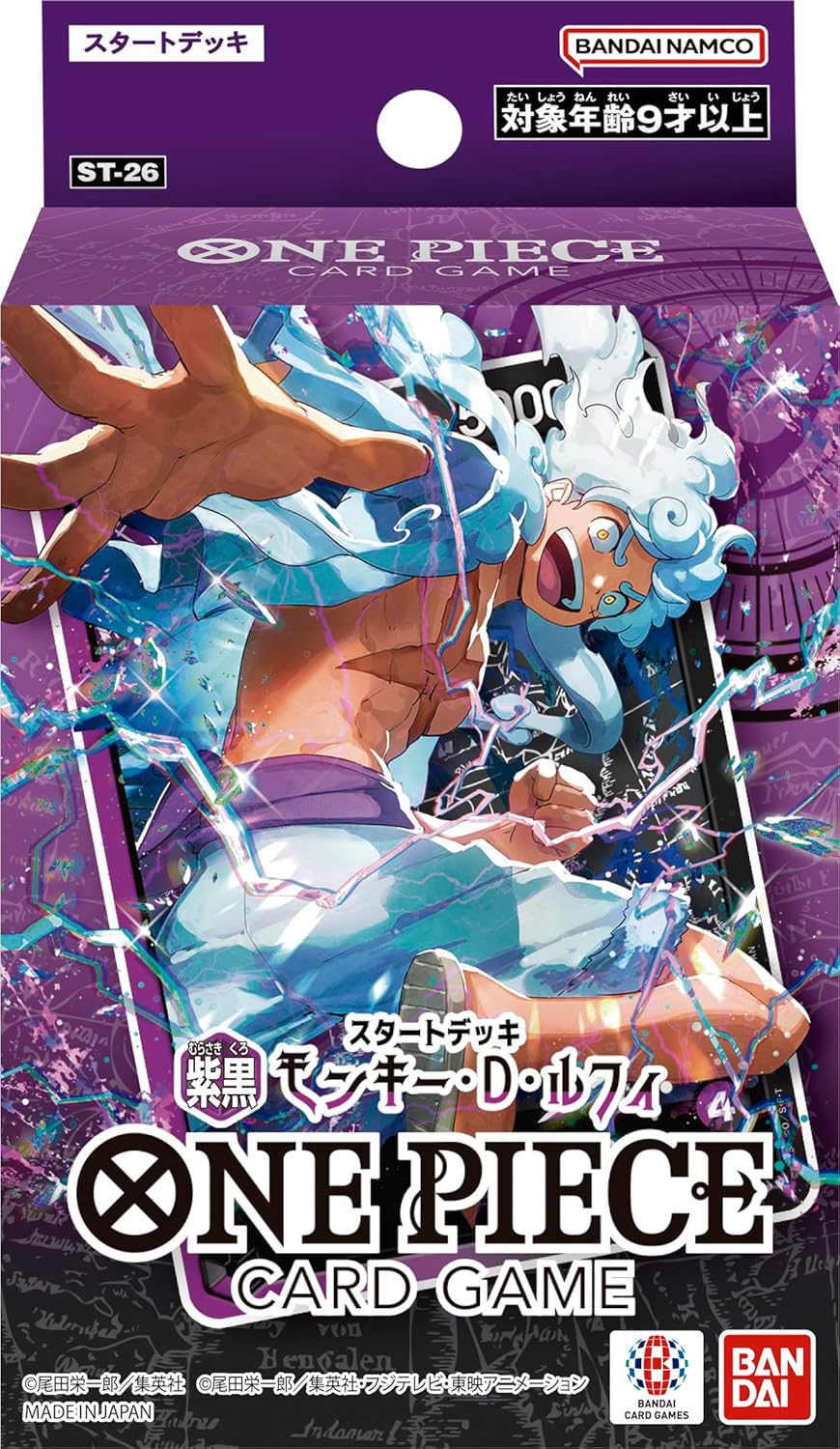
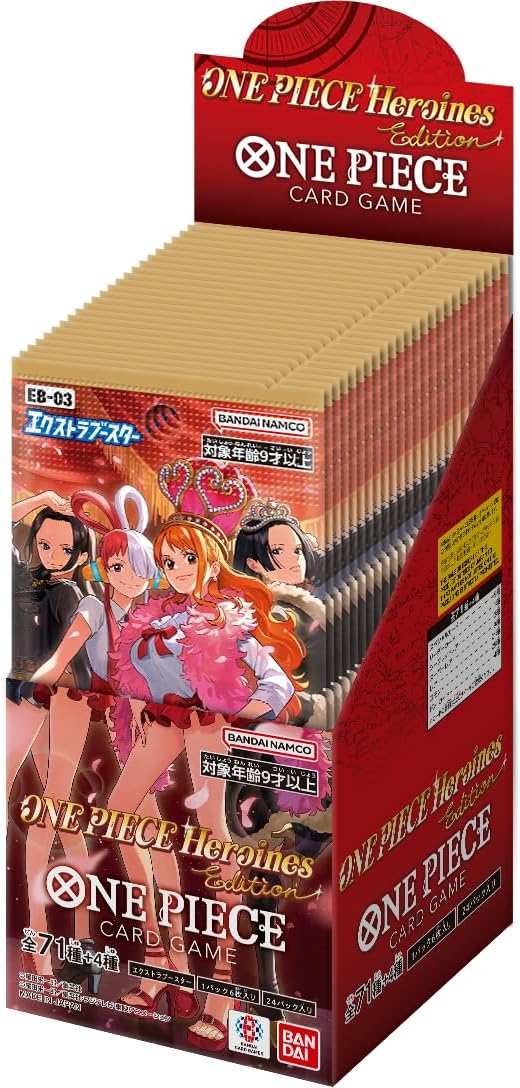
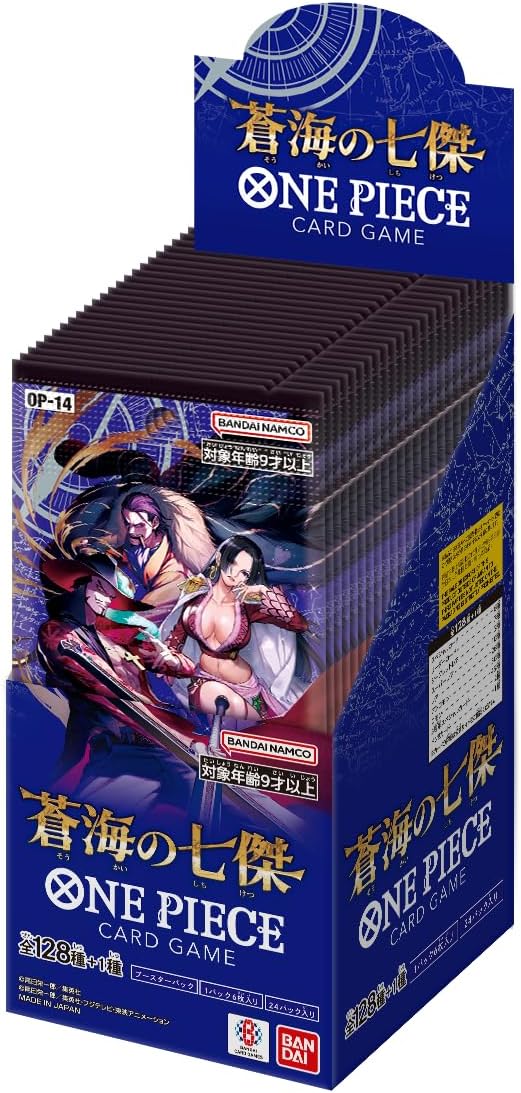
A licensed Japan-based importer for JP-print product. If you specifically want authentic Japanese-print booster boxes and starter decks shipped from Japan — the same kind of starter decks we recommend for new players in our beginner’s guide — an established import mall is generally safer than an unverified reseller, because the product ships sealed directly from Japan rather than passing through unknown middlemen. Discovery Japan Mall is one option that currently stocks genuine BANDAI One Piece Card Game product — for example, the ST-26 Purple/Black Monkey D. Luffy Starter Deck as a cheap way to test a deck, the OP-14 “The Seven Heroes of the Blue Sea” Booster Box, the PRB-02 “ONE PIECE CARD THE BEST Vol. 2” Booster Box of reprinted chase cards, and the EB-03 “ONE PIECE Heroines Edition” Extra Booster Box. Even the accessories are real BANDAI product — Official Card Sleeves 7 (Set of 4) is worth grabbing alongside any box purchase so your pulls don’t get damaged in the mail.



The honest downside of buying this way: it’s genuinely Japanese-print product shipping internationally, so factor in shipping cost and delivery time (typically one to a few weeks to the US), and know that Japanese-print cards are legal in tournaments per official Comprehensive Rules but the card text will be in Japanese, not English — fine for sealed-product collectors, less ideal if you want to read your cards during a game.
What this genre doesn’t really support: loose singles from anonymous marketplaces. If you’re chasing a specific expensive single (an Alternate Art Leader, a Manga Rare), stick to platforms with buyer protection and seller accountability — TCGplayer, established card shop websites, or eBay with a strong-feedback seller — rather than social media DMs or unfamiliar standalone storefronts.
A Timely Nuance: OP-17 Changes the Import Calculus
Worth knowing if you’re weighing whether to import from Japan at all: OP-17 “The World’s Strongest Warriors” (releasing August 22 in Japan, August 28 worldwide) is the first set under BANDAI’s new Global Simultaneous Release model, meaning English product launches the same week as Japan instead of months behind. Going forward, chasing Japanese-print boxes purely to get a new set early makes less sense for English-speaking collectors. Where importing still matters is for Japan-exclusive or older product — earlier numbered sets that are out of print in English, starter decks, and Premium Booster “Best of” compilations like PRB-02 that don’t always get a matching English release.
Grading Adds a Layer — But Watch for Fake Slabs Too
If you’re buying a graded copy of an expensive card (PSA, BGS) instead of a raw one, grading does meaningfully reduce your counterfeit risk — a professionally graded slab has already been authenticated once. But counterfeit slabs are a real and growing problem across the hobby, including cases of real slabs being cracked open with the graded card swapped for a lesser or fake one and resealed. Always verify the cert number directly on the grading company’s own website (not a link the seller provides) before paying a premium for a graded card — if the cert number doesn’t exist, returns a different card, or shows a different grade, walk away.
Comparison Table: Buying Channels at a Glance
| Channel | Best for | Counterfeit/reseal risk | Typical cost vs. MSRP |
|---|---|---|---|
| TCGplayer Direct / Certified Hobby Shop | Singles, sealed boxes, buyer protection | Low | +10-20% |
| Long-established eBay seller (98%+ feedback) | Sealed boxes, bulk lots | Low-Moderate | Market rate, varies |
| Licensed Japan import mall (e.g., Discovery Japan Mall) | Authentic JP-print sealed boxes/decks | Low (ships sealed from Japan) | + shipping/import time |
| Anonymous marketplace/social media listing | Nothing you can’t verify in person | High | Often “too good to be true” |
| Local game store (in person) | Everything, especially first purchases | Lowest | MSRP or near it |
Frequently Asked Questions
Is it safe to buy One Piece Card Game booster boxes from overseas sellers?
It can be, if the seller has an established track record. A licensed import mall shipping factory-sealed BANDAI product directly from Japan carries much less risk than an anonymous reseller, but you should still expect longer shipping times and factor in the cost, since boxes ship internationally rather than from a domestic warehouse.
How can I tell if a “sealed” booster box has actually been resealed?
Check the shrink wrap seam for irregular width or hand-creased folds, look at the flap for glue residue or whitening, and if you want to go further, run a UV light over the seams to check for fresh adhesive. A digital scale comparison against a known-good box weight can support your suspicion but isn’t proof on its own.
Are Japanese-print One Piece cards legal to use in English tournaments?
Japanese-print cards are legal under the official Comprehensive Rules as long as the card itself is legitimate, but many local stores and specific tournaments may set their own house rules, so it’s worth checking with your venue first. The bigger practical downside is that the card text will be in Japanese rather than English.
What’s the safest way to buy a single expensive card, like a Secret Rare or Manga Rare?
Buy graded copies from PSA or BGS when possible and verify the cert number directly on the grading company’s own site before paying. For raw (ungraded) singles, stick to platforms with buyer protection — TCGplayer, established card shop sites, or long-tenured eBay sellers — rather than social media marketplaces.
Do prices for chase cards like Alternate Art Leaders actually hold their value?
Prices fluctuate significantly based on tournament meta shifts, reprints (like the PRB “CARD THE BEST” compilations), and overall hype around a set, so treat any price you see as a snapshot rather than a guarantee — this isn’t financial advice, and secondary-market card values can move quickly in either direction.
Takeaway
One Piece Card Game’s explosive growth has made it a genuine target for counterfeiters and resealers, but the actual defense is simple and doesn’t require expert-level authentication skills: buy from sellers with real track records, inspect seams and card texture on anything expensive, verify graded slabs directly with the grading company, and treat suspiciously low prices as the red flag they almost always are. Do that consistently and you’ll avoid the vast majority of bad purchases in this hobby.
Related Articles
More Trading Card Game Guides
- How to Buy Pokémon Cards Online Safely (2026 Guide) (Pokémon TCG)
- How to Buy Dragon Ball Fusion World Cards Safely (2026) (Dragon Ball Super Card Game)
Comments