※本ページはプロモーションが含まれます
Disclosure: This post contains affiliate links. If you buy through them, we may earn a commission at no additional cost to you. Learn more.
Four years into the One Piece Card Game, the pattern is clear: OP-01 “Romance Dawn” chase cards have mostly held or grown their value, mid-set Manga Rares spike hard around a card’s release and then cool off by 30-70%, and Bandai’s own reprint sets (PRB-01, PRB-02) have been the single biggest force resetting prices across the board. This isn’t hype talk — it’s what the sales data on cards like Gol D. Roger’s OP-09 Manga Rare, the OP-01 Nami parallel, and the OP-16 Sakazuki Manga Rare actually shows as of August 2026.
If you’re trying to figure out whether that $1,000+ alternate art in a display case is a smart buy or a bubble about to pop, this is a rundown of what’s actually happened to One Piece TCG’s most chased cards since the game launched in Japan in July 2022 — and what tends to drive the swings.
- A quick primer: what counts as a “chase card” here
- The early days: OP-01 Romance Dawn (2022) and speculative mania
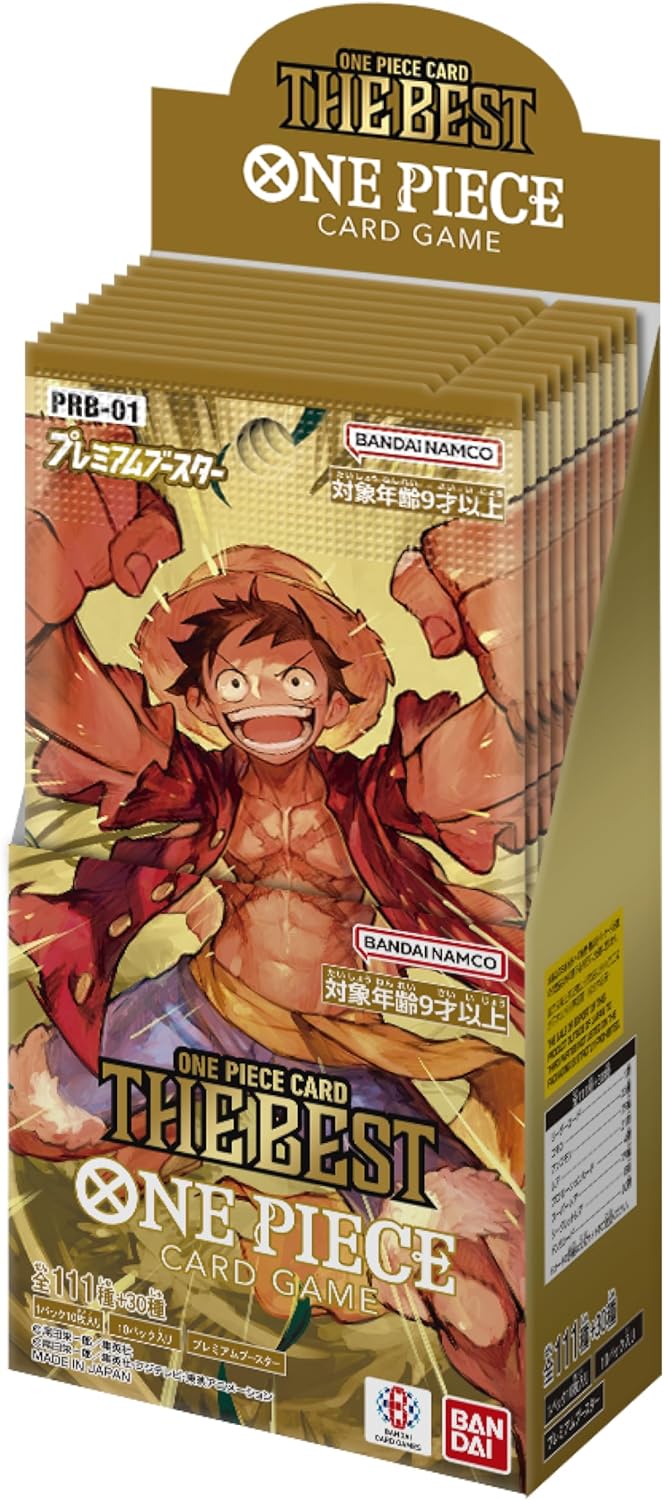
- The reprint reset: PRB-01 “ONE PIECE CARD THE BEST” (2024)
- The current king: Gol D. Roger Manga Rare, OP-09 (2024)
- Anime-anniversary sets: EB-01 and EB-02 (2024-2025)
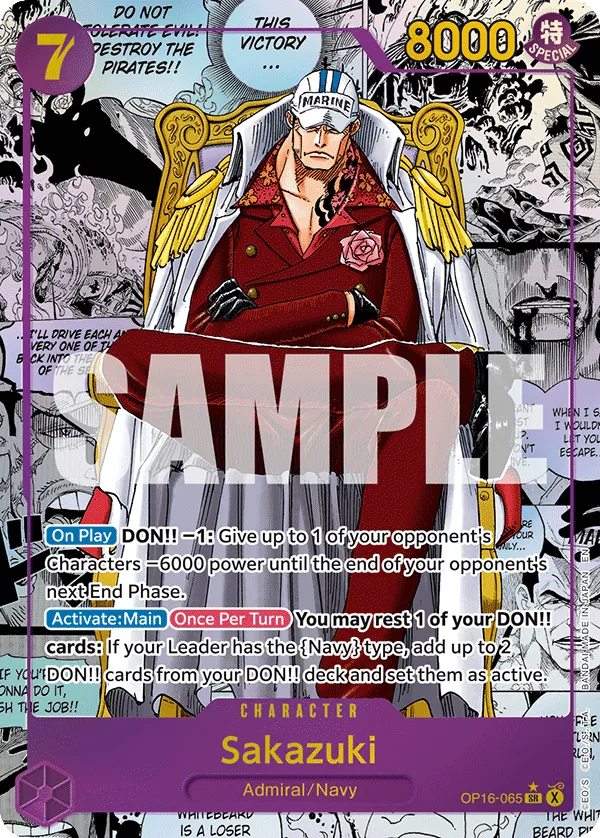
- The freshest chase card: Sakazuki (Akainu) Manga Rare, OP-16 (2026)
- Price comparison table (approximate, as of August 2026)
- Q&A: Does buying sealed product beat chasing singles?
- FAQ
- Takeaway
- More Trading Card Game Guides
A quick primer: what counts as a “chase card” here
One Piece Card Game rarities run from Common up through Leader, Secret Rare (SEC), and the various parallel tiers. Three categories dominate the secondary market:
- SEC Leaders — the full-art, no-border Leader cards (roughly 1 in 24 packs), which double as both competitive staples and posters for a character.
- Alternate Art (AA) / Parallel cards — same stats, different (often anime-referencing) full-bleed artwork, usually about 1 per 48 packs.
- Manga Rares (MR) — full-card black-and-white artwork lifted straight from Eiichiro Oda’s manga panels with screentone shading and foil treatment. These are the true “case hits,” with community pull-rate estimates landing somewhere around 1 per 500-1,500 packs (Bandai has never officially confirmed a rate). Manga Rares only started appearing from OP-09 “Emperors in the New World” onward, though PRB-01 later added manga-panel “Comic Parallel” reprints of earlier iconic cards.
The early days: OP-01 Romance Dawn (2022) and speculative mania
OP-01 launched in Japan on July 8, 2022 and hit English shelves that November, and the first year of the game was genuinely chaotic on price. With no reprints and a much smaller initial print run than Bandai runs today, early alternate arts and Manga-style parallels — think Shanks (OP01-120) and Nami (OP01-016) — became instant chase targets the moment competitive players and collectors both wanted them.


The clearest sign of that early bubble: a one-of-a-kind Treasure Cup tournament-prize Zoro card reportedly sold at auction for around $21,600 in 2022. That’s an outlier (a literal tournament prize, not a standard pack pull), but it set the tone for how speculative the first year got.
The downside: a lot of that early money did not age well. Several early promo Leaders and Shanks-adjacent chase cards that peaked around $400-$500 in early 2024 had dropped to roughly $80-$150 by 2025-2026 — a 60-70% haircut — once the initial FOMO wore off and supply caught up with demand.
The reprint reset: PRB-01 “ONE PIECE CARD THE BEST” (2024)
The single biggest price-moving event in the game’s history so far wasn’t a new set — it was Bandai’s decision to reprint. PRB-01, the franchise’s first dedicated premium reprint booster, covers OP-01 through OP-06 and introduced Comic Parallel (“Manga”) reprints of cards that were previously locked to first-print scarcity, including a reprinted Nami Manga (OP01-016) that has sold for around ¥130,000 (~$847) per copy.

This did two things at once:
1. It made entry-level versions of early staple cards cheaper and more available for new players joining the game late.
2. It created a new, even scarcer chase tier — the ten “Comic Parallel” cards from PRB-01, where full unopened “God Packs” have reportedly sold for roughly ¥1,380,000 (~$9,200) in the Japanese market.
As of August 2026, PSA 10 asking prices for the OP-01 Nami R-SP manga/comic parallel range roughly ¥178,000-¥398,000, which tells you the original OP-01 print — despite the reprint — never really lost its premium as the “first ever” version. Bandai followed up with PRB-02 in 2025, applying the same reprint-then-chase-new-parallel formula to a later batch of sets.
The downside: if you bought a first-print OP-01 or OP-02 alternate art specifically expecting scarcity-driven appreciation, a surprise reprint announcement is exactly the kind of news that can flatten your resale value overnight. Bandai has now done this twice; assume it’ll happen again.
The current king: Gol D. Roger Manga Rare, OP-09 (2024)
OP-09 “Emperors in the New World” (Japan, September 2024) gave the game its most famous single chase card: Gol D. Roger’s Manga Rare (OP09-118) — the character’s first-ever appearance as a playable card, printed in his iconic manga-panel art. Pricing has been volatile but consistently high: reported sales and asks have ranged from roughly $3,400 up to around $3,900 as of April 2026, with the ultra-rare Gold Super Parallel version of the same card commanding roughly ¥448,000 (~$3,000) on top of that. It’s regularly cited as the single most valuable standard-release card in the game’s history.

The downside: Roger is a specialty/support card, not a meta-defining bomb — his price is almost entirely IP prestige and scarcity, not tournament results. That kind of pure-collector pricing can be more volatile long-term than a card tied to an actively winning deck, since it has less “floor” from competitive demand if collector interest cools.
Anime-anniversary sets: EB-01 and EB-02 (2024-2025)
Extra Boosters sit outside the numbered OP-set legality pool but have become some of the strongest price performers precisely because they’re one-off releases that won’t be repeated. EB-01 “Memorial Collection” (2024) saw box prices reportedly climb 30-50% over the 12 months after release. EB-02 “Anime 25th Collection” (Japan, January 25, 2025; English, May 9, 2025) followed the same script — its headline Luffy Manga Rare (EB02-061, Super Parallel) trades around ¥120,000 (~$800) on the Japanese market as of March 2026, with the English print running noticeably higher on the secondary market due to stronger Western collector demand relative to the smaller EN print run.

The downside: “anniversary” sets are a moving target for Bandai — there’s no guarantee the next 25th-anniversary-style release won’t dilute demand for these specific ones, and short-print collector sets are also the type most likely to get faked by counterfeiters once prices climb (more on that below).
The freshest chase card: Sakazuki (Akainu) Manga Rare, OP-16 (2026)
OP-16 “The Time of Battle” (Japan, May 30, 2026; English, June 12, 2026) is the newest set on shelves, and its Sakazuki Manga Rare has already emerged as the set’s priciest card, reportedly reaching around $1,600. Unlike Roger, this one has a real competitive leg to stand on — Sakazuki/Akainu is genuinely playable in Navy decks — which is part of why sellers are pricing it at a premium over most of the set’s other Manga Rares (which range more like $50-$300).
The downside: it’s brand new. OP-16 doesn’t have a 12-month price history yet, and early-set pricing on a card this fresh is exactly the kind of number that can move 30-50% in either direction on a single Regional result or reprint rumor. Early “instant classic” pricing has burned buyers before — see OP-01’s Shanks-adjacent cards above.
Price comparison table (approximate, as of August 2026)
| Card / Set | Rarity | Peak or notable price | Roughly current | What moved it |
|---|---|---|---|---|
| Nami, OP01-016 (Romance Dawn, 2022) | Manga/Comic Parallel | ~¥130,000 PRB-01 reprint sale | ¥178,000-¥398,000 (PSA 10) | First-set scarcity outlasted a reprint |
| Early Shanks-adjacent promo Leaders (OP-01/02 era) | SEC / promo | ~$400-$500 (early 2024) | ~$80-$150 | Bubble deflated as supply caught up |
| Gol D. Roger, OP09-118 (Emperors in the New World, 2024) | Manga Rare | ~$3,900 | ~$3,400-$3,900 | First-ever Roger card + IP prestige |
| Boa Hancock (500 Years in the Future, OP-07) | Manga/Parallel | ~$1,729 | ~$1,700 | Character popularity, limited pulls |
| Luffy, EB02-061 (Anime 25th Collection, 2025) | Super Parallel | ~¥120,000 (~$800) JP | Higher on EN market | One-off anniversary release |
| Sakazuki, OP-16 (The Time of Battle, 2026) | Manga Rare | ~$1,600 | ~$1,600 (new) | Competitive Navy relevance + fresh hype |

Prices above are approximate market snapshots pulled from card-price trackers and secondary-market listings as of the dates noted, and they move constantly — this is not financial advice, and nothing here should be treated as a guarantee that any specific card will appreciate. Treat One Piece TCG chase cards as collectibles you enjoy owning first, and a speculative asset a distant second.
Q&A: Does buying sealed product beat chasing singles?
For most collectors, yes — and it’s the safer entry point if you’re new to this side of the hobby. Chasing a specific $1,000+ single online means navigating a market where high-value manga rares and alternate arts are a known counterfeiting target; a scan-and-compare check against official card lists (or buying only from sellers with graded/authenticated stock) is worth the extra effort. Buying sealed booster boxes of the actual set — like OP-09 Emperors in the New World, the EB-02 Anime 25th Collection, or the reprint-focused ONE PIECE CARD THE BEST (PRB-01) — gives you a real (if long) shot at pulling a chase card yourself, with zero authenticity risk since it’s coming sealed from Japan. Discovery Japan Mall ships genuine Japanese product internationally and currently stocks all three of those, along with PRB-02 and the EB-01 Memorial Collection. Note that OP-01 Romance Dawn’s original booster box is long out of production and isn’t something this mall (or most retailers) currently stocks new — PRB-01’s Comic Parallel reprints are the realistic way to get OP-01-era chase art today.


If you’re deciding between sealed formats generally, we cover the pros and cons in more depth in our booster box vs. starter deck breakdown.
FAQ
Q: What’s the single biggest factor that moves One Piece TCG chase card prices?
A: Bandai’s own release calendar. Reprint sets like PRB-01 and PRB-02 have had a far bigger effect on secondary prices than any single tournament result — they reset the supply of specific chase cards overnight, cooling first-print prices while creating new, scarcer parallel tiers to replace them.
Q: Are Manga Rares always the most valuable rarity in a set?
A: Usually, but not automatically. A Manga Rare of a character with weak competitive relevance and low anime-arc visibility can trade well below a “regular” SEC Leader from a hot archetype. Sakazuki’s OP-16 Manga Rare, for instance, gets a premium partly because Sengoku Navy decks actually play him — pure collector hype without competitive backing tends to be more volatile long-term.
Q: Is it too late to get into collecting these chase cards?
A: No — Bandai keeps releasing new Manga Rares and Extra Boosters every few months (OP-16 in June 2026 is proof), so there’s always a fresh chase underway. The tradeoff is that early-set cards like OP-01/OP-02 originals are much harder and pricier to find now than they were in 2022-2023.
Q: How do I avoid counterfeit chase cards when buying singles?
A: Buy from established marketplaces with buyer protection or graded (PSA/BGS/CGC) copies where possible, compare the card against the official card list on en.onepiece-cardgame.com, and be extra cautious with any “too good to be true” price on a $500+ card sold loose with no provenance. Sealed booster product from a legitimate importer carries essentially zero counterfeit risk by comparison.
Q: Do older chase cards ever get reprinted, and does that ruin their value?
A: Sometimes, yes — PRB-01 and PRB-02 both reprinted earlier chase cards in new parallel treatments. It usually softens (not zeroes out) the value of the original, especially once collectors settle on the “first print” version as the more prestigious one to own, as has held true for the OP-01 Nami parallel even after its PRB-01 reprint.
Takeaway
The last four years of One Piece Card Game price history tell a consistent story: hype-driven early prices tend to fall back to earth, Bandai’s reprint policy is the market’s biggest wildcard, and the cards that hold value longest combine genuine scarcity (first-set or one-off anniversary prints) with either real competitive relevance or unmatched IP prestige (there’s only one “first Gol D. Roger card”). If you’re chasing these cards for the thrill of the pull rather than as an investment, sealed product from a reliable importer is still the most fun — and safest — way to play the odds.
More Trading Card Game Guides
- Dragon Ball Fusion World Chase Card Price History (2024-2026) (Dragon Ball Super Card Game)
- Charizard Card Price History: What Really Happened (Pokémon TCG)
- Naruto CCG Retrospective: BANDAI’s Original Card Game (2006-2013) (Naruto Card Game)
Comments